

5 Hryven (Armed Forces of Ukraine) – Ukraine
Non-circulating coins
Commemoration: 10 Years of the Armed Forces of Ukraine
Series: Rebirth of Ukrainian Statehood
Ukraine
Context
Year: 2001
Issuer: Ukraine 
Issuing organization: National Bank of Ukraine
Period:
(since 1991)
Currency:
(since 1996)
Total mintage: 30,000
Material
References
KM: #Click to copy to clipboard140
Numista: #14431
Value
Exchange value: 5 UAH
Obverse
Description:
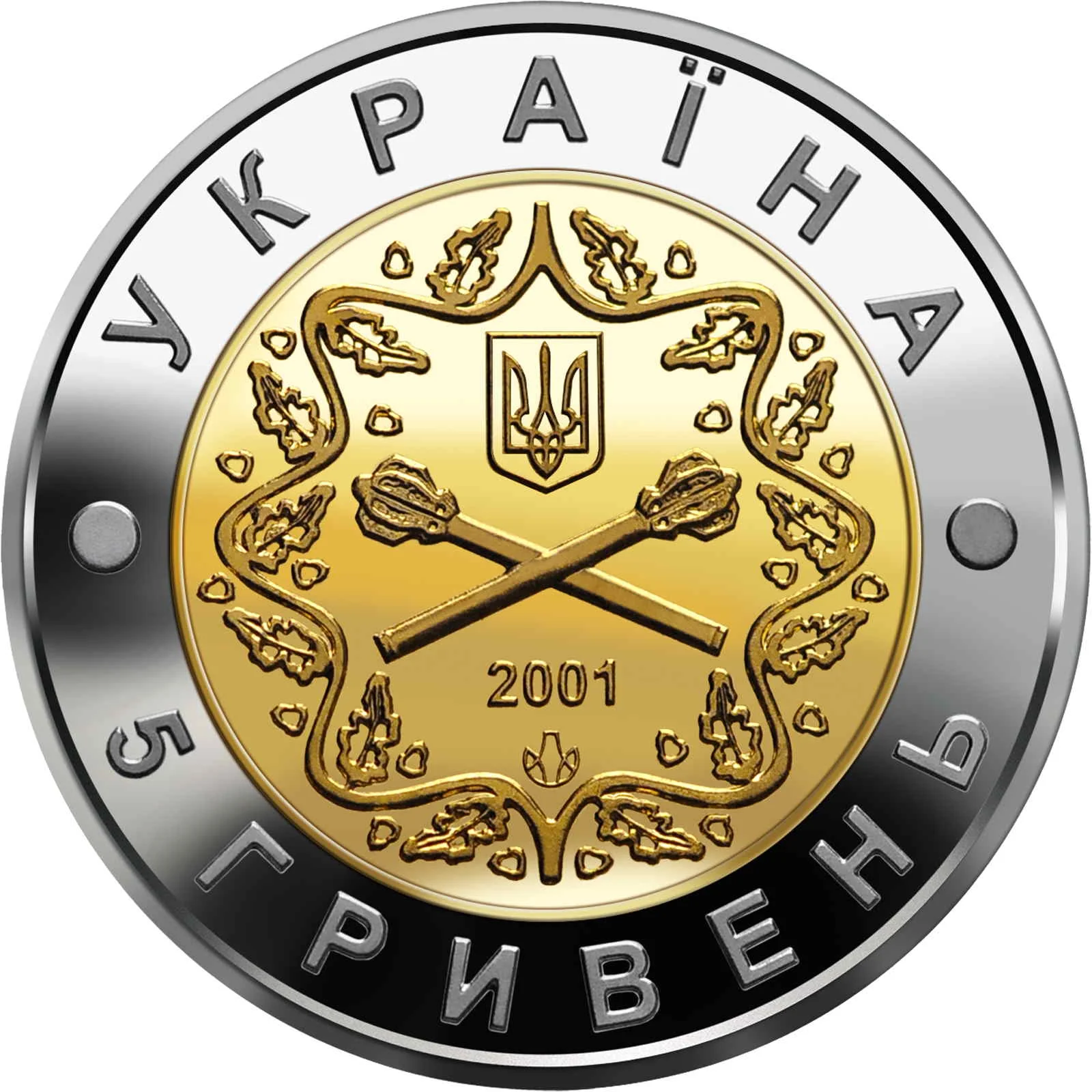
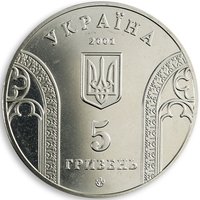
On the inner ring, against a glass-like background within an oak wreath, are the small Ukrainian National Emblem, crossed hetman's maces, the year 2001, and the Mint logo. The outer ring bears the inscriptions: УКРАЇНА and 5 ГРИВЕНЬ.
Inscription:
УКРАЇНА
5 ГРИВЕНЬ
2001
5 ГРИВЕНЬ
2001
Translation:
UKRAINE
5 HRYVNIAS
2001
5 HRYVNIAS
2001
Script: Cyrillic
Language: Ukrainian
Engraver: Sviatoslav Ivanenko
Designers: Oleksandr Muraviov, Sviatoslav Ivanenko
Reverse
Description:
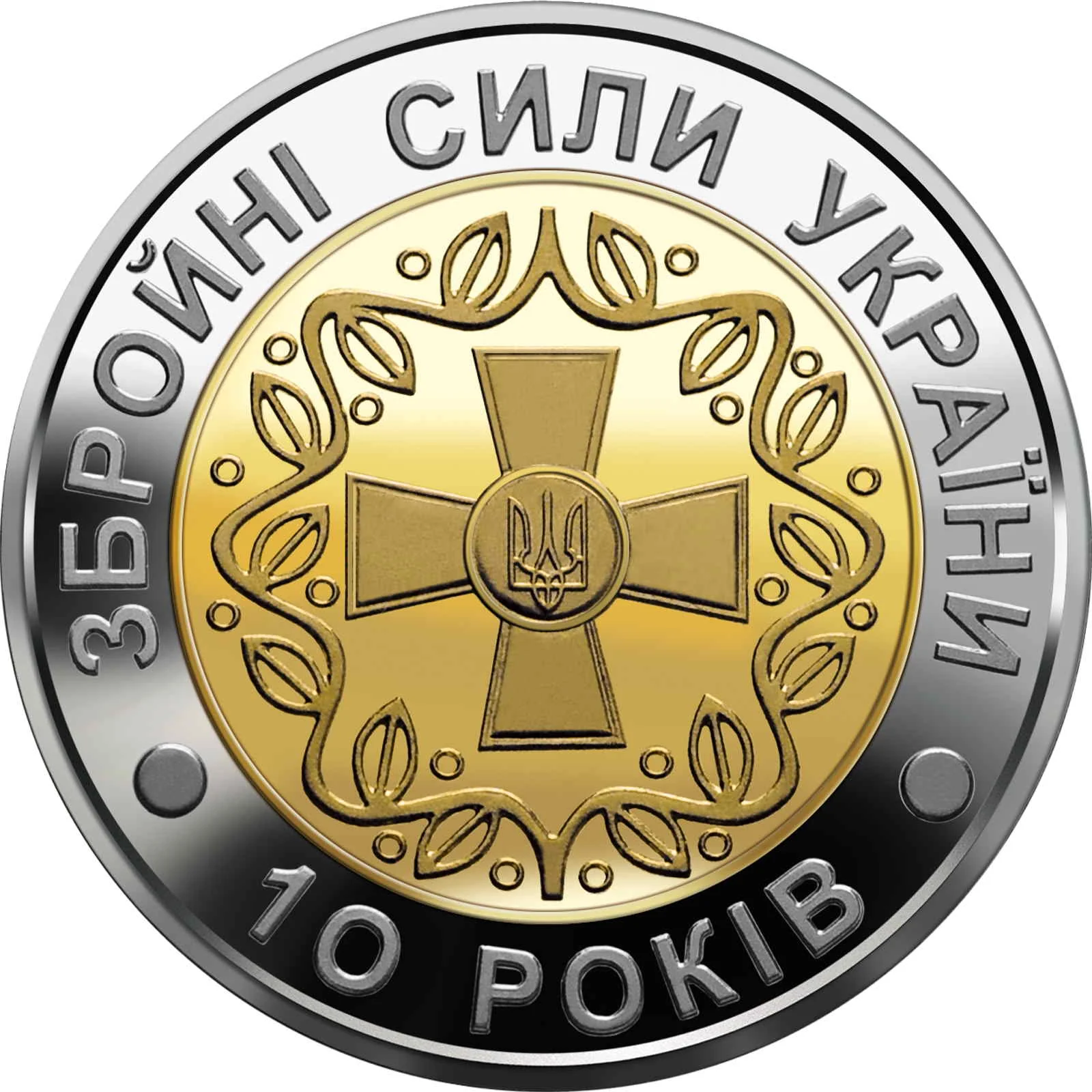
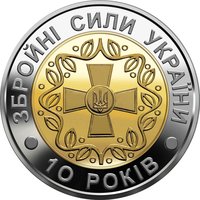
An equal-armed cross with broadened ends, framed by a laurel wreath, features a medallion of Ukraine's small National Emblem at its center. The outer ring bears the inscriptions: ЗБРОЙНІ СИЛИ УКРАЇНИ and 10 РОКІВ.
Inscription:
ЗБРОЙНІ СИЛИ УКРАЇНИ
10 РОКІВ
10 РОКІВ
Translation:
ARMED FORCES OF UKRAINE
10 YEARS
10 YEARS
Script: Cyrillic
Language: Ukrainian
Engraver: Sviatoslav Ivanenko
Designers: Oleksandr Muraviov, Sviatoslav Ivanenko
Edge
Segmented reeding
Mints
| Name | Mark |
|---|---|
| National Bank of Ukraine Banknote Printing and Minting Works | — |
Mintings
| Year | Mint Mark | Mintage | Quality | Collection |
|---|---|---|---|---|
| 2001 | — | 30,000 |
Historical background
In 2001, Ukraine’s currency situation was defined by a period of remarkable stability under a managed exchange rate regime, a significant achievement following the hyperinflation and economic turmoil of the early post-Soviet years. The national currency, the hryvnia (UAH), which replaced the temporary karbovanets in 1996, was pegged to the US dollar at a fixed rate of approximately 5.4 UAH/USD. This peg, maintained by the National Bank of Ukraine (NBU), provided a crucial anchor for prices and business planning, helping to curb inflation and build public confidence in the domestic currency after a decade of severe economic dislocation.
This stability was underpinned by relative macroeconomic calm, including moderate inflation and consistent inflows from international financial institutions like the IMF, which supported the peg with standby loans. However, the regime was not without its underlying pressures and critics. The fixed exchange rate, while stabilizing, made Ukrainian exports less competitive on global markets and required significant foreign currency reserves to maintain. Furthermore, the economy remained heavily dependent on volatile energy imports from Russia, creating a persistent vulnerability in the balance of payments.
Overall, 2001 represented a calm interlude in Ukraine’s monetary history. The fixed peg successfully provided a foundation for recovery and growth after the crises of the 1990s, but it also masked structural economic weaknesses and limited monetary policy flexibility. This set the stage for future challenges, as pressures would eventually lead to a shift to a managed float in 2005, following a period of political upheaval and renewed economic strain.
This stability was underpinned by relative macroeconomic calm, including moderate inflation and consistent inflows from international financial institutions like the IMF, which supported the peg with standby loans. However, the regime was not without its underlying pressures and critics. The fixed exchange rate, while stabilizing, made Ukrainian exports less competitive on global markets and required significant foreign currency reserves to maintain. Furthermore, the economy remained heavily dependent on volatile energy imports from Russia, creating a persistent vulnerability in the balance of payments.
Overall, 2001 represented a calm interlude in Ukraine’s monetary history. The fixed peg successfully provided a foundation for recovery and growth after the crises of the 1990s, but it also masked structural economic weaknesses and limited monetary policy flexibility. This set the stage for future challenges, as pressures would eventually lead to a shift to a managed float in 2005, following a period of political upheaval and renewed economic strain.
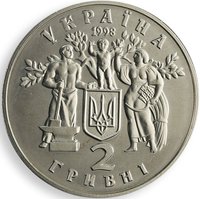
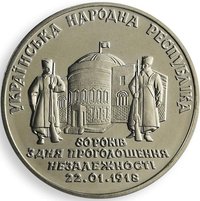
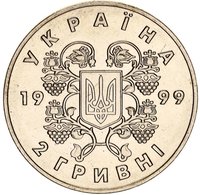
Series: Rebirth of Ukrainian Statehood
⭐ Somewhat Rare