

½ Sovereign – United Kingdom
United Kingdom
Context
Years: 1835–1837
Issuer: United Kingdom 
Ruler: William IV
Currency:
(1158—1970)
Demonetized: Yes
Total mintage: 1,079,500
Material
References
KM: #Click to copy to clipboard722
Numista: #40451
Value
Bullion value: $610.09
Obverse
Description:
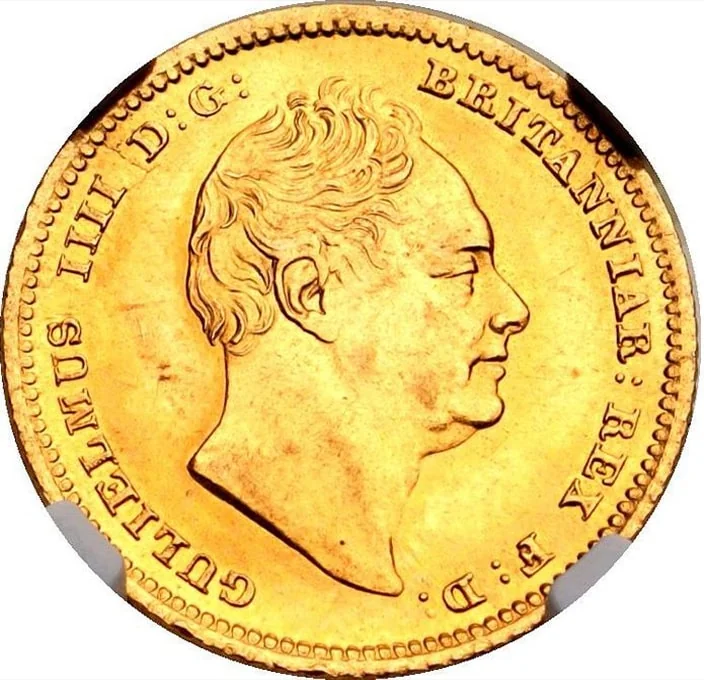
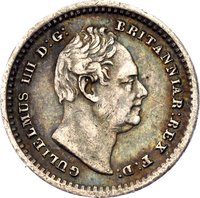
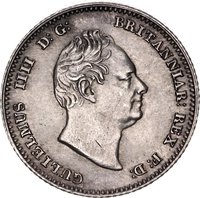
King William IV, bare head right, legend surrounding.
Inscription:
GULIELMUS IIII D:G: BRITTANIAR: REX: F:D:
Translation:
William IV by the Grace of God King of the Britains Defender of the Faith
Script: Latin
Language: Latin
Engraver: William Wyon
Reverse
Description:
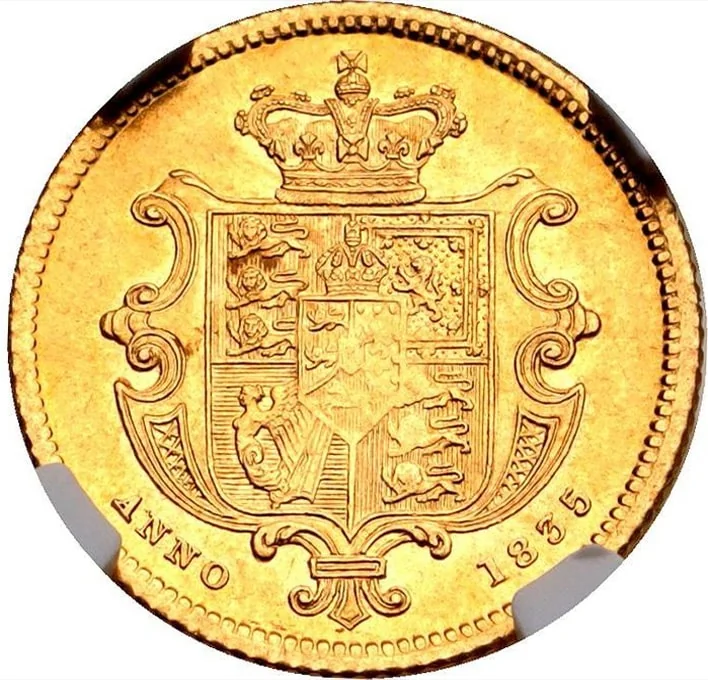
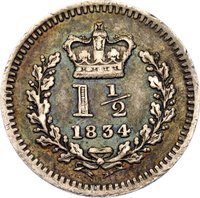
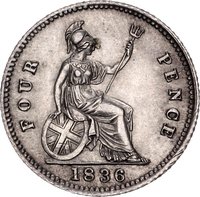
Shield with crown and mantle, legend and date beneath.
Inscription:
ANNO 1836
Script: Latin
Edge
Milled
Mints
| Name | Mark |
|---|---|
| Royal Mint (Tower Hill) | — |
Mintings
| Year | Mint Mark | Mintage | Quality | Collection |
|---|---|---|---|---|
| 1835 | — | 772,500 | ||
| 1836 | — | 146,800 | ||
| 1837 | — | 160,200 |
Historical background
In 1835, the United Kingdom operated under a bimetallic system, legally defined by the great recoinage of 1816. This established the gold sovereign as the principal standard unit of value, with silver officially relegated to a "token" coinage. While gold coins circulated at their intrinsic metal value, silver coins were deliberately struck with a lower silver content than their face value, preventing them from being melted down for profit and ensuring they remained in circulation for everyday transactions. This system, however, created a complex hierarchy of money, as the vast majority of commercial dealings were conducted not with coin but with a proliferation of private banknotes issued by hundreds of country banks across England, Wales, and Scotland.
The period was marked by a cautious recovery following the financial turmoil of the 1825 banking crisis, which had exposed the fragility of the country bank system. In response, the Bank Charter Act of 1833 was a pivotal development, aiming to stabilise the currency. It confirmed the Bank of England's notes as legal tender and, crucially, attempted to centralise control by restricting the issuance of new private banknotes within a 65-mile radius of London. This began a slow process of consolidating note-issue authority with the Bank of England, though provincial and Scottish banks retained their issuance rights for decades to come.
Consequently, the everyday currency experience for Britons in 1835 was one of heterogeneity and some risk. A worker might be paid in Bank of England notes, local banknotes, or a mix of gold and silver coin, each carrying varying degrees of public confidence. The value of a provincial banknote was only as sound as the issuing bank itself, and failures were not uncommon. Thus, while the gold standard provided a theoretical anchor for the economy, the practical monetary landscape remained a decentralised and occasionally unstable patchwork of metal and paper, setting the stage for the more rigid centralisation that would come with the landmark Bank Charter Act of 1844.
The period was marked by a cautious recovery following the financial turmoil of the 1825 banking crisis, which had exposed the fragility of the country bank system. In response, the Bank Charter Act of 1833 was a pivotal development, aiming to stabilise the currency. It confirmed the Bank of England's notes as legal tender and, crucially, attempted to centralise control by restricting the issuance of new private banknotes within a 65-mile radius of London. This began a slow process of consolidating note-issue authority with the Bank of England, though provincial and Scottish banks retained their issuance rights for decades to come.
Consequently, the everyday currency experience for Britons in 1835 was one of heterogeneity and some risk. A worker might be paid in Bank of England notes, local banknotes, or a mix of gold and silver coin, each carrying varying degrees of public confidence. The value of a provincial banknote was only as sound as the issuing bank itself, and failures were not uncommon. Thus, while the gold standard provided a theoretical anchor for the economy, the practical monetary landscape remained a decentralised and occasionally unstable patchwork of metal and paper, setting the stage for the more rigid centralisation that would come with the landmark Bank Charter Act of 1844.
💎 Extremely Rare