

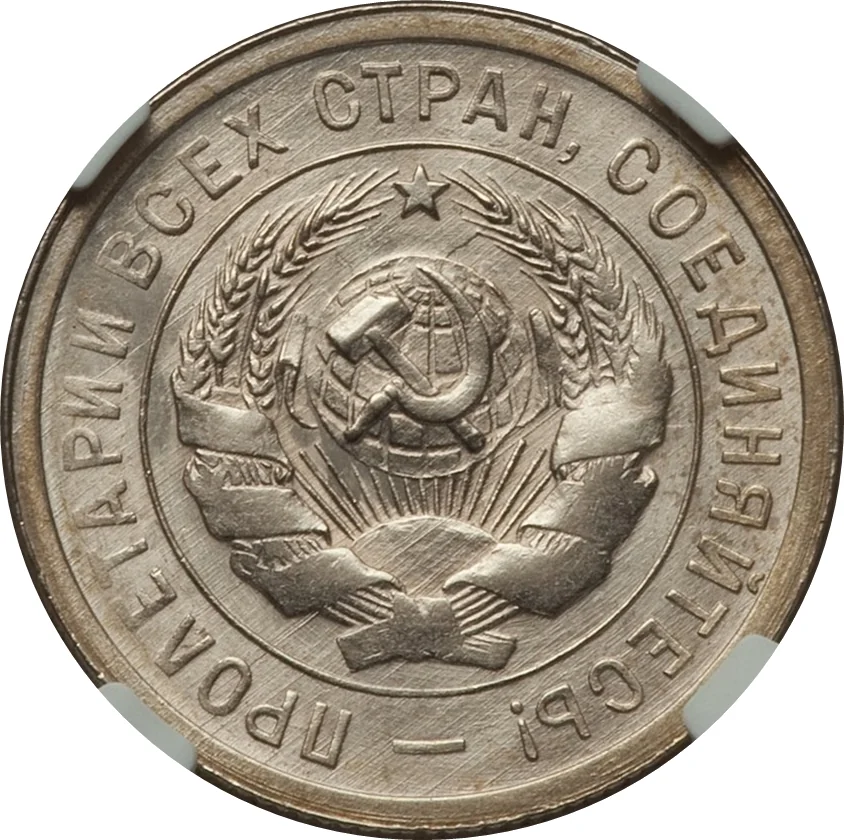
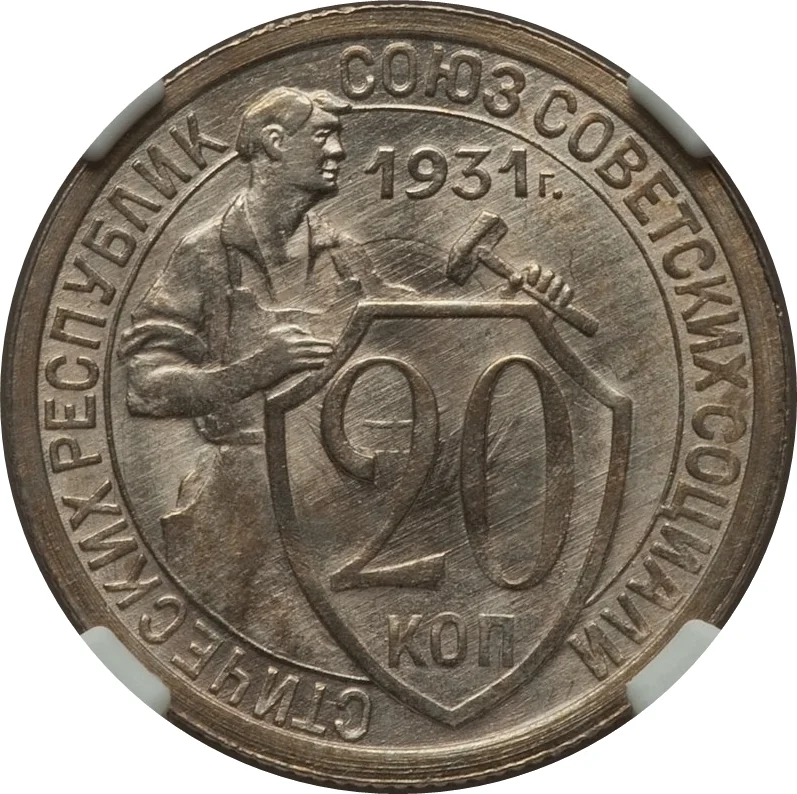
20 Kopecks – Soviet Union
Russia
Context
Years: 1931–1934
Country: Russia 
Issuer: Soviet Union 
Period:
(1922—1991)
Currency:
(1924—1947)
Demonetized: Yes
Total mintage: 471,902,000
Material
Diameter: 21.8 mm
Weight: 3.6 g
Thickness: 1.4 mm
Shape: Round
Composition: Copper-nickel
Technique: Milled
Alignment: Medal alignment
flip
References
Y: #Click to copy to clipboard97
Numista: #4045
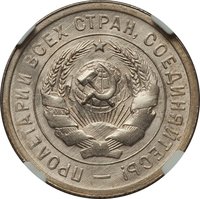
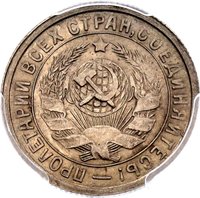
Obverse
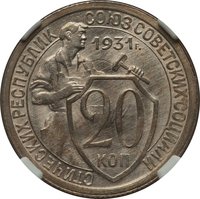
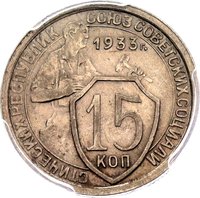
Reverse
Edge
Reeded
Mintings
| Year | Mint Mark | Mintage | Quality | Collection |
|---|---|---|---|---|
| 1931 | — | 82,200,000 | ||
| 1932 | — | 175,350,000 | ||
| 1933 | — | 143,927,000 | ||
| 1934 | — | 70,425,000 |
Historical background
In 1931, the Soviet Union’s currency situation was deeply strained, caught between the immense financial demands of the First Five-Year Plan (1928–1932) and the realities of a collapsing monetary system. The state was pursuing breakneck industrialization and forced collectivization of agriculture, policies funded primarily by printing money. This led to rampant inflation, as the volume of cash in circulation skyrocketed without a corresponding increase in consumer goods, creating severe shortages and a growing gap between official prices and those on the illegal black market.
The ruble itself was essentially non-convertible and played a diminished role in the planned economy, where physical allocation of resources was often more important than financial calculation. The state attempted to manage the crisis through a complex system of multiple currencies and rationing. Crucially, a distinction existed between chervonets (backed theoretically by gold and used for foreign trade) and the regular ruble used domestically, but this did little to stabilize internal finances. Meanwhile, the government issued ration cards for essential goods like bread at low fixed prices for urban workers, while "commercial shops" sold goods at much higher market prices for those with cash, effectively creating a two-tier economy.
This monetary chaos was both a cause and a symptom of the broader social catastrophe unfolding in 1931, including the man-made famine in Ukraine and other grain-producing regions. The financial disorder underscored the failure of early Bolshevik attempts to abolish money altogether and highlighted the regime’s pragmatic, if chaotic, retreat into using currency as an administrative tool despite its ideological ambivalence toward it. The situation would eventually force a major monetary reform in 1935-1937, but in 1931, the Soviet economy was characterized by inflationary pressure, widespread scarcity, and a currency system struggling to function under the weight of state policy.
The ruble itself was essentially non-convertible and played a diminished role in the planned economy, where physical allocation of resources was often more important than financial calculation. The state attempted to manage the crisis through a complex system of multiple currencies and rationing. Crucially, a distinction existed between chervonets (backed theoretically by gold and used for foreign trade) and the regular ruble used domestically, but this did little to stabilize internal finances. Meanwhile, the government issued ration cards for essential goods like bread at low fixed prices for urban workers, while "commercial shops" sold goods at much higher market prices for those with cash, effectively creating a two-tier economy.
This monetary chaos was both a cause and a symptom of the broader social catastrophe unfolding in 1931, including the man-made famine in Ukraine and other grain-producing regions. The financial disorder underscored the failure of early Bolshevik attempts to abolish money altogether and highlighted the regime’s pragmatic, if chaotic, retreat into using currency as an administrative tool despite its ideological ambivalence toward it. The situation would eventually force a major monetary reform in 1935-1937, but in 1931, the Soviet economy was characterized by inflationary pressure, widespread scarcity, and a currency system struggling to function under the weight of state policy.
🌱 Very Common