

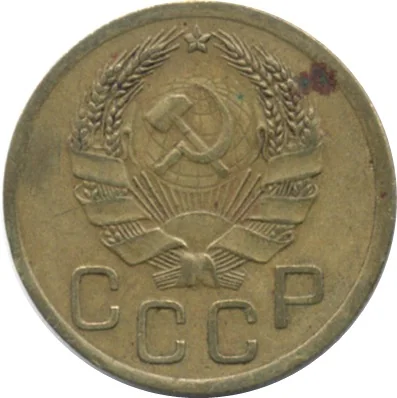
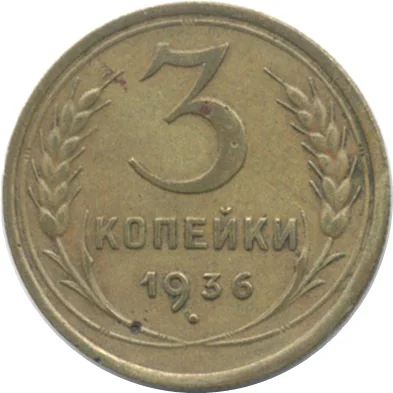
3 kopecks – Soviet Union
Add to wishlist
Russia
Context
Years: 1935–1936
Country: Russia
Issuer: Soviet Union
Period:
(1922—1991)
Currency:
(1924—1947)
Demonetized: Yes
Total mintage: 62,757,000
Material
Diameter: 22 mm
Weight: 3 g
Thickness: 1 mm
Shape: Round
Composition: Aluminium bronze
Magnetic: No
Technique: Milled
Alignment: Medal alignment
flip
References
Y: #
Numista: #4043
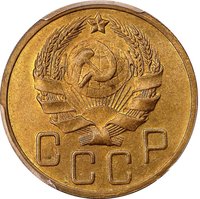
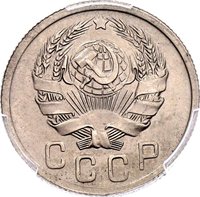
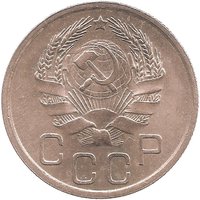
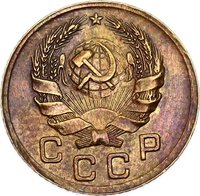
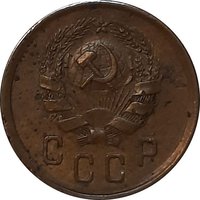
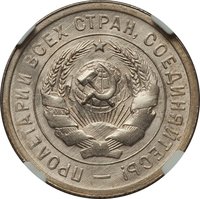
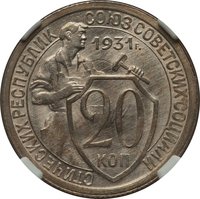
Obverse
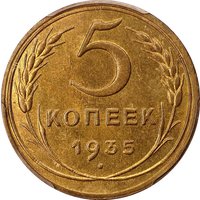
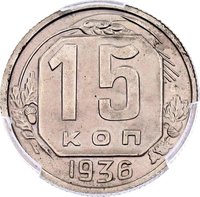
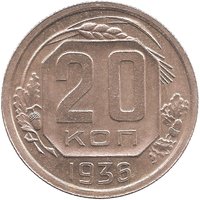
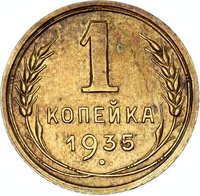
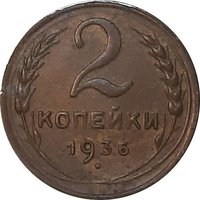
Reverse
Edge
Reeded
Categories
| Symbol> Hammer and sickle |
Mintings
| Year | Mint Mark | Mintage | Quality | Collection |
|---|---|---|---|---|
| 1935 | — | — | ||
| 1936 | — | 62,757,000 |
Historical background
In 1935, the Soviet Union’s currency situation was defined by the culmination of the First Five-Year Plan (1928-1932) and the ongoing Second Five-Year Plan. The state had aggressively pursued rapid industrialization and forced collectivization of agriculture, policies financed through heavy monetary emission. This led to significant inflationary pressures, a severe shortage of consumer goods, and a thriving black market where goods traded at prices far above official state rates. The ruble, while stable in official accounting, had severely eroded purchasing power for the average citizen, creating a stark divide between the controlled economy and material reality.
To address this crisis, the government implemented a crucial monetary reform in 1935. This was not a redenomination but a critical adjustment of the ruble's exchange rate with foreign currency, pegging it to the French franc (1 franc = 3 rubles) instead of the previous theoretical gold standard. More importantly, the state used this reform to abolish the previously separate "Torgsin" hard currency stores, where citizens could use valuables or foreign currency to buy scarce goods. This move was designed to centralize all foreign exchange earnings into the state treasury and strengthen control over the financial system, further restricting the population's access to quality goods.
Overall, the 1935 currency context reflects a system in transition, still grappling with the inflationary consequences of breakneck economic transformation. The reforms of that year aimed to stabilize foreign trade accounting and tighten the state's monopoly over all financial flows. For ordinary Soviets, however, the primary economic experience remained one of scarcity, rationing (though the rationing system was officially abolished in 1935), and a dual economy where access to necessities was often secured outside the official wage and price structure.
To address this crisis, the government implemented a crucial monetary reform in 1935. This was not a redenomination but a critical adjustment of the ruble's exchange rate with foreign currency, pegging it to the French franc (1 franc = 3 rubles) instead of the previous theoretical gold standard. More importantly, the state used this reform to abolish the previously separate "Torgsin" hard currency stores, where citizens could use valuables or foreign currency to buy scarce goods. This move was designed to centralize all foreign exchange earnings into the state treasury and strengthen control over the financial system, further restricting the population's access to quality goods.
Overall, the 1935 currency context reflects a system in transition, still grappling with the inflationary consequences of breakneck economic transformation. The reforms of that year aimed to stabilize foreign trade accounting and tighten the state's monopoly over all financial flows. For ordinary Soviets, however, the primary economic experience remained one of scarcity, rationing (though the rationing system was officially abolished in 1935), and a dual economy where access to necessities was often secured outside the official wage and price structure.
🌱 Common