

20 Mark – Anhalt-Dessau
Germany
Context
Year: 1904
Country: Germany 
Issuer: Anhalt-Dessau
Ruler: Frederick II
Currency:
Demonetization: 16 August 1938
Total mintage: 25,200
Material
References
KM: #Click to copy to clipboard28
Numista: #40363
Value
Bullion value: $1188.99
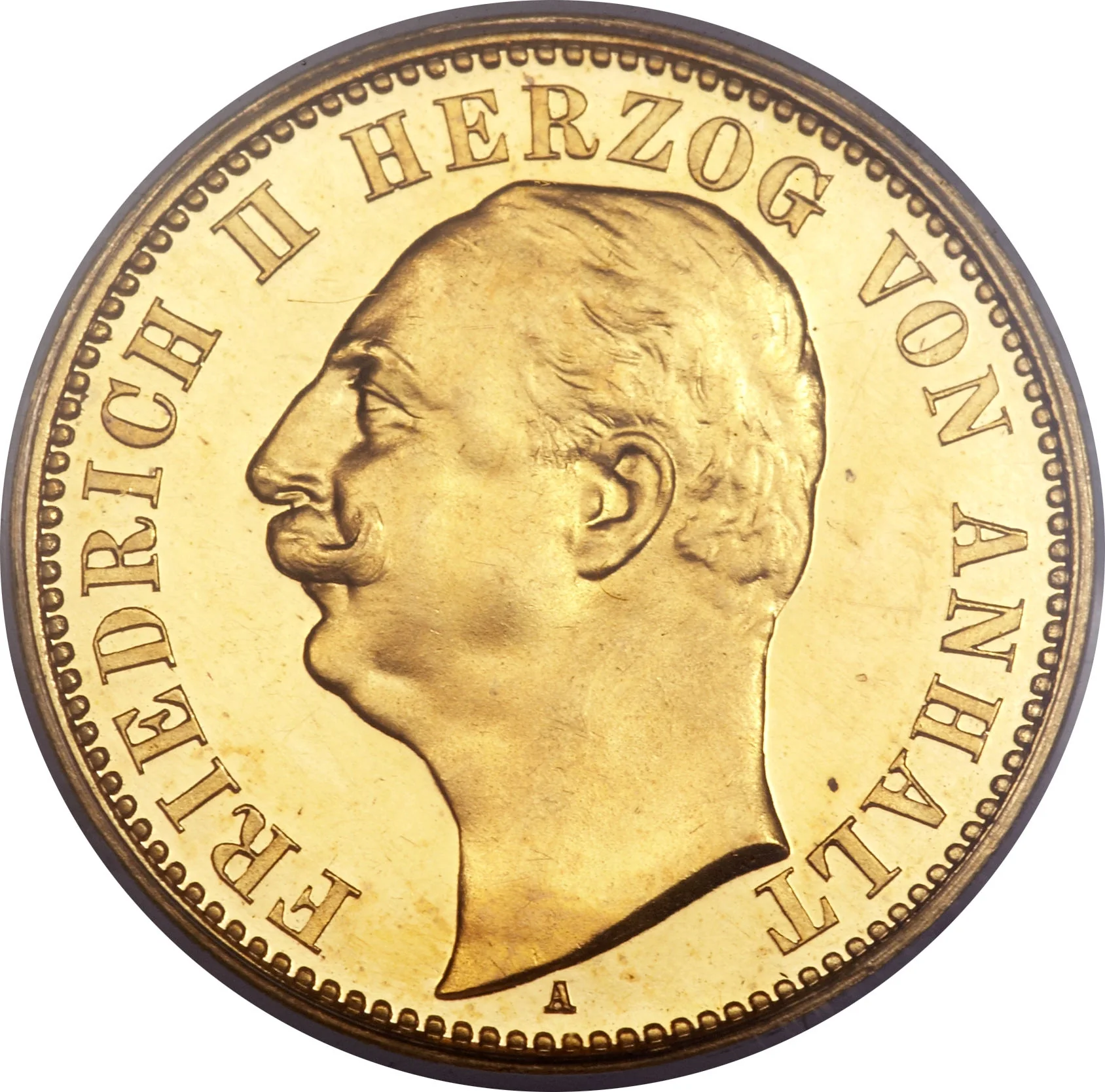
Obverse
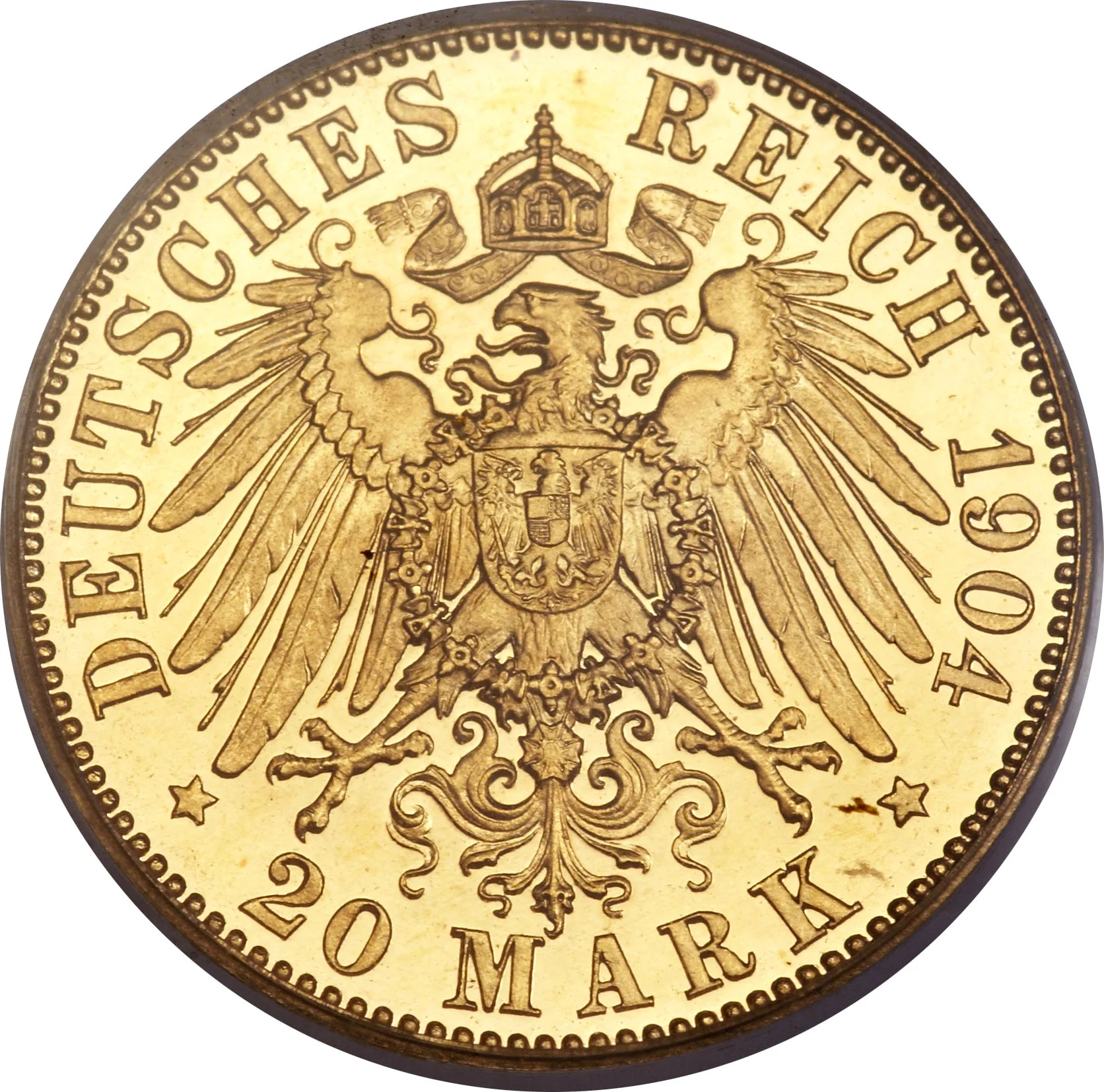
Reverse
Description:
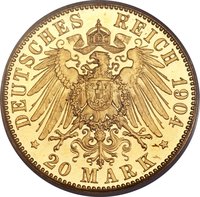
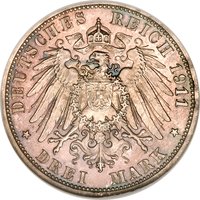
Top: date inscription. Center: crowned Imperial German eagle. Bottom: denomination inscription.
Inscription:
* DEUTSCHES REICH 1904 *
20 MARK
20 MARK
Script: Latin
Edge
Mints
| Name | Mark |
|---|---|
| Berlin | A |
Historical background
In 1904, the currency situation in the Duchy of Anhalt-Dessau was fully integrated within the unified monetary system of the German Empire, established in 1871 following unification. The empire had successfully replaced a confusing array of regional currencies with a single, stable national currency: the Goldmark. This Reichsmark, backed by Germany's gold standard, was the sole legal tender throughout the empire, including in Anhalt-Dessau. Consequently, the duchy no longer issued its own independent coinage for everyday use, and its earlier thalers and minor coins had been largely withdrawn from circulation.
However, Anhalt-Dessau, like other German federal states, retained the limited right of Münzhoheit (coinage prerogative). This privilege allowed it to strike commemorative and ceremonial coins, primarily in precious metals like silver and gold, which held legal tender status alongside the imperial coinage. These issues, such as the 2, 3, and 5-mark silver coins bearing the portrait of Duke Friedrich I, were symbolic of the duchy's historical identity and autonomy within the federal structure, but they circulated alongside and were pegged to the value of the imperial currency.
Therefore, the background for 1904 is one of stability and imperial uniformity. The economy of Anhalt-Dessau operated seamlessly within the larger German economic sphere, benefiting from the credibility and widespread acceptance of the Goldmark. The local currency "situation" was essentially non-existent as a point of practical concern, with any ducal coinage serving a purely numismatic or representational function rather than reflecting an independent monetary policy.
However, Anhalt-Dessau, like other German federal states, retained the limited right of Münzhoheit (coinage prerogative). This privilege allowed it to strike commemorative and ceremonial coins, primarily in precious metals like silver and gold, which held legal tender status alongside the imperial coinage. These issues, such as the 2, 3, and 5-mark silver coins bearing the portrait of Duke Friedrich I, were symbolic of the duchy's historical identity and autonomy within the federal structure, but they circulated alongside and were pegged to the value of the imperial currency.
Therefore, the background for 1904 is one of stability and imperial uniformity. The economy of Anhalt-Dessau operated seamlessly within the larger German economic sphere, benefiting from the credibility and widespread acceptance of the Goldmark. The local currency "situation" was essentially non-existent as a point of practical concern, with any ducal coinage serving a purely numismatic or representational function rather than reflecting an independent monetary policy.
✨ Legendary