

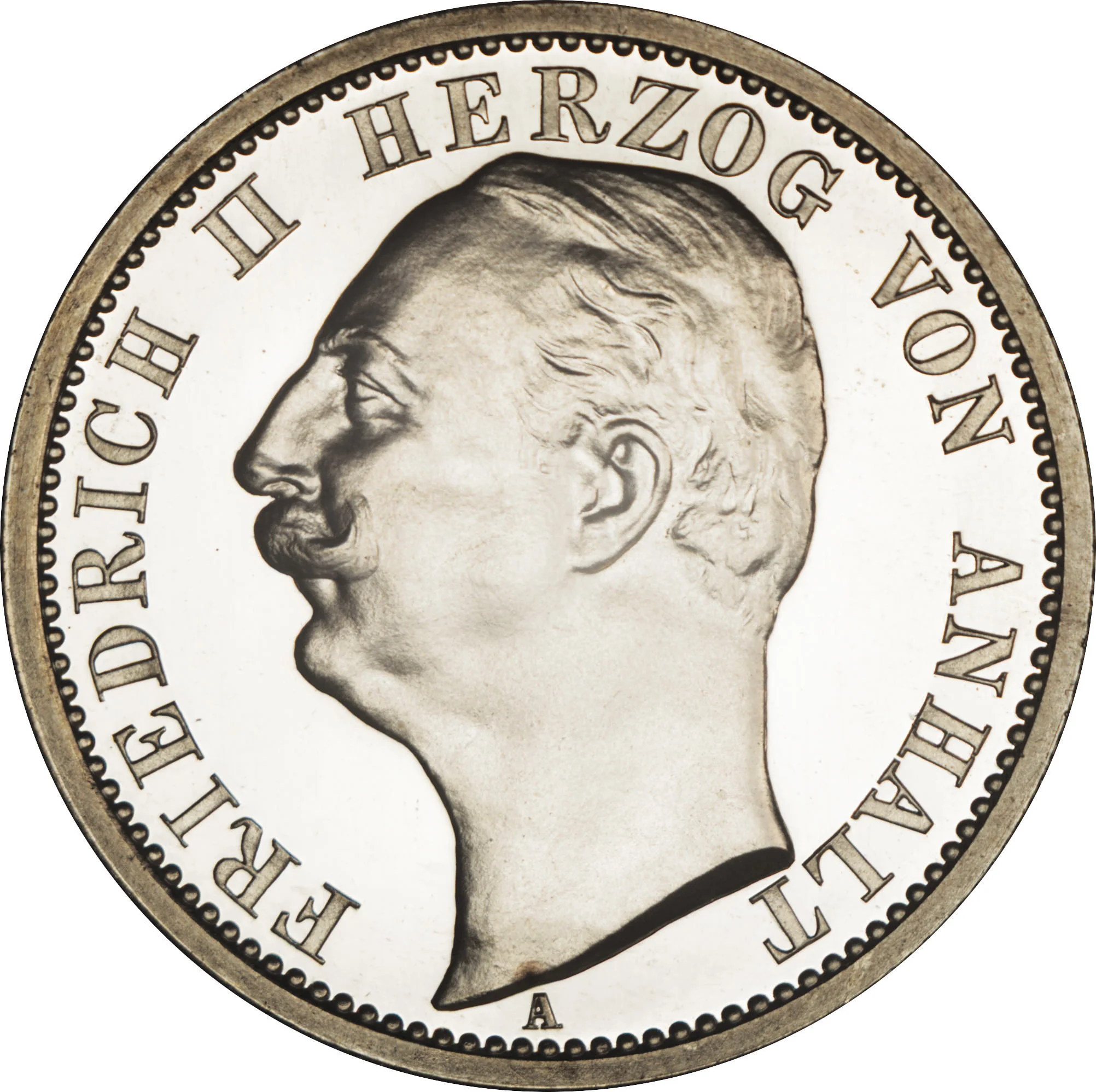
2 marks – Anhalt-Dessau
Add to wishlist
Germany
Context
Years: 1901–1904
Country: Germany
Issuer: Anhalt-Dessau
Ruler: Frederick II
Currency:
Demonetized: Yes
Total mintage: 50,150
Material
References
KM: #
Numista: #30795
Value
Bullion value: $25.45
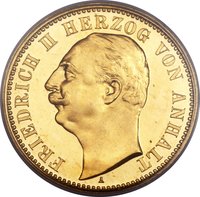
Obverse
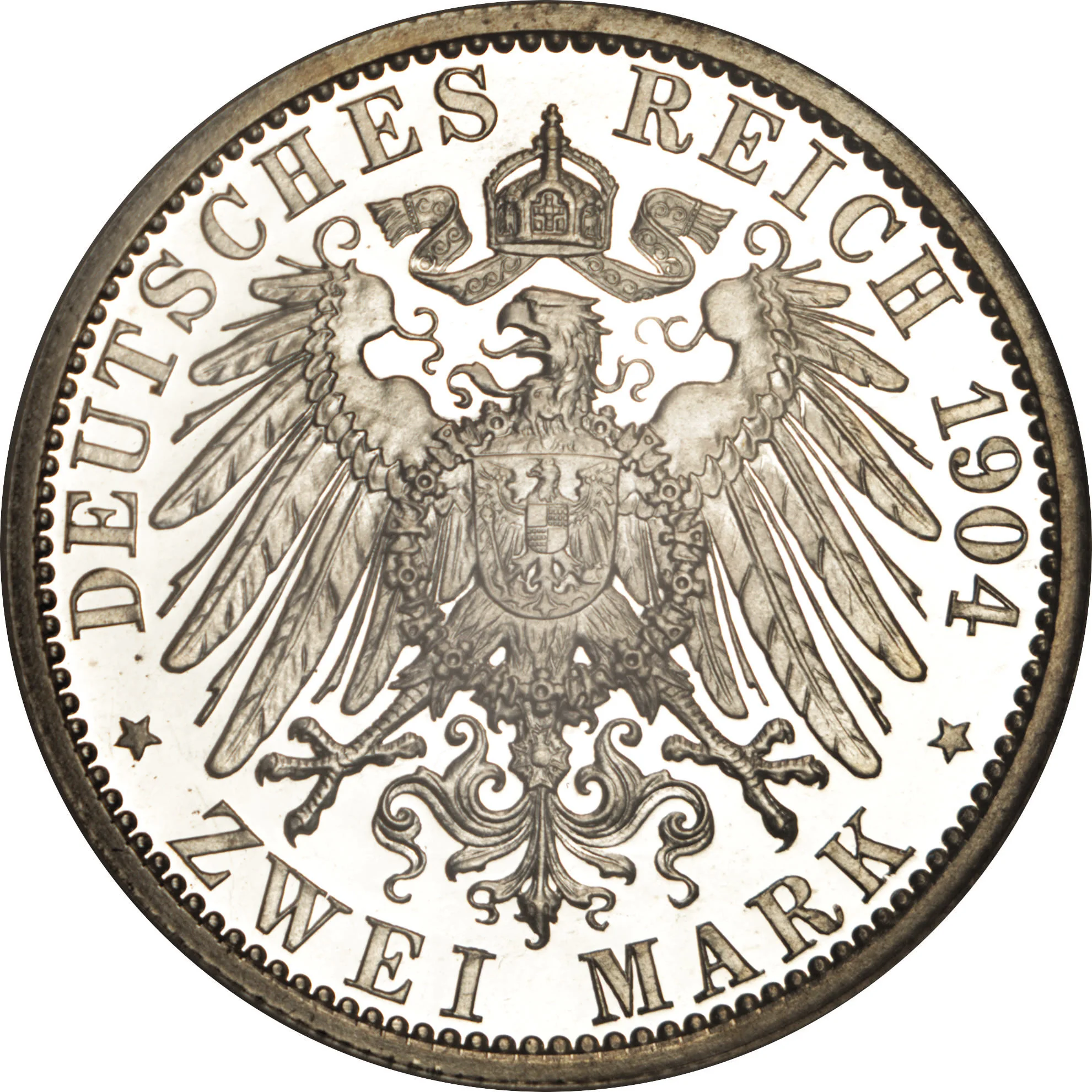
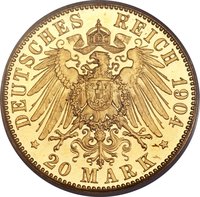
Reverse
Description:
Top: date inscription. Center: crowned Imperial German eagle. Bottom: denomination inscription.
Inscription:
* DEUTSCHES REICH 1904 *
ZWEI MARK
ZWEI MARK
Script: Latin
Edge
Reeded.
Mints
| Name | Mark |
|---|---|
| Berlin | A |
Historical background
In 1901, the currency situation in the Duchy of Anhalt-Dessau, like in all constituent states of the German Empire, was governed by the uniform national laws established at unification in 1871. The era of disparate regional coinages and multiple currency standards had ended. The official and exclusive legal tender was the German Goldmark, a currency defined by a fixed gold standard (0.358423 grams of fine gold per Mark) and managed by the Reichsbank in Berlin. This provided Anhalt-Dessau with monetary stability and seamless integration into the wider national economy.
While the Duchy itself no longer issued its own independent currency, it retained a limited right of coinage within the imperial framework. The Anhalt mint in Dessau (marked with the letter "A") occasionally struck small-denomination, low-value coins in copper and nickel (like the 2 and 5 Pfennig pieces) for local use, as well as commemorative issues. However, these were not sovereign currencies but rather subsidiary coins of the unified Reich, their value and metallic content strictly dictated by federal law. High-value gold and silver coins in circulation were overwhelmingly imperial issues.
Thus, the 1901 monetary background in Anhalt-Dessau was one of consolidated stability. The local economy operated on a sound, gold-backed national currency, which facilitated trade, investment, and financial predictability. Any discussion of its "currency situation" is therefore essentially a study of its participation in the successful German monetary union, with only a minor numismatic footnote relating to its limited minting of subsidiary coinage bearing its own ducal insignia.
While the Duchy itself no longer issued its own independent currency, it retained a limited right of coinage within the imperial framework. The Anhalt mint in Dessau (marked with the letter "A") occasionally struck small-denomination, low-value coins in copper and nickel (like the 2 and 5 Pfennig pieces) for local use, as well as commemorative issues. However, these were not sovereign currencies but rather subsidiary coins of the unified Reich, their value and metallic content strictly dictated by federal law. High-value gold and silver coins in circulation were overwhelmingly imperial issues.
Thus, the 1901 monetary background in Anhalt-Dessau was one of consolidated stability. The local economy operated on a sound, gold-backed national currency, which facilitated trade, investment, and financial predictability. Any discussion of its "currency situation" is therefore essentially a study of its participation in the successful German monetary union, with only a minor numismatic footnote relating to its limited minting of subsidiary coinage bearing its own ducal insignia.
💎 Extremely Rare