

1 Pound – Egypt
Non-circulating coins
Commemoration: Centennial of the Faculty of Law - Cairo University
Egypt
Context
Year: 1980
Islamic (Hijri) Year: 1400
Issuer: Egypt 
Period:
(since 1971)
Currency:
(since 1916)
Total mintage: 2,000
Material
References
KM: #Click to copy to clipboard516
Numista: #403410
Value
Exchange value: 1 EGP
Bullion value: $1167.11
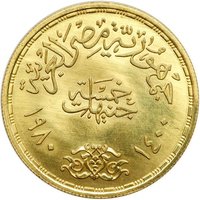
Obverse
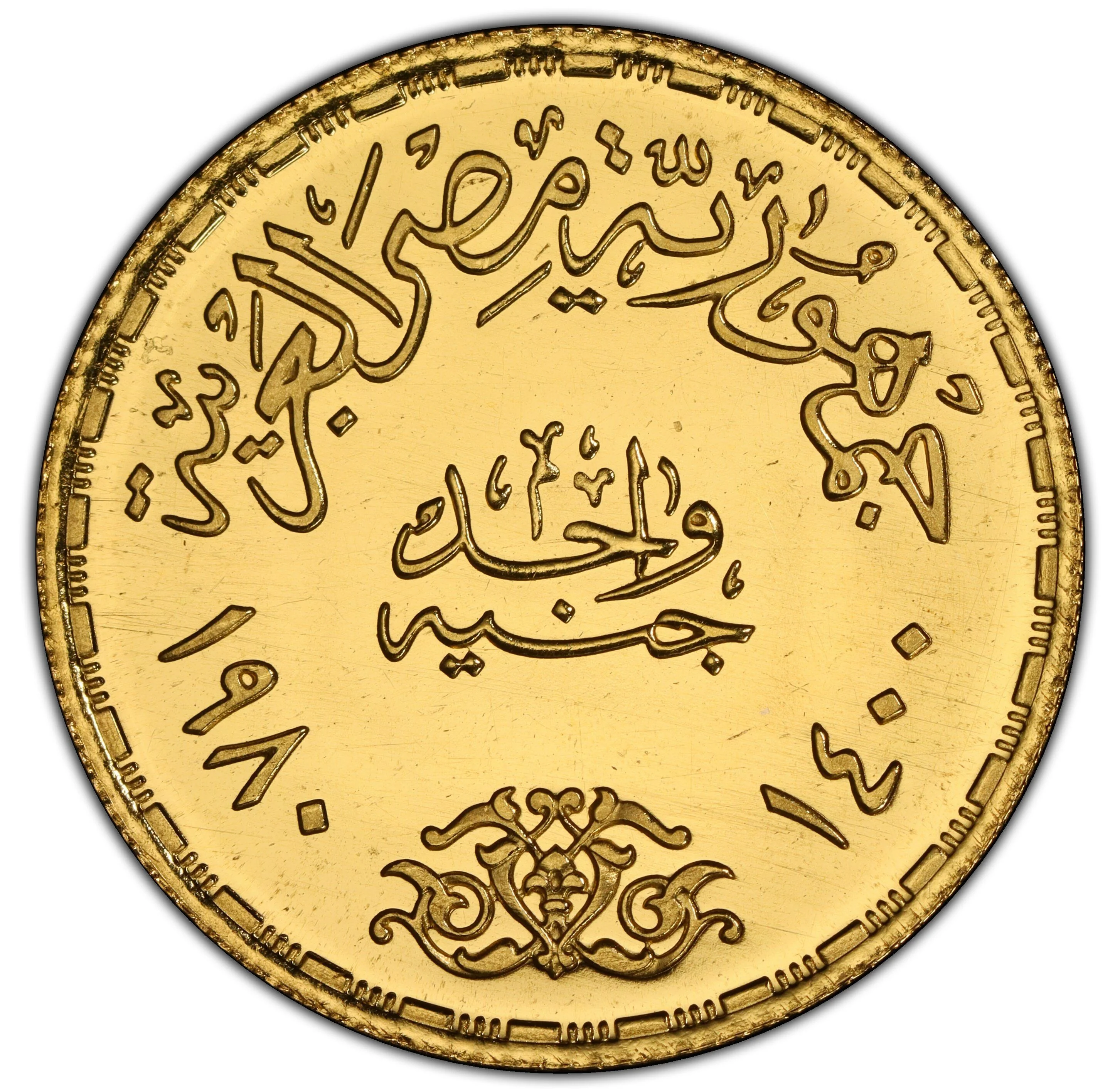
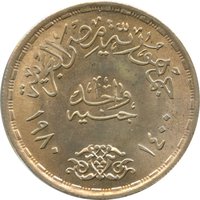
Description:
[Country name] ([Dates])
Inscription:
جمهورية مصر العربية
واحد جنيه
١٤٠٠ـ١٩٨٠
واحد جنيه
١٤٠٠ـ١٩٨٠
Translation:
Arab Republic of Egypt
One Pound
1400-1980
One Pound
1400-1980
Script: Arabic (naskh)
Language: Arabic
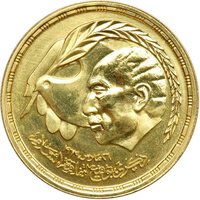
Reverse
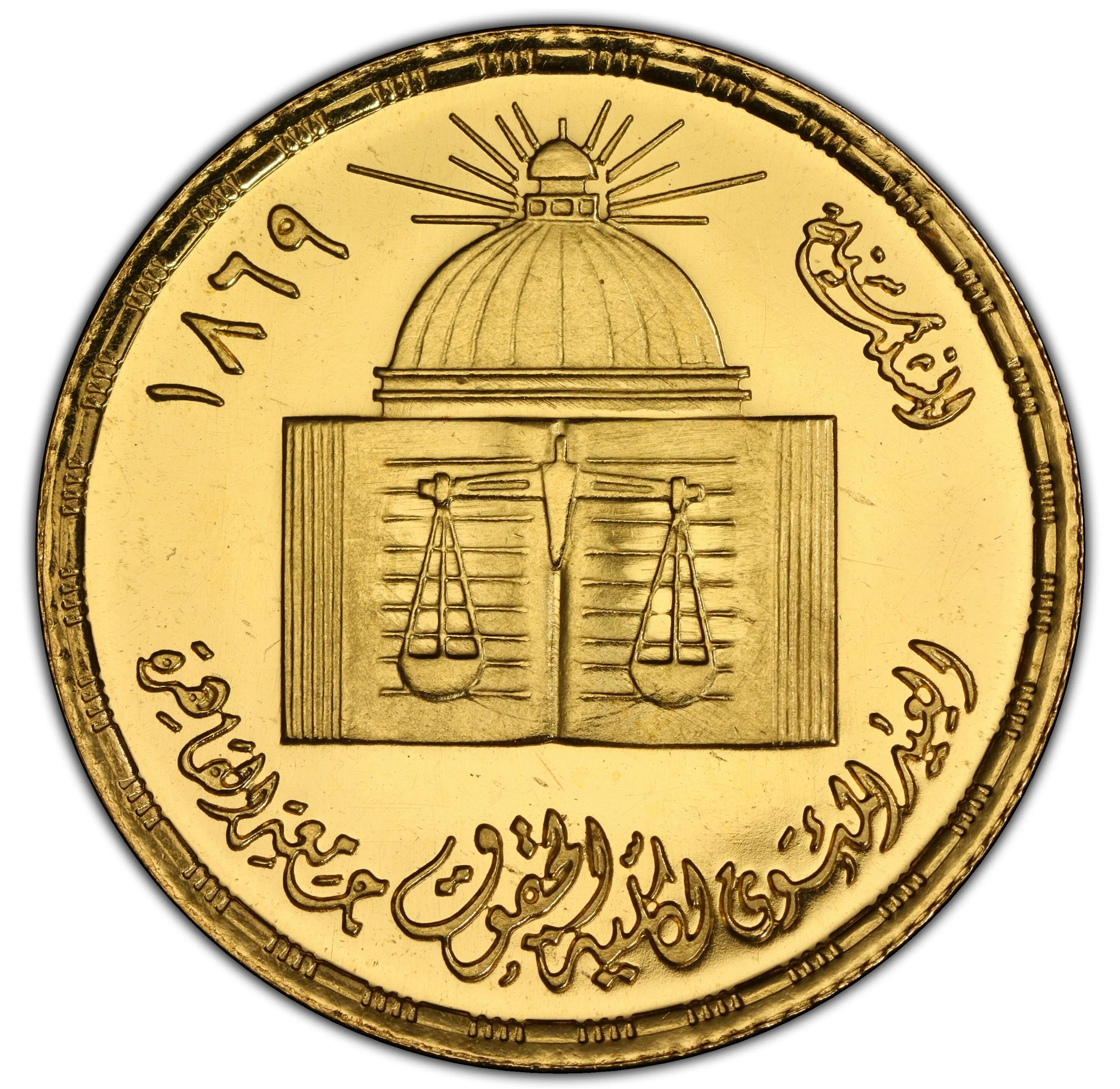
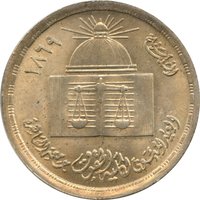
Description:
Cairo University Faculty of Law
Inscription:
العبد المئوى لكلية الحقوق جامعة القاهرة
Translation:
The humble servant of the Faculty of Law, Cairo University.
Script: Arabic (naskh)
Language: Arabic
Edge
Reeded
Categories
| Education |
Mints
| Name | Mark |
|---|---|
| Egyptian Mint Authority | — |
Mintings
| Year | Mint Mark | Mintage | Quality | Collection |
|---|---|---|---|---|
| 1980 | — | 2,000 | ||
| 1980 | — | — | Proof |
Historical background
By 1980, Egypt's currency situation was characterized by a complex and strained duality. The country operated under a multi-tiered exchange rate system, a legacy of the 1970s Infitah (economic opening) policies. An official fixed rate, heavily overvalued and used for government transactions and essential imports, coexisted with a more realistic "parallel" or black-market rate. This disconnect created significant economic distortions, encouraging capital flight, fostering a lucrative black market for foreign currency, and masking the true cost of imports, thereby burdening state finances.
The root causes of this instability were deeply embedded in Egypt's macroeconomic conditions. The government maintained extensive subsidies on basic goods and a large public sector, leading to chronic budget deficits. These were financed primarily by borrowing from the domestic banking system, which fueled high inflation. Furthermore, while revenues from oil exports, Suez Canal tolls, and remittances from workers abroad provided crucial foreign exchange, they proved insufficient to meet the soaring demand for imports and service the country's growing external debt, putting persistent downward pressure on the Egyptian pound.
Consequently, the currency regime of 1980 was unsustainable. The gap between the official and parallel market rates continued to widen, undermining government credibility and creating bottlenecks for the private sector, which often struggled to access foreign currency at the official rate. This environment signaled an urgent need for reform, setting the stage for the gradual but painful economic adjustments and eventual currency devaluations that would be pursued under international guidance in the years to follow.
The root causes of this instability were deeply embedded in Egypt's macroeconomic conditions. The government maintained extensive subsidies on basic goods and a large public sector, leading to chronic budget deficits. These were financed primarily by borrowing from the domestic banking system, which fueled high inflation. Furthermore, while revenues from oil exports, Suez Canal tolls, and remittances from workers abroad provided crucial foreign exchange, they proved insufficient to meet the soaring demand for imports and service the country's growing external debt, putting persistent downward pressure on the Egyptian pound.
Consequently, the currency regime of 1980 was unsustainable. The gap between the official and parallel market rates continued to widen, undermining government credibility and creating bottlenecks for the private sector, which often struggled to access foreign currency at the official rate. This environment signaled an urgent need for reform, setting the stage for the gradual but painful economic adjustments and eventual currency devaluations that would be pursued under international guidance in the years to follow.
✨ Legendary