

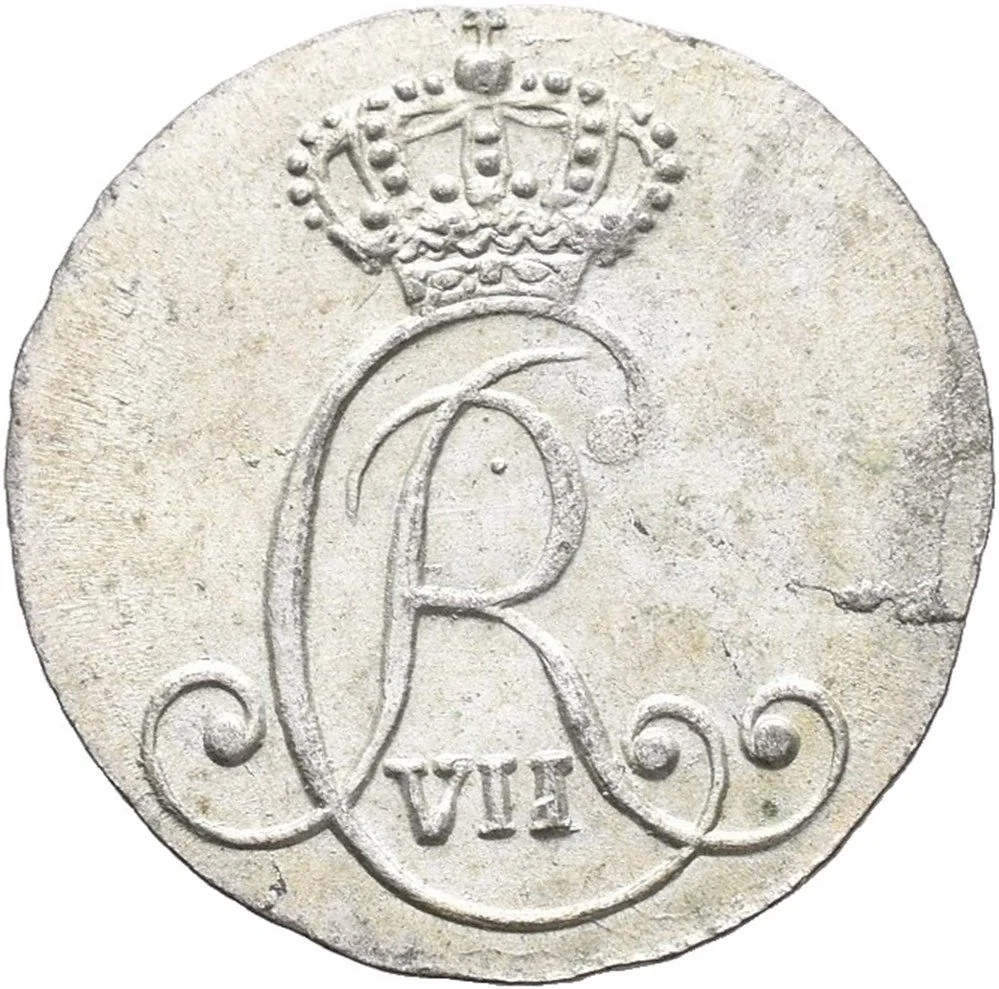
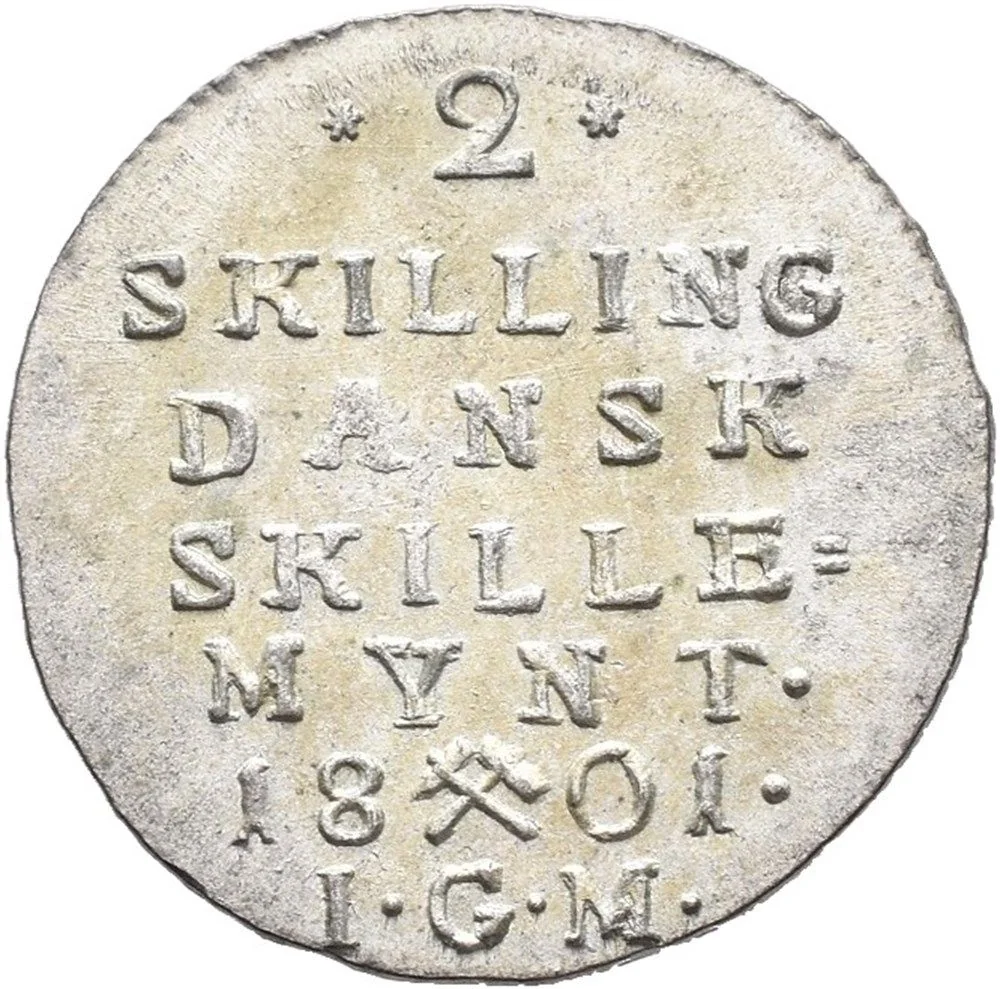
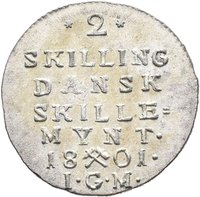
2 Skilling – Norway
Norway
Context
Years: 1800–1807
Issuer: Norway 
Ruler: Christian VII
Currency:
(1746—1814)
Demonetized: Yes
Total mintage: 13,523,000
Material
References
KM: #Click to copy to clipboard270
Numista: #40310
Obverse
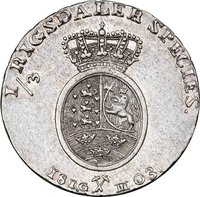
Reverse
Edge
Smooth, very thin
Mints
| Name | Mark |
|---|---|
| Norwegian Mint | — |
Mintings
| Year | Mint Mark | Mintage | Quality | Collection |
|---|---|---|---|---|
| 1800 | — | 2,419,200 | ||
| 1801 | — | 1,108,800 | ||
| 1802 | — | 2,853,600 | ||
| 1803 | — | — | ||
| 1804 | — | — | ||
| 1805 | — | 3,634,000 | ||
| 1807 | — | 3,507,400 |
Historical background
In the early 1800s, Norway found itself in a complex and unstable currency situation, a direct consequence of its changing political status. Following the Treaty of Kiel in 1814, Norway entered a personal union with Sweden but retained its own independent institutions, including the Bank of Norway (Norges Bank), founded in 1816. However, the preceding decades of war, blockade, and economic disruption had left the monetary system in disarray. The country was plagued by a severe shortage of specie (coin), and a confusing multitude of currencies—including Danish rigsdaler, Swedish riksdaler, and various foreign coins—circulated alongside a flood of depreciated paper money issued by the previous Danish administration.
Recognizing the need for stability, the newly established Norwegian Parliament (Stortinget) took decisive action. In 1816, it passed a law introducing a new national currency, the speciedaler, divided into 120 skilling. Crucially, this new daler was intended to be on a silver standard, meaning its value was directly tied to a fixed quantity of silver to ensure its worth and inspire public confidence. Norges Bank was given the sole right to issue banknotes, which were declared legal tender and were, in theory, convertible to silver. This was a bold step toward creating a modern, unified monetary system for the young nation.
Despite these formal reforms, the initial decades were marked by significant practical challenges. Public trust in paper money was low due to past experiences with devaluation, and Norges Bank struggled with insufficient silver reserves to fully back its notes. Consequently, the convertibility of notes to silver was periodically suspended, and the currency's value fluctuated. It was not until the 1840s, after a period of fiscal discipline and the accumulation of adequate silver reserves, that Norway successfully established a stable and fully functional silver standard, finally realizing the monetary vision set out at the beginning of the century.
Recognizing the need for stability, the newly established Norwegian Parliament (Stortinget) took decisive action. In 1816, it passed a law introducing a new national currency, the speciedaler, divided into 120 skilling. Crucially, this new daler was intended to be on a silver standard, meaning its value was directly tied to a fixed quantity of silver to ensure its worth and inspire public confidence. Norges Bank was given the sole right to issue banknotes, which were declared legal tender and were, in theory, convertible to silver. This was a bold step toward creating a modern, unified monetary system for the young nation.
Despite these formal reforms, the initial decades were marked by significant practical challenges. Public trust in paper money was low due to past experiences with devaluation, and Norges Bank struggled with insufficient silver reserves to fully back its notes. Consequently, the convertibility of notes to silver was periodically suspended, and the currency's value fluctuated. It was not until the 1840s, after a period of fiscal discipline and the accumulation of adequate silver reserves, that Norway successfully established a stable and fully functional silver standard, finally realizing the monetary vision set out at the beginning of the century.
🌟 Limited