

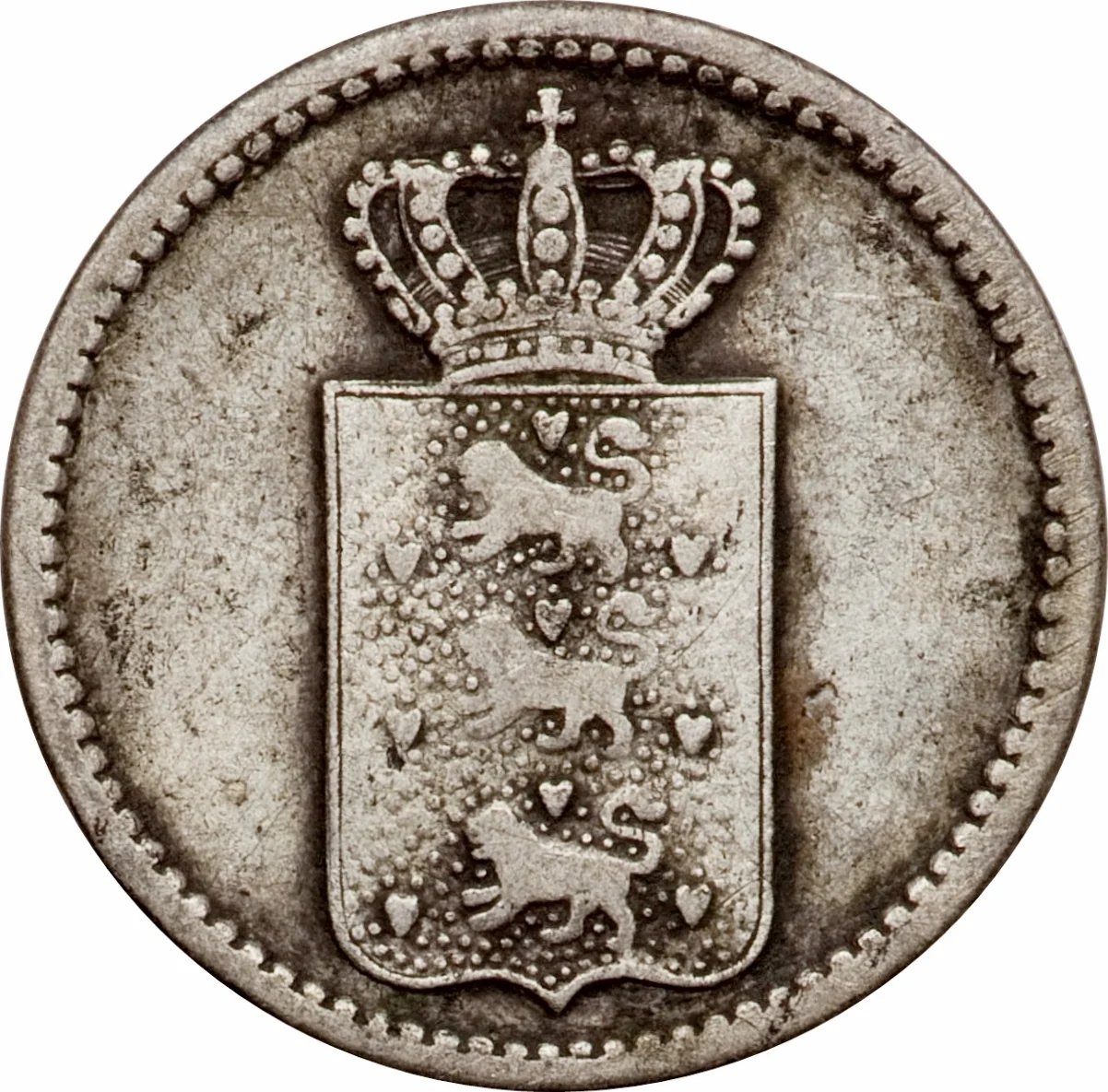
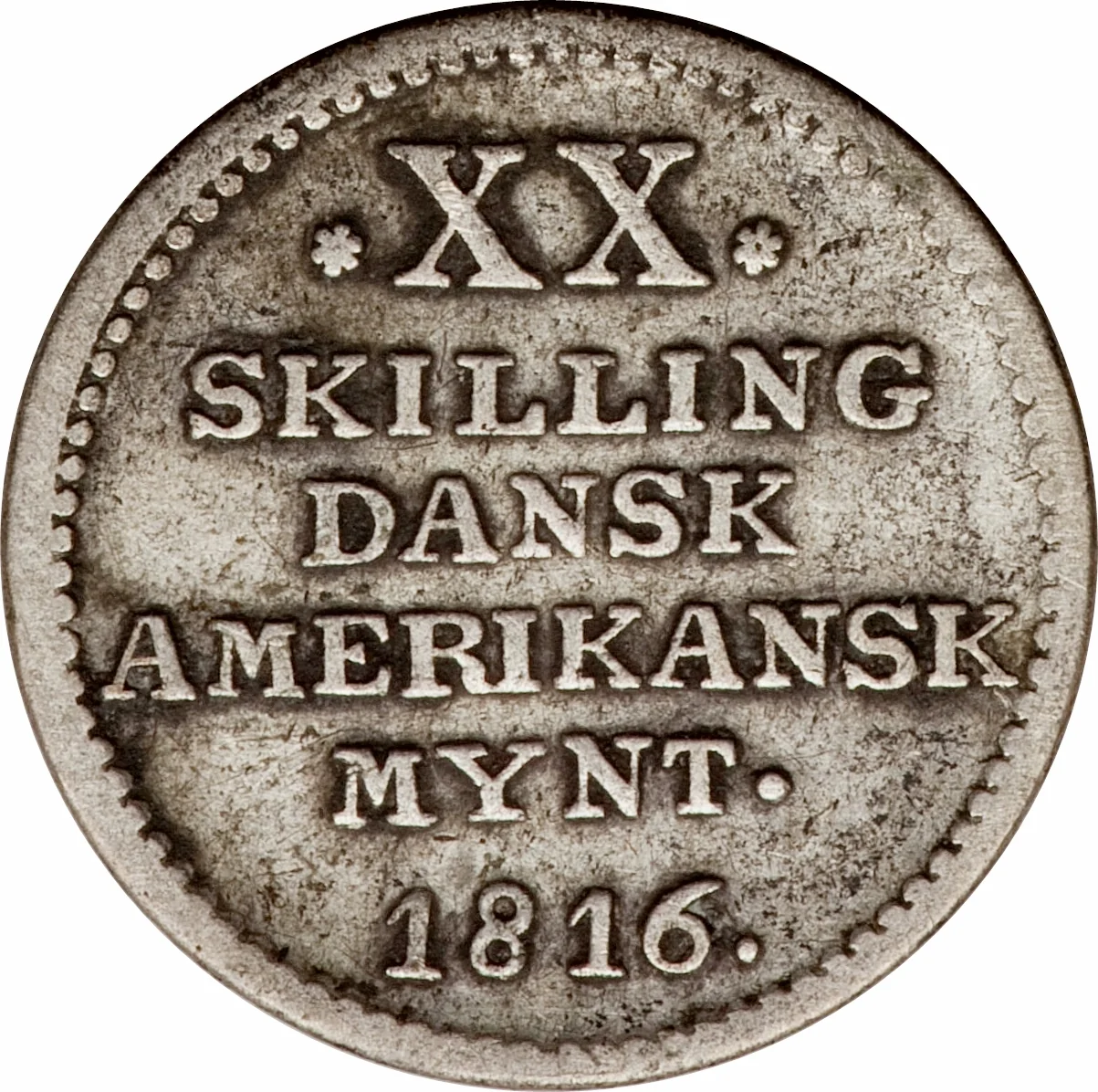
20 Skilling – Danish West Indies
Context
Year: 1816
Issuer: Danish West Indies
Ruler: Frederick VI
Currency:
(1740—1849)
Demonetized: Yes
Total mintage: 20,000
Material
References
KM: #Click to copy to clipboard15
Numista: #40059
Value
Bullion value: $8.57
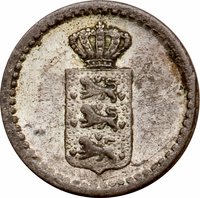
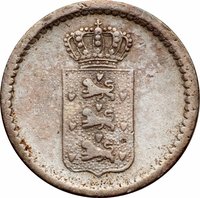
Obverse
Description:
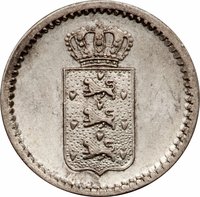
Arms with a crown.
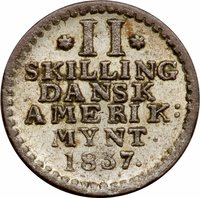
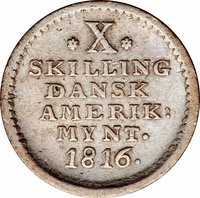
Reverse
Edge
Engrailed
Mintings
| Year | Mint Mark | Mintage | Quality | Collection |
|---|---|---|---|---|
| 1816 | — | 20,000 |
Historical background
In 1816, the currency situation in the Danish West Indies (present-day U.S. Virgin Islands) was complex and problematic, characterized by a chaotic multiplicity of circulating coins. The official currency was the Danish rigsdaler, but in practice, the economy of the plantation islands was deeply integrated into broader Caribbean and Atlantic trade networks. Consequently, a wide array of foreign coins circulated freely, most notably Spanish and Mexican silver pesos (pieces of eight), British coins, and Dutch guilders. This created a confusing environment where merchants and planters had to constantly calculate exchange rates, leading to inefficiency and frequent disputes.
The root of this disorder lay in the colony's chronic shortage of official Danish coinage. The islands' primary exports—sugar, cotton, and rum—were traded internationally, and payment often came in the form of the most trusted and abundant regional currency: Spanish silver. The Danish state lacked both the means and the will to flood the colony with sufficient rigsdaler to displace these entrenched foreign coins. As a result, the Spanish dollar effectively served as the de facto standard, with prices and contracts often set in its units, while official accounts were kept in rigsdaler.
Recognizing the debilitating effects of this monetary anarchy on commerce and colonial administration, Danish authorities took decisive action in 1816. They officially demonetized the myriad of foreign coins and introduced a new, unified system anchored by the Dansk Vestindisk rigsdaler (Danish West Indian rigsdaler). This currency was pegged directly and simply to the familiar Spanish dollar at a 1:1 parity, acknowledging economic reality while imposing Danish sovereignty. This reform of 1816 was a crucial step in simplifying transactions and stabilizing the colonial economy, though foreign coins, particularly the silver peso, would remain informally influential for decades to come.
The root of this disorder lay in the colony's chronic shortage of official Danish coinage. The islands' primary exports—sugar, cotton, and rum—were traded internationally, and payment often came in the form of the most trusted and abundant regional currency: Spanish silver. The Danish state lacked both the means and the will to flood the colony with sufficient rigsdaler to displace these entrenched foreign coins. As a result, the Spanish dollar effectively served as the de facto standard, with prices and contracts often set in its units, while official accounts were kept in rigsdaler.
Recognizing the debilitating effects of this monetary anarchy on commerce and colonial administration, Danish authorities took decisive action in 1816. They officially demonetized the myriad of foreign coins and introduced a new, unified system anchored by the Dansk Vestindisk rigsdaler (Danish West Indian rigsdaler). This currency was pegged directly and simply to the familiar Spanish dollar at a 1:1 parity, acknowledging economic reality while imposing Danish sovereignty. This reform of 1816 was a crucial step in simplifying transactions and stabilizing the colonial economy, though foreign coins, particularly the silver peso, would remain informally influential for decades to come.
💎 Extremely Rare