

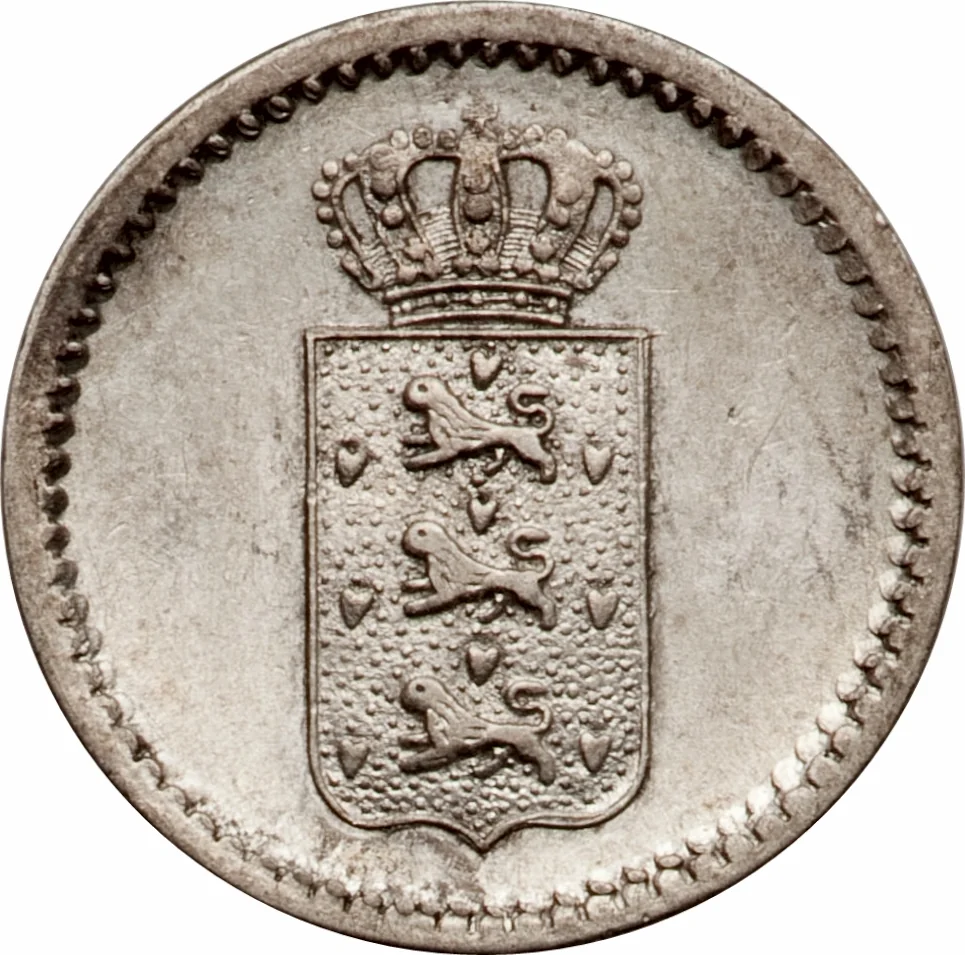
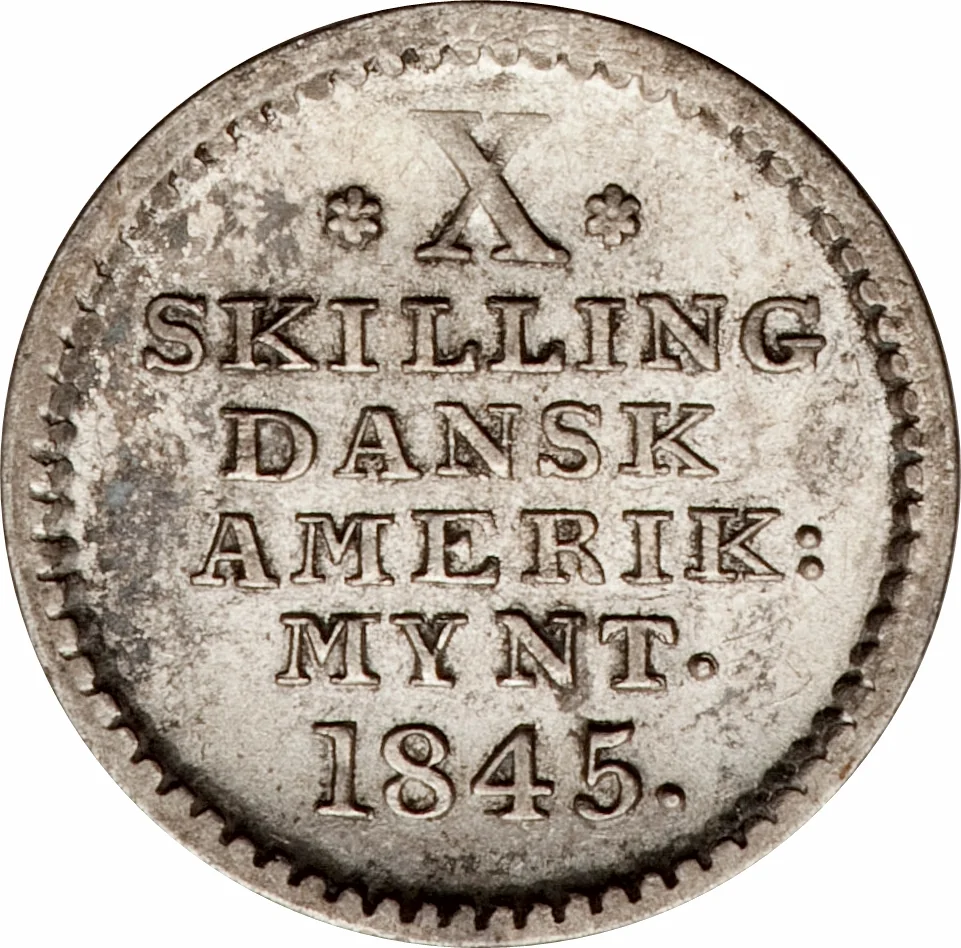
10 Skilling – Danish West Indies
Context
Years: 1840–1847
Issuer: Danish West Indies
Ruler: Christian VIII
Currency:
(1740—1849)
Demonetized: Yes
Total mintage: 309,000
Material
References
KM: #Click to copy to clipboard16
Numista: #29678
Value
Bullion value: $4.29
Obverse
Description:
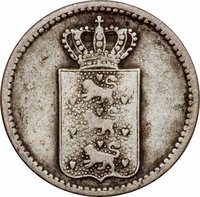
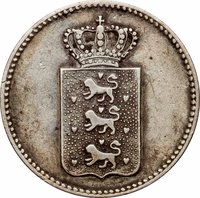
Arms with a crown.
Reverse
Edge
Engrailed
Mintings
| Year | Mint Mark | Mintage | Quality | Collection |
|---|---|---|---|---|
| 1840 | — | 103,000 | ||
| 1845 | — | 97,000 | ||
| 1845 | — | — | Proof | |
| 1847 | — | 109,000 |
Historical background
In the 1840s, the currency situation in the Danish West Indies (present-day U.S. Virgin Islands) was characterized by chronic complexity and instability. The official currency was the Danish rigsdaler, divided into 96 skilling, but it circulated alongside a bewildering array of foreign coins. Spanish and Mexican silver dollars (pieces of eight), British sovereigns, French francs, and Dutch guilders all passed through the ports of Charlotte Amalie and Christiansted due to the islands' central role in regional trade and transit. This created a constant challenge for merchants and planters, who had to navigate fluctuating exchange rates and the varying purity of foreign specie.
The root of this monetary chaos lay in the colony's economic reality. The plantation economy, based on sugar and rum, was in a long period of stagnation and decline, straining the finances of both the colonial government and planters. There was a persistent shortage of official Danish coinage, as the metropolitan government was reluctant to export specie to a financially draining possession. Consequently, the most common and trusted medium for larger transactions became the Spanish dollar, valued for its consistent silver content. Smaller daily transactions, however, were often conducted using a jumble of cut and worn foreign fractional coins, leading to disputes and inefficiency.
Danish authorities made attempts to impose order, officially setting exchange rates for the various foreign coins in relation to the rigsdaler. These proclamations, however, were largely ineffective in practice. The market rates continued to fluctuate based on the supply of coins arriving with ships, and the widespread use of cut and defaced coins further complicated valuations. Thus, by 1840, the currency system was a fragile and unofficial bimetallic standard dominated by foreign silver, reflecting the islands' deeper integration into the Caribbean and Atlantic economic spheres than into the Danish kingdom itself, a situation that would persist for decades.
The root of this monetary chaos lay in the colony's economic reality. The plantation economy, based on sugar and rum, was in a long period of stagnation and decline, straining the finances of both the colonial government and planters. There was a persistent shortage of official Danish coinage, as the metropolitan government was reluctant to export specie to a financially draining possession. Consequently, the most common and trusted medium for larger transactions became the Spanish dollar, valued for its consistent silver content. Smaller daily transactions, however, were often conducted using a jumble of cut and worn foreign fractional coins, leading to disputes and inefficiency.
Danish authorities made attempts to impose order, officially setting exchange rates for the various foreign coins in relation to the rigsdaler. These proclamations, however, were largely ineffective in practice. The market rates continued to fluctuate based on the supply of coins arriving with ships, and the widespread use of cut and defaced coins further complicated valuations. Thus, by 1840, the currency system was a fragile and unofficial bimetallic standard dominated by foreign silver, reflecting the islands' deeper integration into the Caribbean and Atlantic economic spheres than into the Danish kingdom itself, a situation that would persist for decades.
⭐ Rare