

5 dollars – Hong Kong
Add to wishlist
China
Context
Years: 1976–1979
Country: China
Issuer: Hong Kong
Ruler: Elizabeth II
Currency:
(since 1863)
Demonetized: Yes
Total mintage: 52,000,000
Material
References
KM: #
Numista: #3992
Value
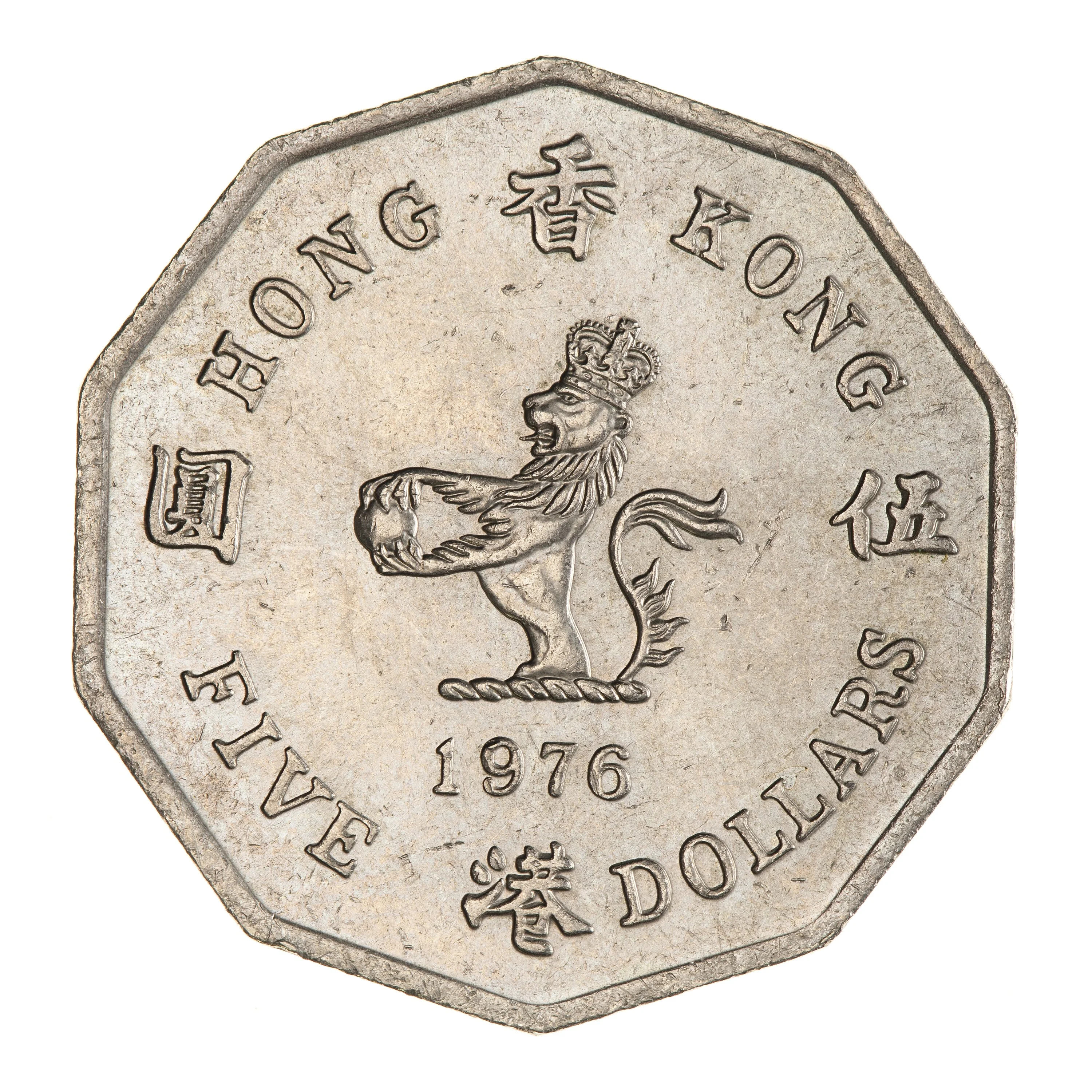
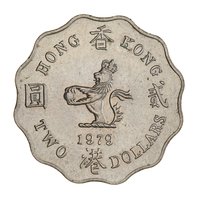
Exchange value: 5 HKD
Obverse
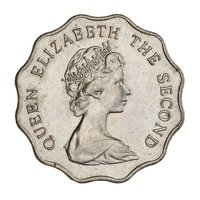
Description:
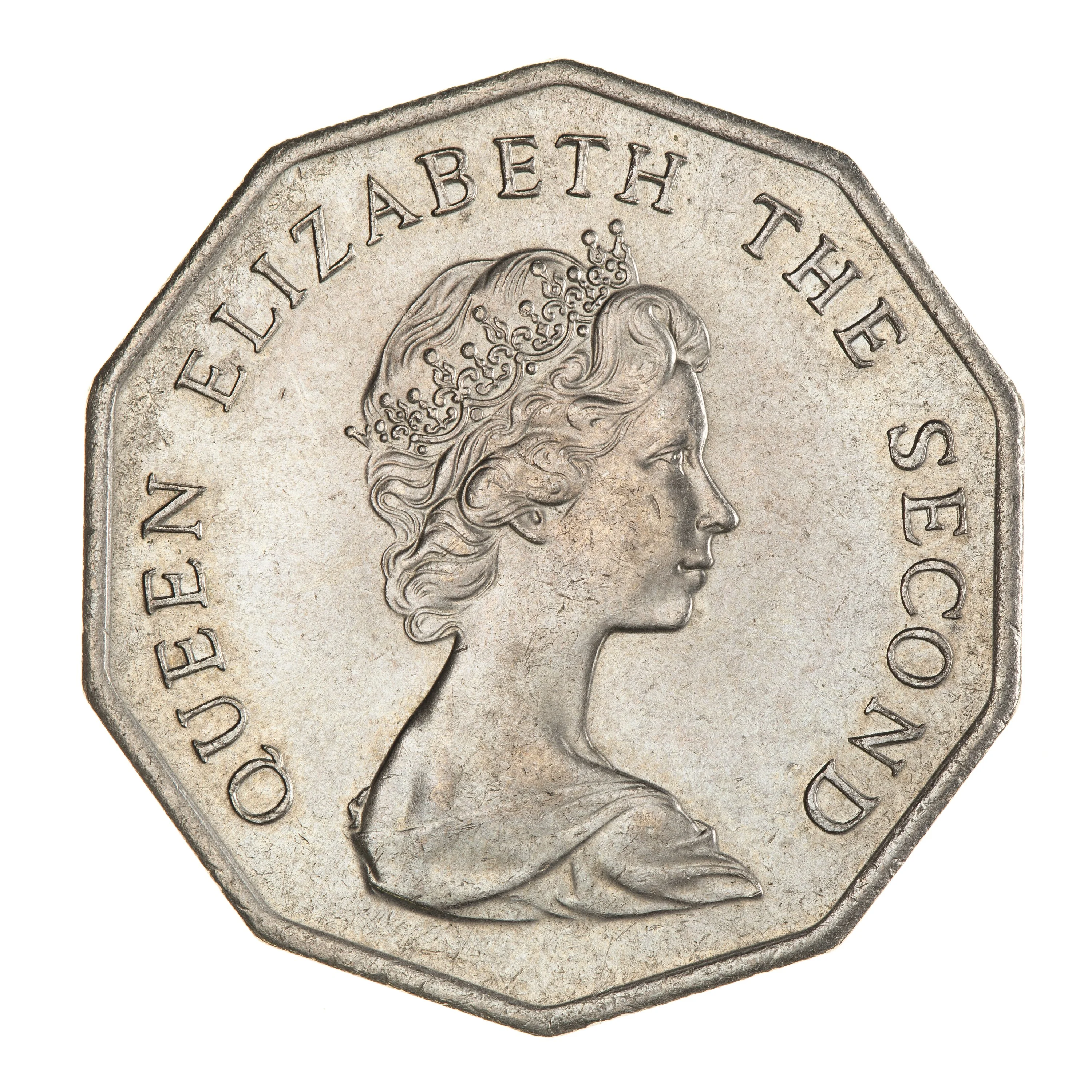
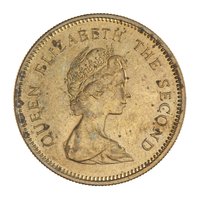
Right-facing crowned bust.
Inscription:
QUEEN ELIZABETH THE SECOND
Script: Latin
Engraver: Arnold Machin
Reverse
Edge
Plain
Mints
| Name | Mark |
|---|---|
| Royal Mint | — |
Mintings
| Year | Mint Mark | Mintage | Quality | Collection |
|---|---|---|---|---|
| 1976 | — | 30,000,000 | ||
| 1978 | — | 10,000,000 | ||
| 1979 | — | 12,000,000 |
Historical background
In 1976, Hong Kong's currency situation was defined by stability under a unique and long-standing colonial monetary system. The Hong Kong dollar was not issued by a central bank but by two private commercial banks—The Hong Kong and Shanghai Banking Corporation (HSBC) and the Chartered Bank—under strict government supervision. Its value was firmly anchored to the British pound sterling at a fixed rate of HK$14.55 to £1, a peg that had been in place since 1935. This arrangement provided predictability for trade and finance, which were the lifeblood of the colony's rapidly growing export-oriented economy.
This sterling peg, however, also embedded a key vulnerability. Hong Kong's monetary base was effectively backed by sterling assets held in London. This meant that the value of the Hong Kong dollar was indirectly exposed to the fluctuations of the British pound on the global stage. In the early 1970s, the collapse of the Bretton Woods system and the subsequent float of major currencies had already forced Hong Kong to briefly abandon the sterling peg in 1972, switching briefly to a short-lived peg to the US dollar before allowing a float. By 1976, the currency was again formally pegged, but this time to the US dollar at a rate of HK$4.65, a change made in 1974 to better reflect the territory's shifting trade patterns away from the UK.
Therefore, the background of 1976 is one of transition and recalibration. The economy was booming, but the monetary authorities were navigating the aftermath of a major international monetary upheaval. The new US dollar peg was still being tested, and the system remained a "currency board" style arrangement without a central bank. This period set the stage for the future challenges that would lead to a critical reform in 1983, when a definitive and rigid linked exchange rate system to the US dollar was established in response to a crisis of confidence, creating the framework that persists today.
This sterling peg, however, also embedded a key vulnerability. Hong Kong's monetary base was effectively backed by sterling assets held in London. This meant that the value of the Hong Kong dollar was indirectly exposed to the fluctuations of the British pound on the global stage. In the early 1970s, the collapse of the Bretton Woods system and the subsequent float of major currencies had already forced Hong Kong to briefly abandon the sterling peg in 1972, switching briefly to a short-lived peg to the US dollar before allowing a float. By 1976, the currency was again formally pegged, but this time to the US dollar at a rate of HK$4.65, a change made in 1974 to better reflect the territory's shifting trade patterns away from the UK.
Therefore, the background of 1976 is one of transition and recalibration. The economy was booming, but the monetary authorities were navigating the aftermath of a major international monetary upheaval. The new US dollar peg was still being tested, and the system remained a "currency board" style arrangement without a central bank. This period set the stage for the future challenges that would lead to a critical reform in 1983, when a definitive and rigid linked exchange rate system to the US dollar was established in response to a crisis of confidence, creating the framework that persists today.
🌱 Very Common