

2 dollars – Hong Kong
Add to wishlist
China
Context
Years: 1975–1984
Country: China
Issuer: Hong Kong
Ruler: Elizabeth II
Currency:
(since 1863)
Total mintage: 188,540,000
Material
References
KM: #
Numista: #1025
Value
Exchange value: 2 HKD
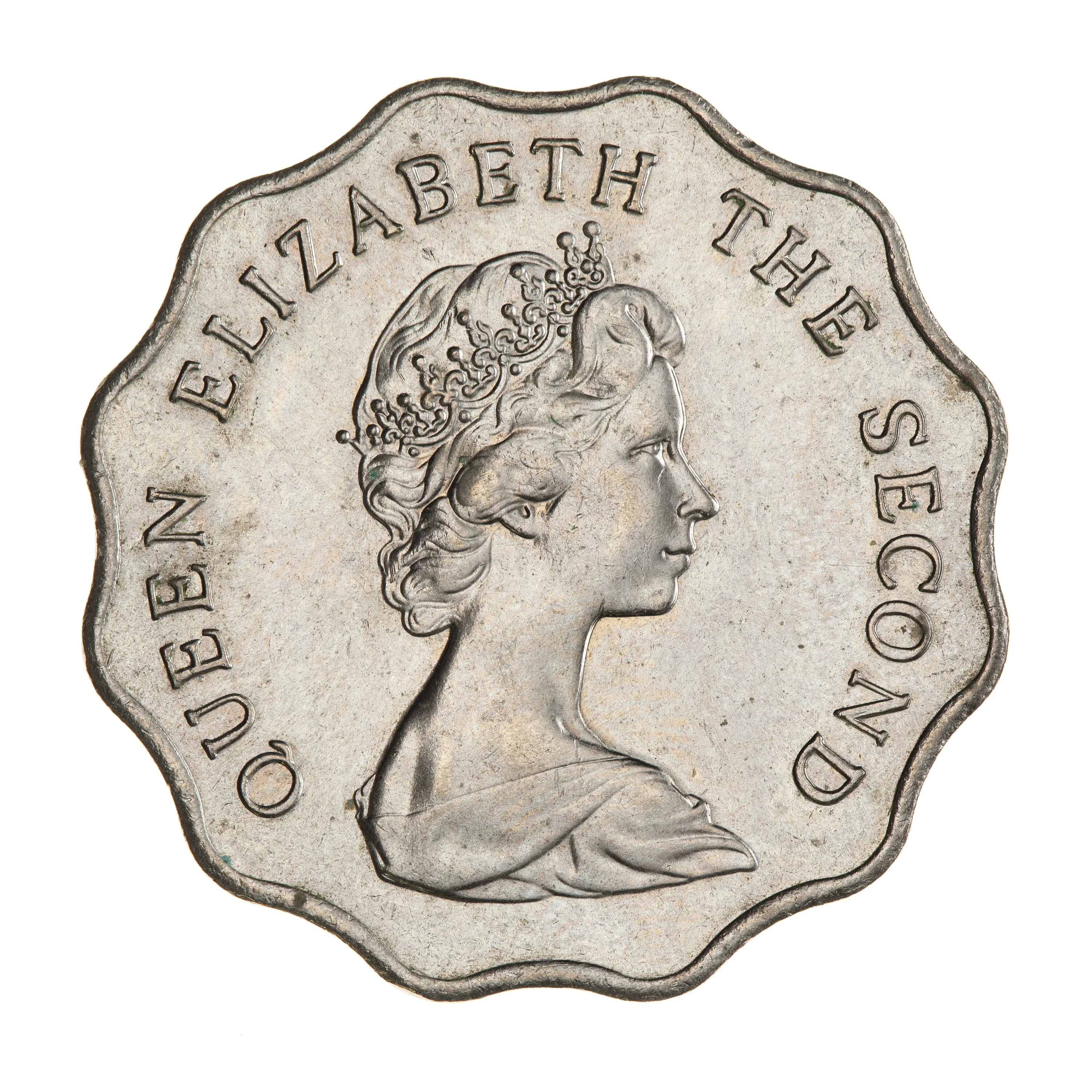
Obverse
Description:
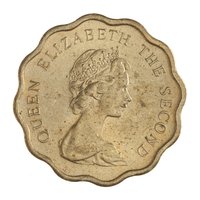
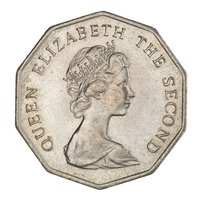
Right-facing crowned bust.
Inscription:
QUEEN ELIZABETH THE SECOND
Script: Latin
Engraver: Arnold Machin
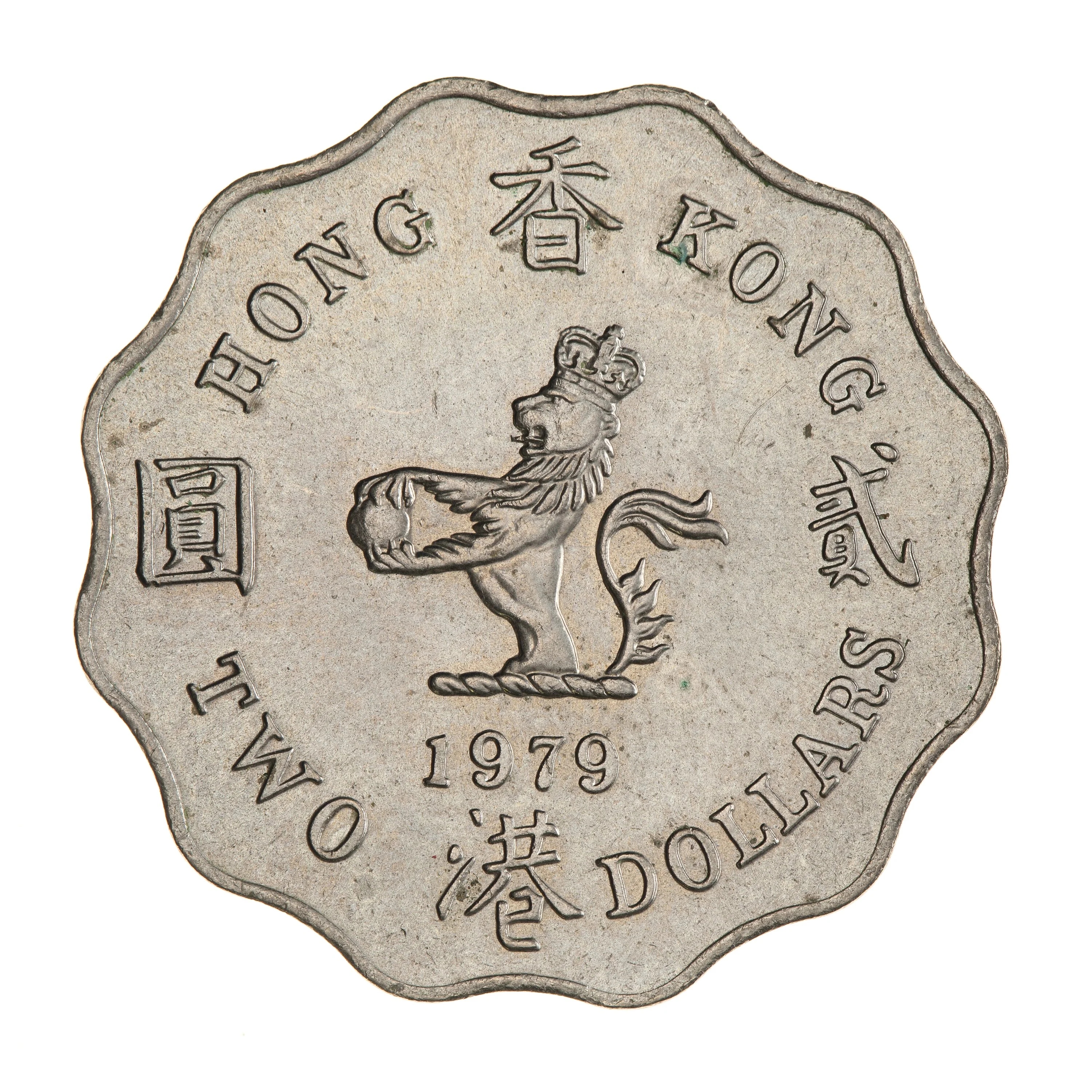
Reverse
Edge
Plain
Mints
| Name | Mark |
|---|---|
| Royal Mint | — |
Mintings
| Year | Mint Mark | Mintage | Quality | Collection |
|---|---|---|---|---|
| 1975 | — | 60,000,000 | ||
| 1978 | — | 504,000 | ||
| 1979 | — | 9,032,000 | ||
| 1980 | — | 30,000,000 | ||
| 1981 | — | 30,000,000 | ||
| 1982 | — | 30,000,000 | ||
| 1983 | — | 7,002,000 | ||
| 1984 | — | 22,002,000 |
Historical background
In 1975, Hong Kong's currency situation was characterized by stability under the British colonial administration, but it operated without a central bank or a formal, unified currency system. The Hong Kong dollar was not issued by a single authority; instead, it was supplied by three commercial banks—The Hongkong and Shanghai Banking Corporation (HSBC), Chartered Bank (now Standard Chartered), and Mercantile Bank (later absorbed by HSBC)—each issuing their own distinct notes. This arrangement, underpinned by a sterling exchange standard, required the banks to hold pound sterling reserves in London to back their note issuance, formally linking the Hong Kong dollar to the British pound.
This link, however, was under quiet strain. The early 1970s saw the collapse of the Bretton Woods system and the floating of major currencies. In response, Hong Kong briefly pegged its dollar to the US dollar in 1972 after the sterling's devaluation, but this was abandoned in 1974, leaving the currency to float freely. By 1975, the Hong Kong dollar was in a managed float, though its historical and practical ties to sterling remained significant in banking reserves. The period was one of transition, with the government exercising limited direct monetary control, relying instead on the discipline of the note-issuing banks and the inherent stability of a fully backed currency system.
Economically, 1975 was a year of recovery for Hong Kong, rebounding from the 1973-74 stock market crash and global oil crisis. The relative stability of the currency, despite its unconventional issuance, provided a foundation for this resurgence in trade and manufacturing. There were no major currency crises that year; the system functioned adequately. However, the lack of a central monetary authority would later be seen as a vulnerability, a lesson that ultimately contributed to major reforms after future shocks, leading to the establishment of the modern linked exchange rate system in 1983.
This link, however, was under quiet strain. The early 1970s saw the collapse of the Bretton Woods system and the floating of major currencies. In response, Hong Kong briefly pegged its dollar to the US dollar in 1972 after the sterling's devaluation, but this was abandoned in 1974, leaving the currency to float freely. By 1975, the Hong Kong dollar was in a managed float, though its historical and practical ties to sterling remained significant in banking reserves. The period was one of transition, with the government exercising limited direct monetary control, relying instead on the discipline of the note-issuing banks and the inherent stability of a fully backed currency system.
Economically, 1975 was a year of recovery for Hong Kong, rebounding from the 1973-74 stock market crash and global oil crisis. The relative stability of the currency, despite its unconventional issuance, provided a foundation for this resurgence in trade and manufacturing. There were no major currency crises that year; the system functioned adequately. However, the lack of a central monetary authority would later be seen as a vulnerability, a lesson that ultimately contributed to major reforms after future shocks, leading to the establishment of the modern linked exchange rate system in 1983.
🌱 Very Common