

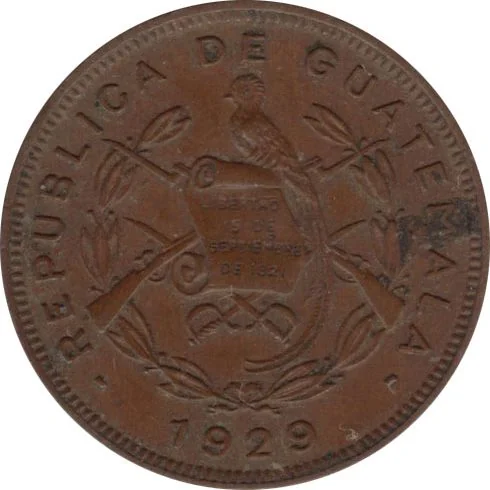
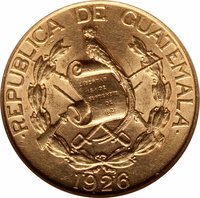
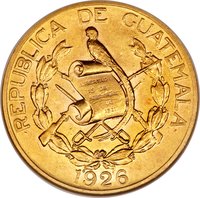
Obverse
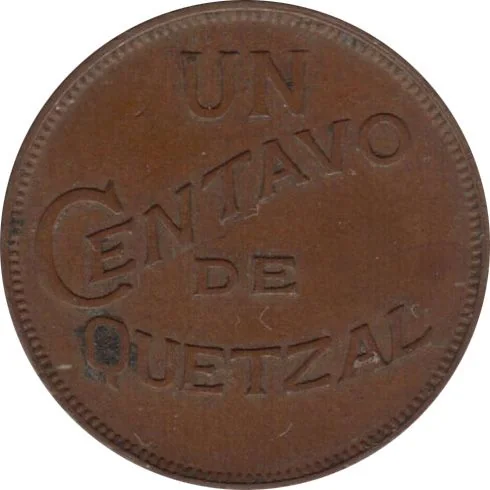
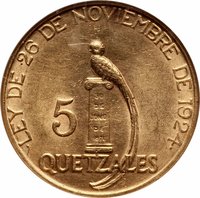
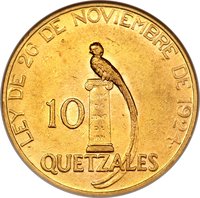
Reverse
Edge
Plain
Categories
| Symbols> Coat of Arms |
Mints
| Name | Mark |
|---|---|
| Royal Mint (Tower Hill) | — |
Mintings
| Year | Mint Mark | Mintage | Quality | Collection |
|---|---|---|---|---|
| 1929 | — | 500,000 | ||
| 1929 | — | — | Proof |
Historical background
In 1929, Guatemala's currency situation was defined by the gold standard and the central role of the peso, a silver-based coin that had been the official monetary unit since 1925. However, the country operated on a unique bimetallic system where both gold and silver coins were legal tender, with their values fixed by law. The gold quetzal (equal to one US dollar) was the unit of account for international trade and banking, while the silver peso remained the dominant physical currency in everyday circulation for the majority of the population. This created a somewhat dual system, with the theoretical gold standard anchored to international markets and a practical silver-based economy domestically.
The year 1929 marked the beginning of significant external pressure on this system. The onset of the Great Depression following the Wall Street Crash triggered a sharp decline in global prices for Guatemala's key exports, primarily coffee and bananas. This led to a dramatic fall in foreign exchange earnings, straining the country's ability to maintain its gold reserves. Concurrently, a worldwide crisis of confidence caused a flight to gold, depleting the metallic reserves that backed the currency. While the full devastating impact of the Depression would crescendo in the early 1930s, 1929 was the pivotal year when the structural vulnerabilities of Guatemala's bimetallic system were exposed by these external shocks.
Consequently, by the end of 1929, the foundations of Guatemala's monetary stability were eroding. The government under President Lázaro Chacón faced the difficult choice of either enforcing strict deflationary policies to maintain the gold standard or abandoning it to preserve domestic liquidity. The strain was evident in a growing imbalance between the theoretical value of the currency and its practical backing. This precarious situation set the stage for the abandonment of the gold standard in 1931, a move that led to the peso's devaluation and the eventual ascendance of the quetzal as the sole national currency, fundamentally reshaping Guatemala's monetary landscape in the decade to follow.
The year 1929 marked the beginning of significant external pressure on this system. The onset of the Great Depression following the Wall Street Crash triggered a sharp decline in global prices for Guatemala's key exports, primarily coffee and bananas. This led to a dramatic fall in foreign exchange earnings, straining the country's ability to maintain its gold reserves. Concurrently, a worldwide crisis of confidence caused a flight to gold, depleting the metallic reserves that backed the currency. While the full devastating impact of the Depression would crescendo in the early 1930s, 1929 was the pivotal year when the structural vulnerabilities of Guatemala's bimetallic system were exposed by these external shocks.
Consequently, by the end of 1929, the foundations of Guatemala's monetary stability were eroding. The government under President Lázaro Chacón faced the difficult choice of either enforcing strict deflationary policies to maintain the gold standard or abandoning it to preserve domestic liquidity. The strain was evident in a growing imbalance between the theoretical value of the currency and its practical backing. This precarious situation set the stage for the abandonment of the gold standard in 1931, a move that led to the peso's devaluation and the eventual ascendance of the quetzal as the sole national currency, fundamentally reshaping Guatemala's monetary landscape in the decade to follow.
Series: System: 1925-1949
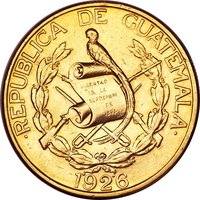
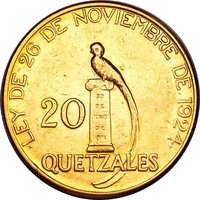
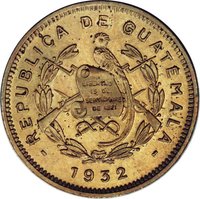
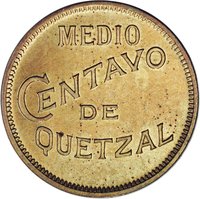
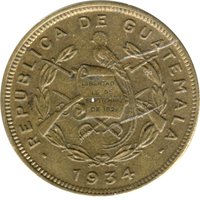
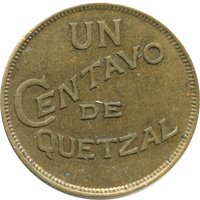
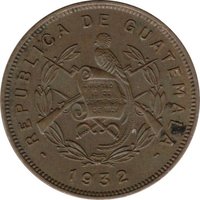
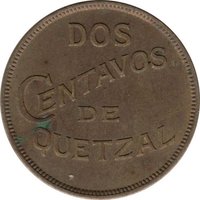
⭐ Somewhat Rare