

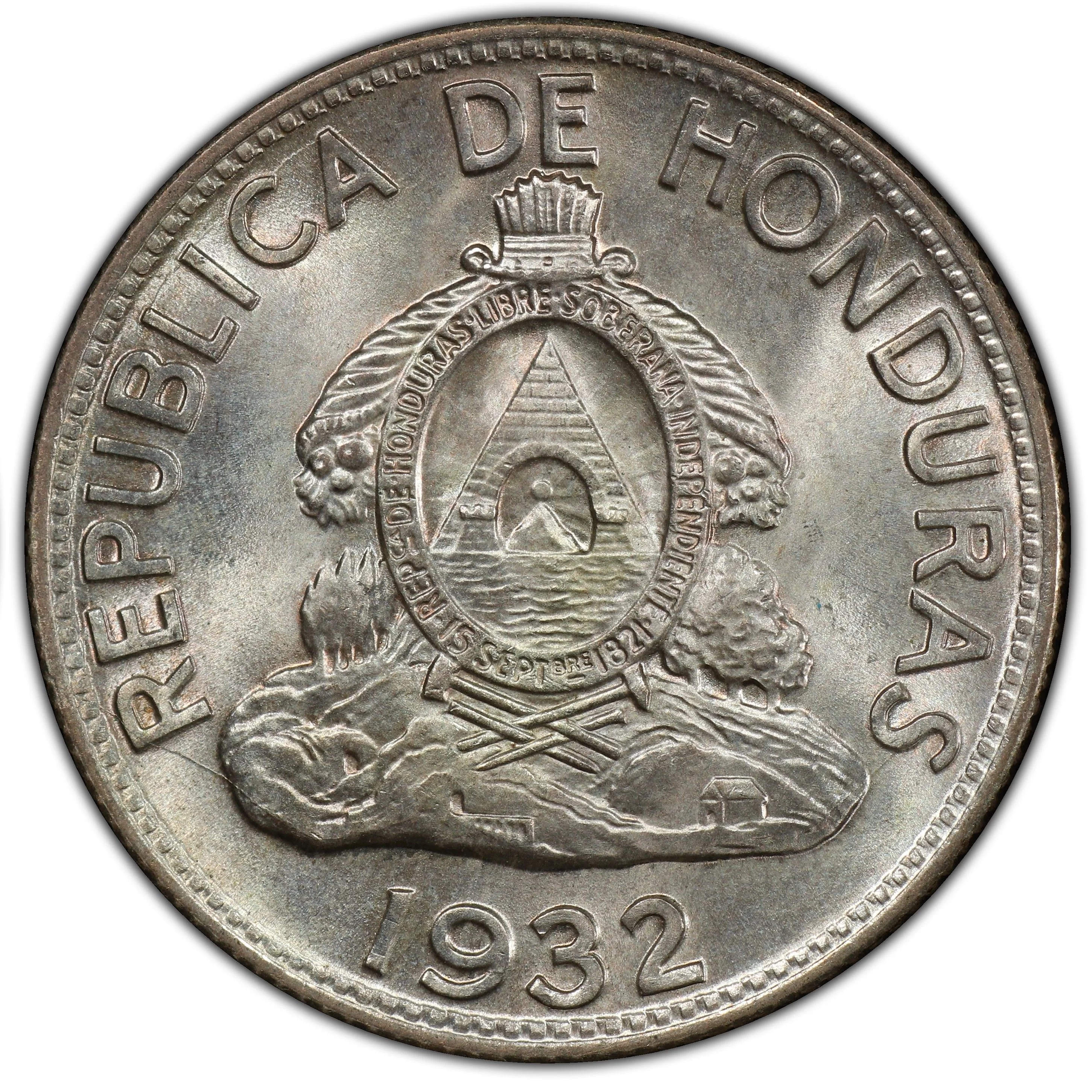
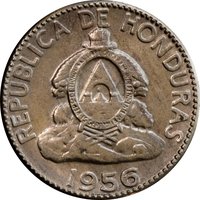
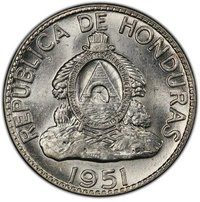
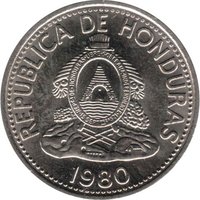
Obverse
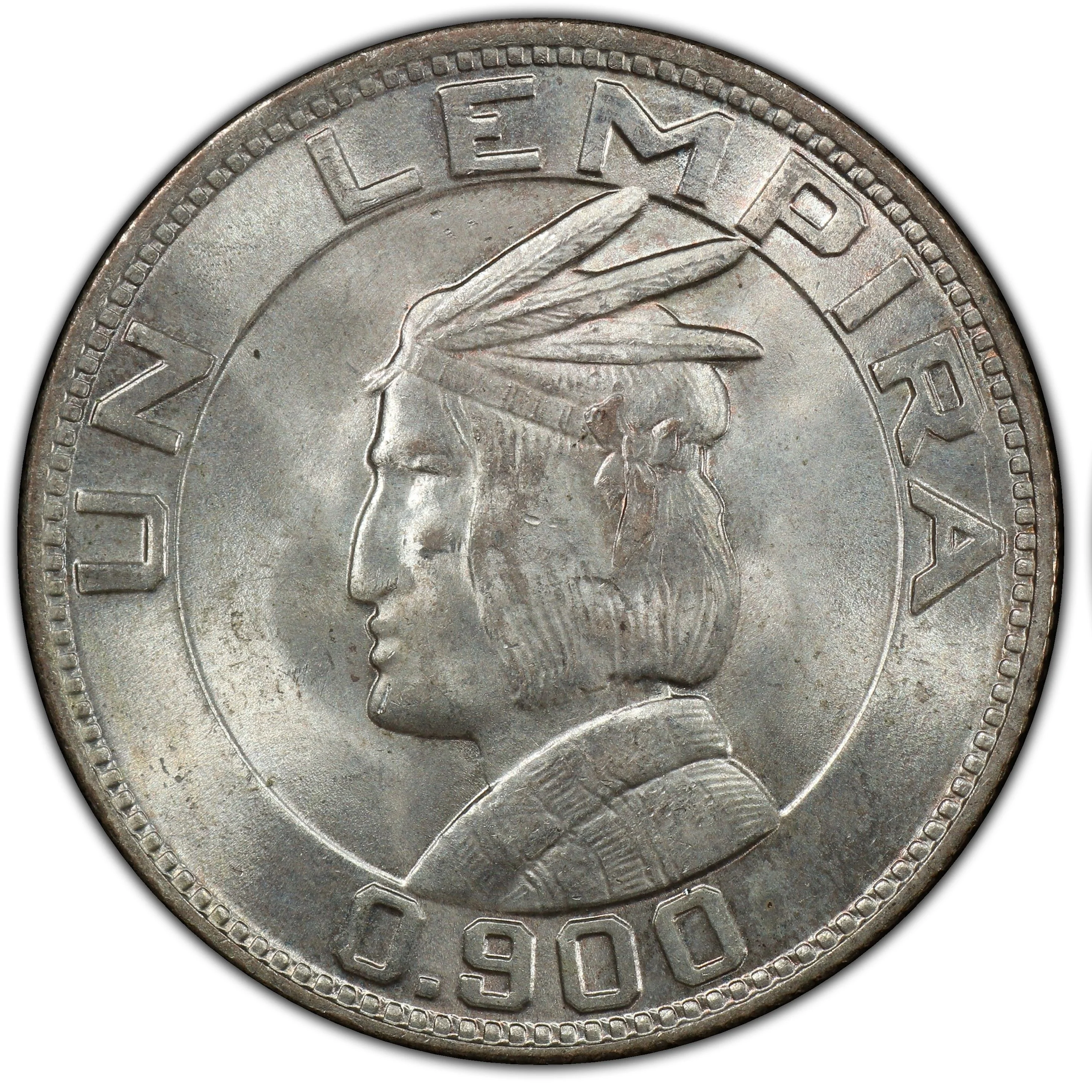
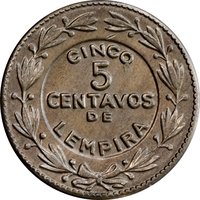
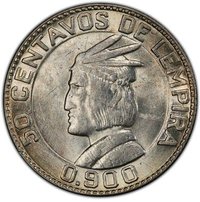
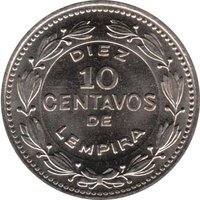
Reverse
Edge
Reeded
Categories
| Symbols> Coat of Arms |
Mints
| Name | Mark |
|---|---|
| United States Mint of Philadelphia | — |
Mintings
| Year | Mint Mark | Mintage | Quality | Collection |
|---|---|---|---|---|
| 1931 | — | 550,000 | ||
| 1932 | — | 1,000,000 | ||
| 1933 | — | 400,000 | ||
| 1934 | — | 600,000 | ||
| 1935 | — | 1,000,000 | ||
| 1937 | — | 4,000,000 |
Historical background
In 1931, Honduras was ensnared in a severe economic crisis, deeply rooted in its dependence on a single export: bananas. Controlled by foreign corporations, notably the United Fruit Company, this monoculture economy was devastated by the collapse of global commodity prices during the Great Depression. The resulting plunge in export revenues crippled government finances, leading to widespread unemployment, social unrest, and a drastic fall in national income. This economic shock exposed the profound vulnerability of Honduras's export-dependent model and set the stage for a monetary crisis.
The currency situation was directly threatened by the nation's adherence to the gold standard. To maintain the fixed exchange rate of the Honduran peso, the government was compelled to spend its dwindling gold reserves to support the currency's value. As capital fled the country and export earnings dried up, these reserves were rapidly depleted. By mid-1931, Honduras faced an impossible choice: continue depleting its last reserves of gold and foreign exchange to uphold the gold standard, or abandon it to preserve what little financial stability remained.
Consequently, in 1931, Honduras was forced to suspend the gold standard, allowing the peso to depreciate. This devaluation was a painful but necessary step to stop the hemorrhage of reserves and to make Honduran banana exports cheaper and more competitive on the global market. The move marked a definitive end to an era of monetary orthodoxy and highlighted the extreme external pressures facing small, commodity-driven economies during the global depression, shaping Honduras's financial policies for years to come.
The currency situation was directly threatened by the nation's adherence to the gold standard. To maintain the fixed exchange rate of the Honduran peso, the government was compelled to spend its dwindling gold reserves to support the currency's value. As capital fled the country and export earnings dried up, these reserves were rapidly depleted. By mid-1931, Honduras faced an impossible choice: continue depleting its last reserves of gold and foreign exchange to uphold the gold standard, or abandon it to preserve what little financial stability remained.
Consequently, in 1931, Honduras was forced to suspend the gold standard, allowing the peso to depreciate. This devaluation was a painful but necessary step to stop the hemorrhage of reserves and to make Honduran banana exports cheaper and more competitive on the global market. The move marked a definitive end to an era of monetary orthodoxy and highlighted the extreme external pressures facing small, commodity-driven economies during the global depression, shaping Honduras's financial policies for years to come.
Series: 1931 Honduras circulation coins
🌱 Fairly Common