

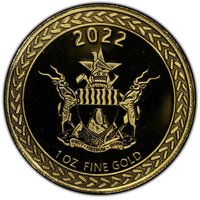
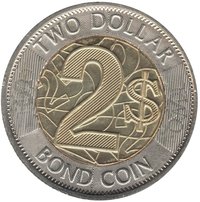
Obverse
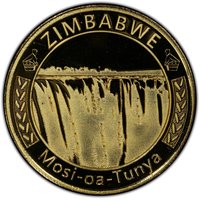
Reverse
Edge
Reeded with serial number
Categories
| Geography> River |
| Symbols> Coat of Arms |
Mints
| Name | Mark |
|---|---|
| Zimbabwe Mint | — |
Mintings
| Year | Mint Mark | Mintage | Quality | Collection |
|---|---|---|---|---|
| 2022 | — | — | Proof |
Historical background
In 2022, Zimbabwe's currency situation remained deeply troubled, characterized by severe instability and a profound loss of public confidence. The core issue was the continued use of the Zimbabwe dollar (ZWL), reintroduced in 2019 after the hyperinflation of the 2000s, which struggled to hold value against major foreign currencies. Despite official efforts to enforce its sole use, the US dollar remained the preferred medium for most significant transactions, savings, and pricing, creating a complex multi-currency environment. This duality led to a vast disparity between the official exchange rate set by the central bank and the much weaker parallel market rate, fueling persistent inflation that eroded salaries and savings.
Authorities implemented several measures throughout the year in an attempt to stabilize the local currency and curb rampant inflation, which peaked at over 280% in mid-2022. These included aggressive interest rate hikes, introducing gold coins as an inflation-hedging investment tool, and maintaining strict capital controls. However, these policies had limited success. The fundamental lack of trust in the ZWL, driven by memories of past hyperinflation and ongoing fiscal deficits monetized by the central bank, meant that dollarization continued to deepen organically within the economy, undermining the official currency's viability.
The consequences for ordinary Zimbabweans were severe. Soaring prices for basic goods, fuel, and services, combined with stagnant wages paid in the rapidly depreciating ZWL, led to a sharp decline in living standards and increased poverty. The currency chaos created significant business uncertainty, discouraging investment and complicating long-term planning. By the end of 2022, the situation had not been resolved, setting the stage for further policy shifts as the government continued to grapple with the challenge of establishing a stable and trusted national currency amidst a deeply dollarized economy.
Authorities implemented several measures throughout the year in an attempt to stabilize the local currency and curb rampant inflation, which peaked at over 280% in mid-2022. These included aggressive interest rate hikes, introducing gold coins as an inflation-hedging investment tool, and maintaining strict capital controls. However, these policies had limited success. The fundamental lack of trust in the ZWL, driven by memories of past hyperinflation and ongoing fiscal deficits monetized by the central bank, meant that dollarization continued to deepen organically within the economy, undermining the official currency's viability.
The consequences for ordinary Zimbabweans were severe. Soaring prices for basic goods, fuel, and services, combined with stagnant wages paid in the rapidly depreciating ZWL, led to a sharp decline in living standards and increased poverty. The currency chaos created significant business uncertainty, discouraging investment and complicating long-term planning. By the end of 2022, the situation had not been resolved, setting the stage for further policy shifts as the government continued to grapple with the challenge of establishing a stable and trusted national currency amidst a deeply dollarized economy.

✨ Legendary