

2 dollars – Zimbabwe
Add to wishlist
Zimbabwe
Material
Diameter: 28 mm
Weight: 11.11 g
Thickness: 2.6 mm
Shape: Round
Techniques: Latent image, Milled
Alignment: Medal alignment
flip
References
KM: #
Numista: #184676
Value
Exchange value: 2 ZWL
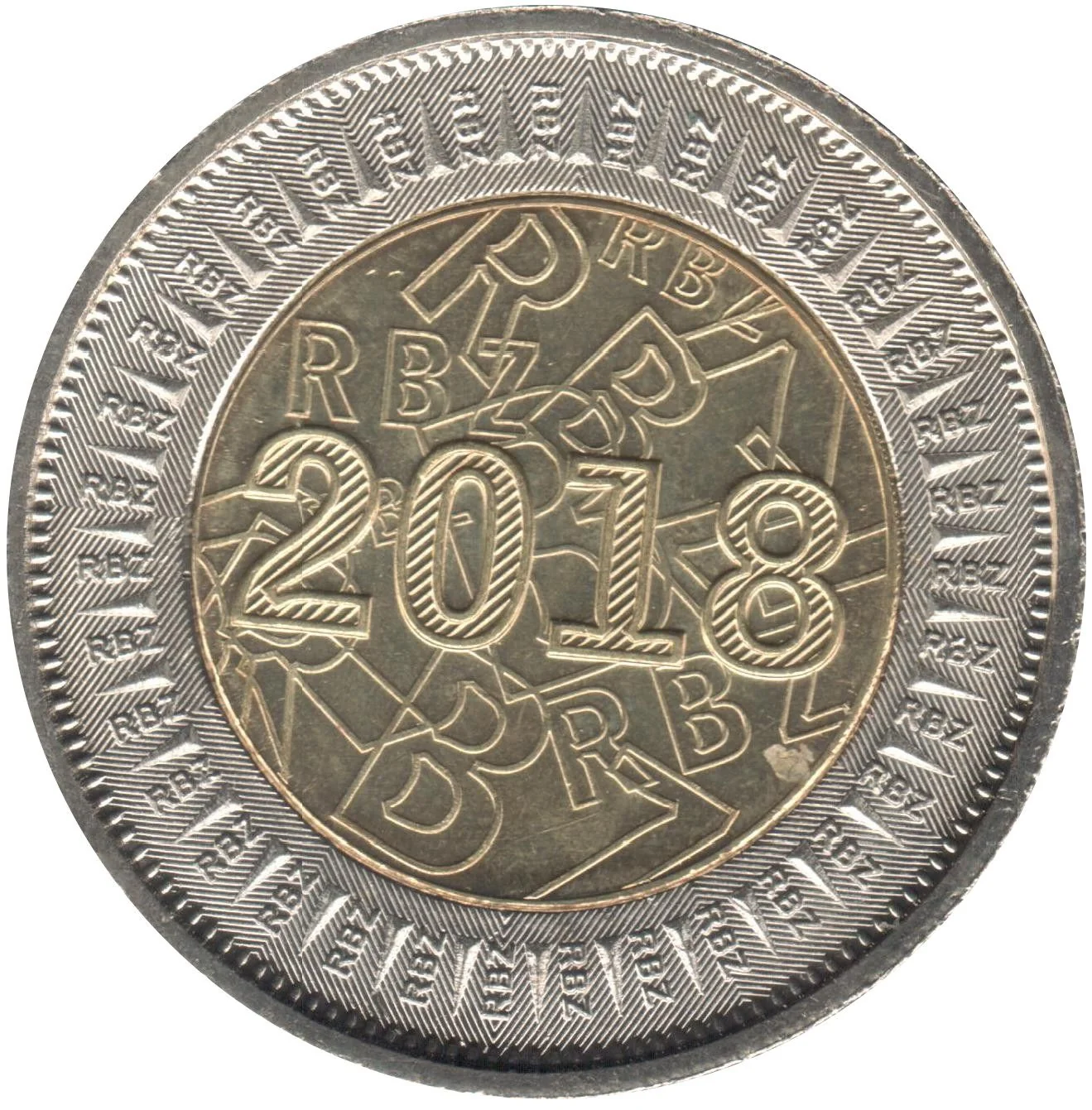
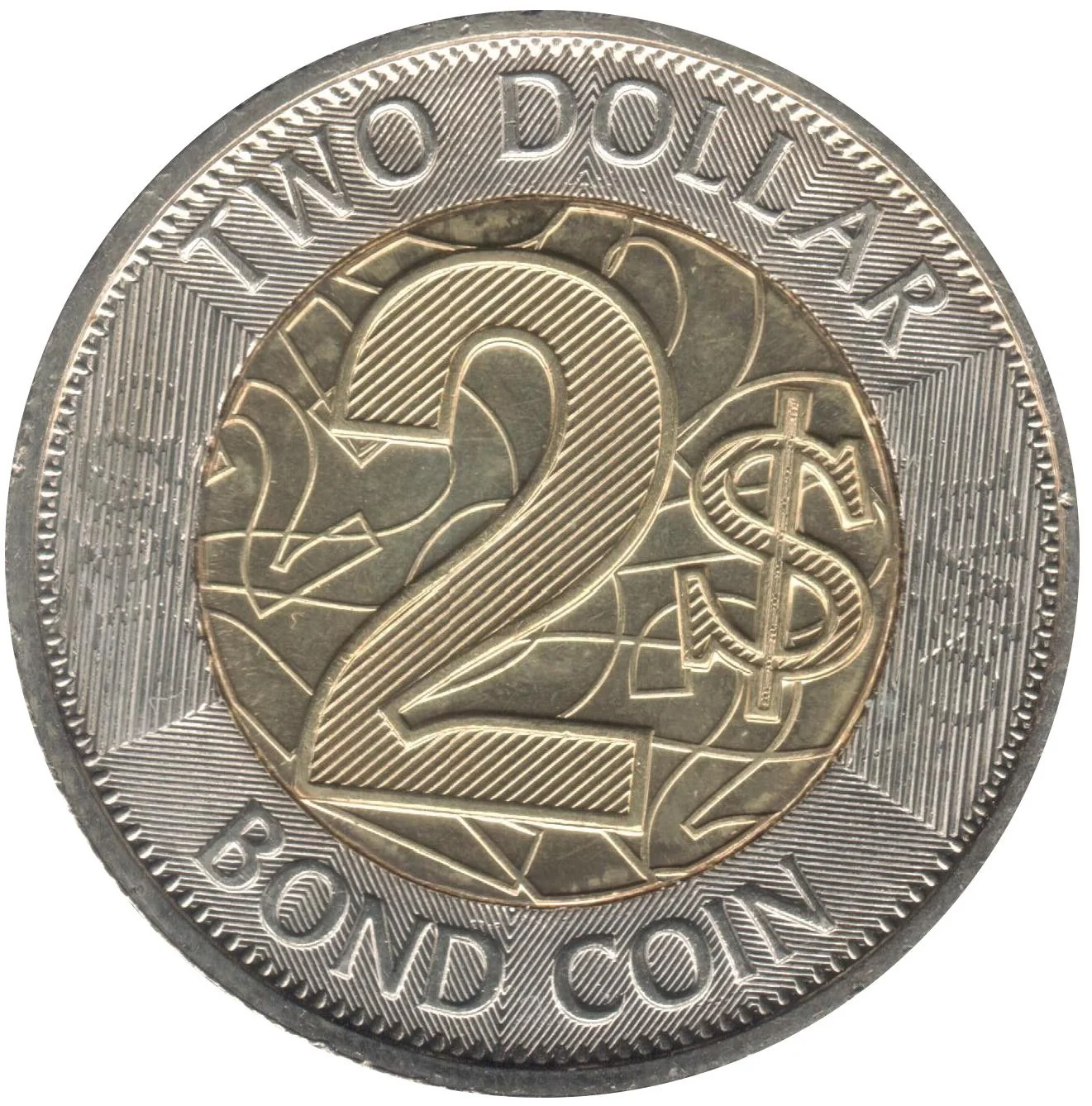
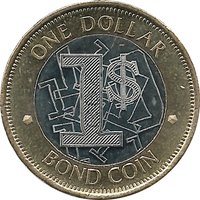
Obverse
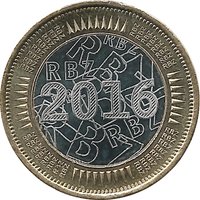
Reverse
Edge
Serrated rim profile with a groove and edge lettering
Legend:
RBZ ... RBZ ... RBZ ... RBZ ... RBZ ... RBZ ...
Mints
| Name | Mark |
|---|---|
| South African Mint | — |
Mintings
| Year | Mint Mark | Mintage | Quality | Collection |
|---|---|---|---|---|
| 2018 | — | — |
Historical background
By 2018, Zimbabwe was grappling with a severe currency crisis rooted in decades of economic mismanagement, hyperinflation, and a collapse in public confidence. Following the catastrophic hyperinflation of the late 2000s, which led to the abandonment of the Zimbabwean dollar in 2009, the country had adopted a multi-currency system, primarily using the US dollar. However, dwindling foreign currency reserves and a large trade deficit created a severe shortage of physical US dollars in the economy. In response, the government introduced a series of surrogate currencies—first "bond notes" in 2016 and later electronic "RTGS dollars"—which were officially pegged at 1:1 to the US dollar but rapidly traded at a significant discount on the thriving black market.
The situation in 2018 was defined by this growing duality and dysfunction. While the government insisted on the 1:1 parity, the real market told a different story, with premiums for physical US dollars reaching as high as 400%. This created a complex, three-tiered pricing system: prices in physical US dollars, prices in electronic balances, and even higher prices for certain goods purchased using mobile money. The chronic shortage of cash led to long bank queues and social unrest, severely hampering business operations and everyday transactions. The economy was effectively dollarized in practice but without access to the actual currency, leading to severe liquidity constraints.
The crisis came to a head after the July 2018 general elections. Facing unsustainable fiscal pressures, the new finance minister, Mthuli Ncube, announced a series of austerity measures in October 2018. Most significantly, he formally separated the RTGS and bond note balances from the US dollar, effectively acknowledging they were a separate, weaker currency. This move, intended as a step toward currency reform and attracting IMF support, immediately triggered a sharp devaluation, accelerating inflation and worsening the economic hardship for ordinary Zimbabweans, setting the stage for the reintroduction of a new Zimbabwean dollar in 2019.
The situation in 2018 was defined by this growing duality and dysfunction. While the government insisted on the 1:1 parity, the real market told a different story, with premiums for physical US dollars reaching as high as 400%. This created a complex, three-tiered pricing system: prices in physical US dollars, prices in electronic balances, and even higher prices for certain goods purchased using mobile money. The chronic shortage of cash led to long bank queues and social unrest, severely hampering business operations and everyday transactions. The economy was effectively dollarized in practice but without access to the actual currency, leading to severe liquidity constraints.
The crisis came to a head after the July 2018 general elections. Facing unsustainable fiscal pressures, the new finance minister, Mthuli Ncube, announced a series of austerity measures in October 2018. Most significantly, he formally separated the RTGS and bond note balances from the US dollar, effectively acknowledging they were a separate, weaker currency. This move, intended as a step toward currency reform and attracting IMF support, immediately triggered a sharp devaluation, accelerating inflation and worsening the economic hardship for ordinary Zimbabweans, setting the stage for the reintroduction of a new Zimbabwean dollar in 2019.

🌟 Uncommon