

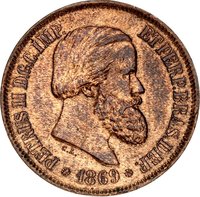
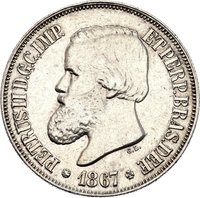
Obverse
Description:
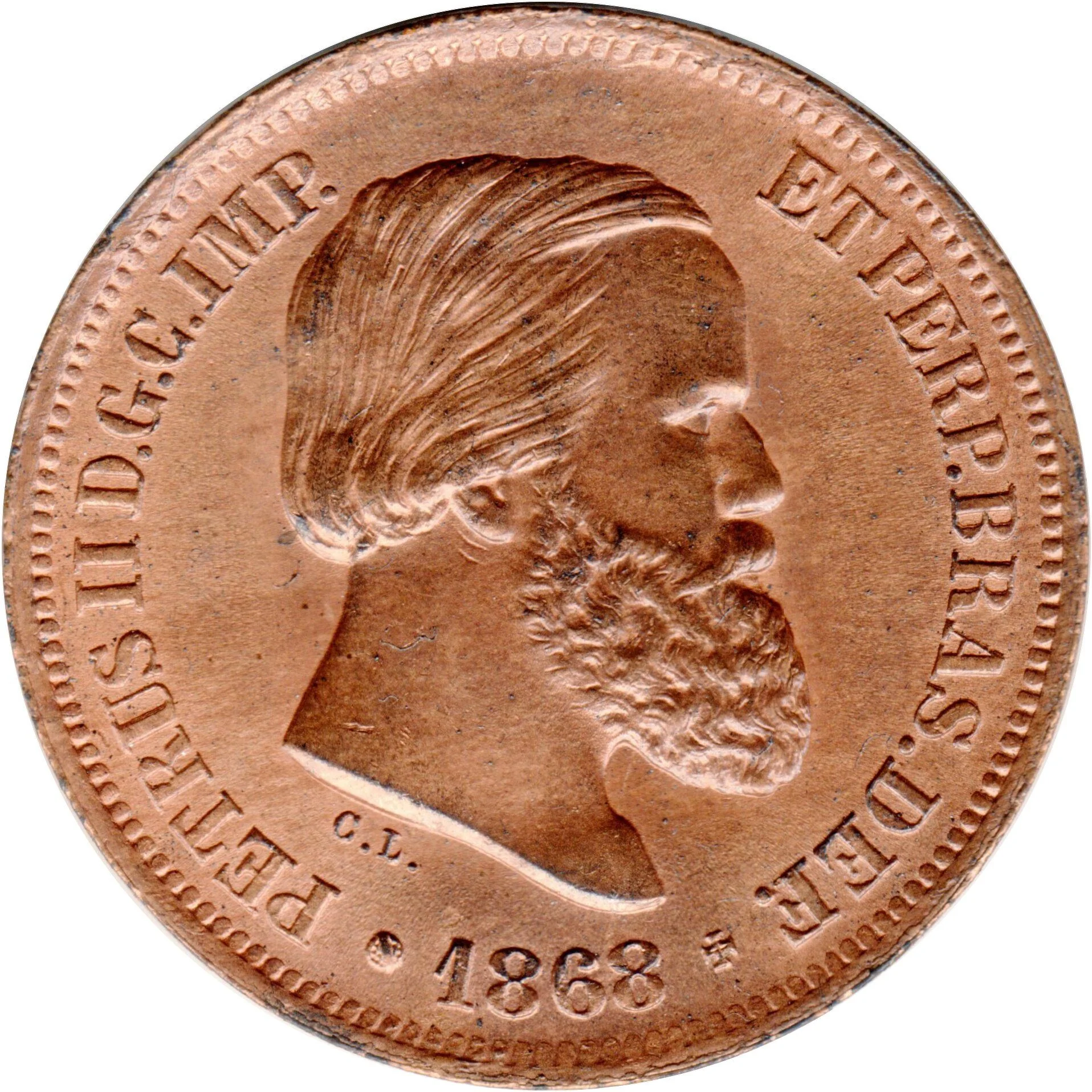
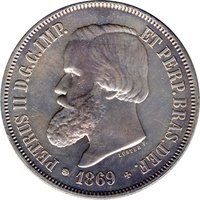
Pedro II portrait, facing right, with date below and rim inscription.
Inscription:
PETRUS II D.G.C.IMP. ET PERP.BRAS.DEF
*1870*
*1870*
Translation:
Peter II, by the Grace of God, Constitutional Emperor and Perpetual Defender of Brazil.
*1870*
*1870*
Script: Latin
Language: Latin
Engraver: Cristian Lüster
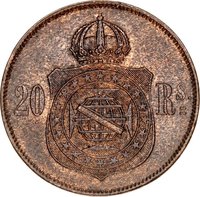
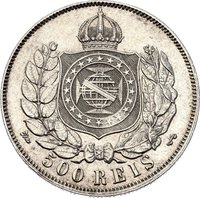
Reverse
Description:
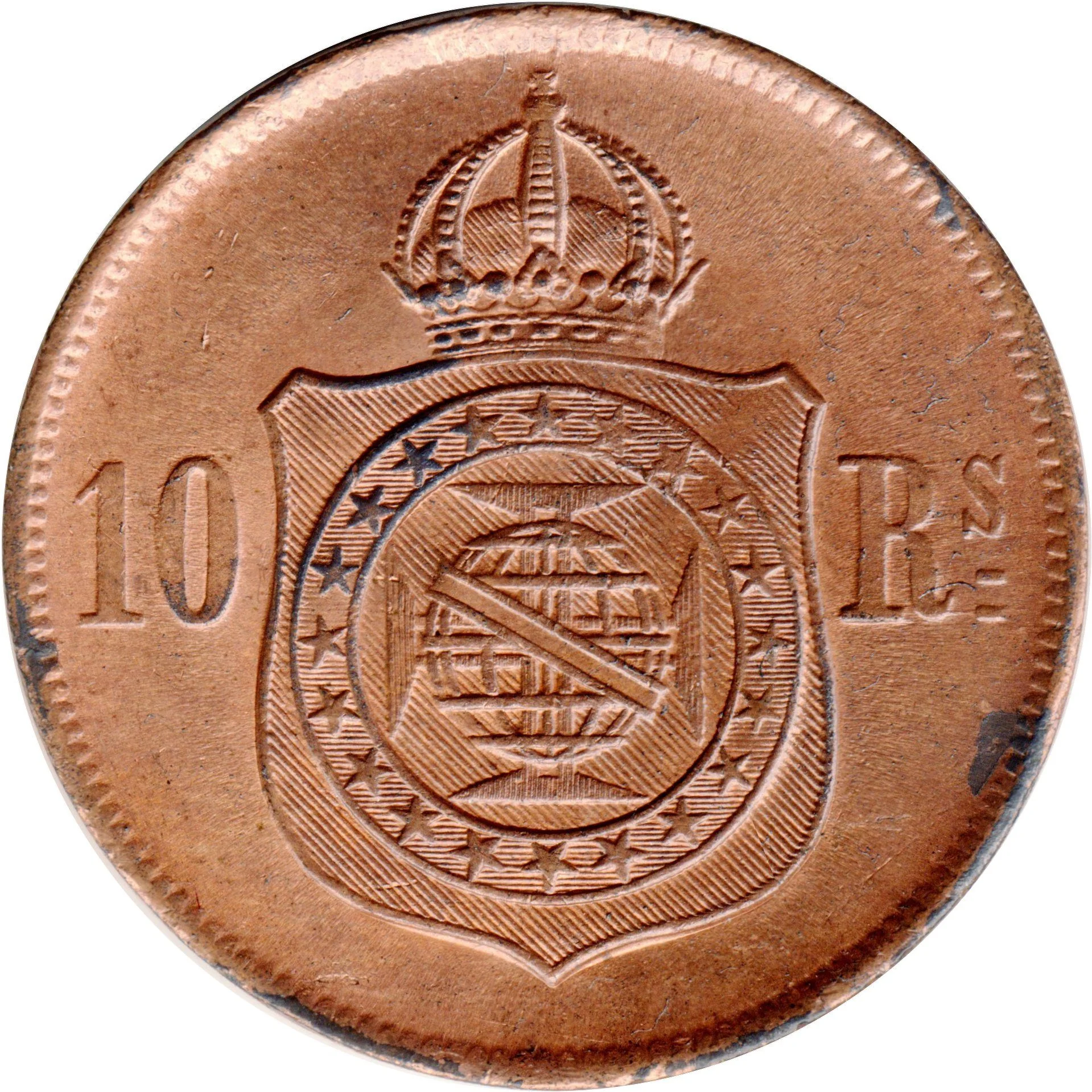
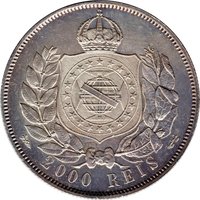
Brazilian shield divides value.
Inscription:
10 Rs
Translation:
Ten Rupees
Script: Latin
Engraver: Cristian Lüster
Edge
Plain
Mints
| Name | Mark |
|---|---|
| Royal Mint of Belgium | point after 'RS' |
Mintings
| Year | Mint Mark | Mintage | Quality | Collection |
|---|---|---|---|---|
| 1868 | — | 89,604,000 | ||
| 1869 | — | — | ||
| 1870 | — | — |
Historical background
In 1868, Brazil's currency situation was characterized by significant instability and inflationary pressures, rooted in the financial demands of the Paraguayan War (1864-1870). The conflict had placed an enormous strain on the Imperial Treasury, forcing the government of Dom Pedro II to resort to extensive borrowing and, most consequentially, the unchecked issuance of paper money. The Banco do Brasil, acting as the government's financial agent, continuously expanded the money supply without the backing of gold reserves, leading to a sharp decline in the value of paper currency relative to gold.
This period saw a severe divergence between two circulating mediums: gold-backed coins (the mil-réis) and unbacked paper notes, also called mil-réis but trading at a steep discount. This created a system of effective exchange rates, where prices for major transactions, imports, and foreign debt servicing were often quoted in gold, while the domestic economy used depreciating paper. The resulting inflation eroded public confidence and living standards, creating a complex financial environment of uncertainty for merchants and the public alike.
The situation prompted growing criticism from orthodox economists and politicians, known as metalistas, who advocated for a return to the gold standard and fiscal discipline. However, the government's immediate military priorities took precedence, delaying any serious monetary reform. Thus, in 1868, the currency crisis was actively worsening, setting the stage for the profound financial reforms that would follow in the 1870s, as the war concluded and the imperative to stabilize the economy became unavoidable.
This period saw a severe divergence between two circulating mediums: gold-backed coins (the mil-réis) and unbacked paper notes, also called mil-réis but trading at a steep discount. This created a system of effective exchange rates, where prices for major transactions, imports, and foreign debt servicing were often quoted in gold, while the domestic economy used depreciating paper. The resulting inflation eroded public confidence and living standards, creating a complex financial environment of uncertainty for merchants and the public alike.
The situation prompted growing criticism from orthodox economists and politicians, known as metalistas, who advocated for a return to the gold standard and fiscal discipline. However, the government's immediate military priorities took precedence, delaying any serious monetary reform. Thus, in 1868, the currency crisis was actively worsening, setting the stage for the profound financial reforms that would follow in the 1870s, as the war concluded and the imperative to stabilize the economy became unavoidable.
🌱 Common