

1 Sol – Bolivia
Circulating commemorative coins
Commemoration: SIXTH CONSTITUTION BOLIVIAN
Bolivia
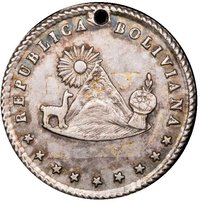
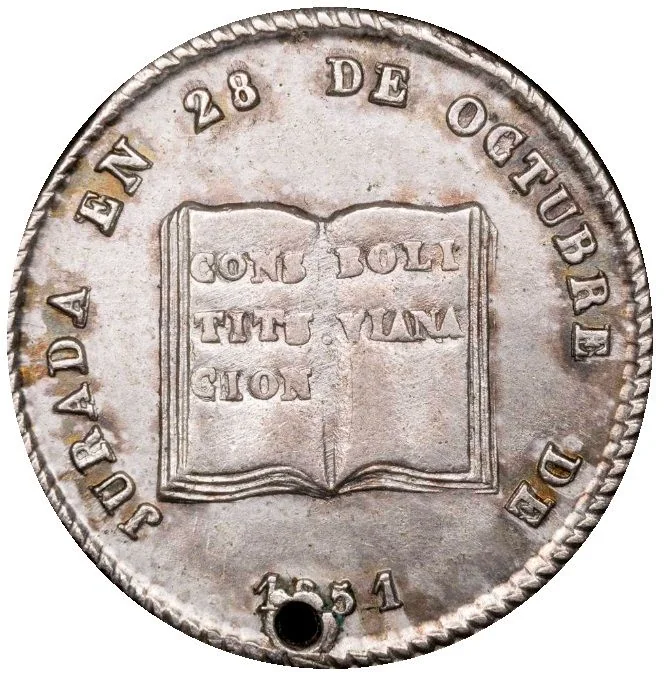
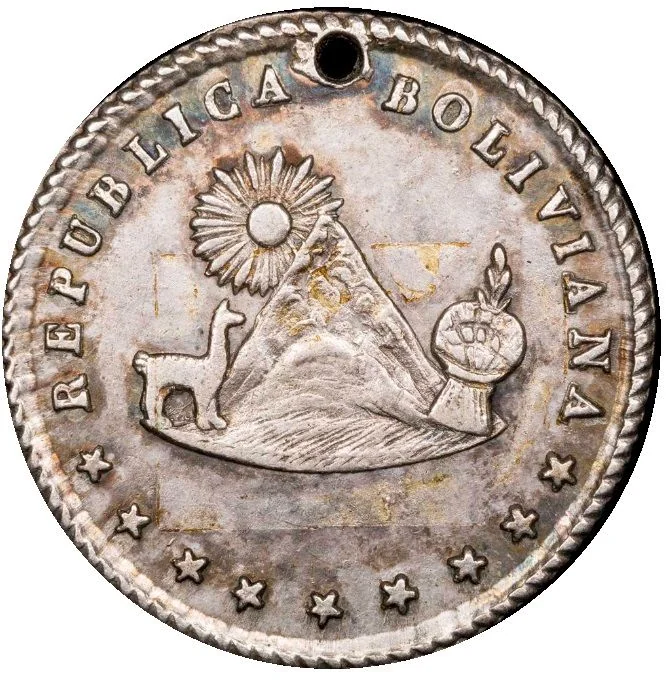
Obverse
Reverse
Edge
Reeded
Mints
| Name | Mark |
|---|---|
| Potosi | — |
Mintings
| Year | Mint Mark | Mintage | Quality | Collection |
|---|---|---|---|---|
| 1851 | — | — |
Historical background
In 1851, Bolivia's currency situation was characterized by profound instability and complexity, a direct legacy of the economic devastation following the War of the Pacific (1879-1884) and earlier internal conflicts. While this date falls within a period of relative political calm under General Manuel Isidoro Belzu, the monetary system was a fragmented patchwork. The primary circulating coin was the Bolivian silver peso, often known as the peso feble (weak peso), but its value and purity were inconsistent. Crucially, foreign coins, especially Peruvian and Chilean silver pesos, circulated widely and often at a premium to the debased Bolivian coinage, undermining national monetary sovereignty.
This period predated a central banking system, with currency issuance controlled directly by the government mint, the Casa de la Moneda in Potosí. Chronic fiscal shortfalls led successive governments, including Belzu's, to engage in severe debasement—reducing the silver content in coins to generate seigniorage revenue. This practice, while providing immediate funds for the state, fueled inflation, eroded public trust, and drove higher-value full-weight coins out of circulation (Gresham's Law). Consequently, everyday transactions were hampered by uncertainty, as the value of a coin depended heavily on its mint, date, and physical wear.
The monetary disarray of 1851 reflected broader challenges of a nation struggling to integrate its economy after independence. The reliance on silver mining, fiscal instability, and the lack of a unified national currency hindered commerce and economic development. This situation would persist for decades, with successive attempts at reform largely failing until the creation of the Boliviano in 1864 and, more definitively, with monetary reforms and the establishment of the Central Bank of Bolivia in the early 20th century.
This period predated a central banking system, with currency issuance controlled directly by the government mint, the Casa de la Moneda in Potosí. Chronic fiscal shortfalls led successive governments, including Belzu's, to engage in severe debasement—reducing the silver content in coins to generate seigniorage revenue. This practice, while providing immediate funds for the state, fueled inflation, eroded public trust, and drove higher-value full-weight coins out of circulation (Gresham's Law). Consequently, everyday transactions were hampered by uncertainty, as the value of a coin depended heavily on its mint, date, and physical wear.
The monetary disarray of 1851 reflected broader challenges of a nation struggling to integrate its economy after independence. The reliance on silver mining, fiscal instability, and the lack of a unified national currency hindered commerce and economic development. This situation would persist for decades, with successive attempts at reform largely failing until the creation of the Boliviano in 1864 and, more definitively, with monetary reforms and the establishment of the Central Bank of Bolivia in the early 20th century.

✨ Legendary