

4 Soles – Bolivia
Circulating commemorative coins
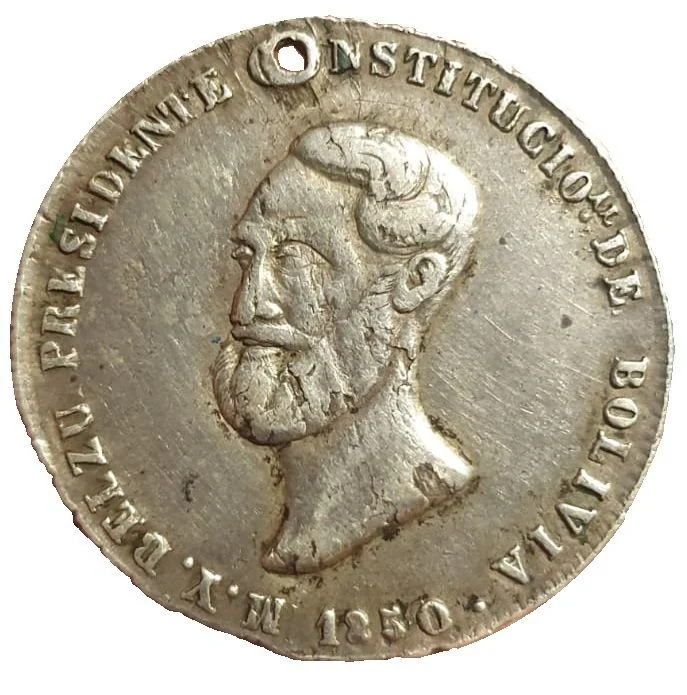
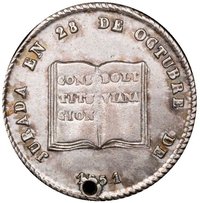
Commemoration: BELZU PRESIDENT CONSTITUTIONAL
Bolivia
Context
Material
Diameter: 33 mm
Weight: 13.4 g
Silver weight: 13.40 g
Thickness: 2 mm
Shape: Irregular round
Composition: Silver
Magnetic: No
Technique: Hammered
Alignment: Medal alignment
flip
References
Numista: #326986
Value
Bullion value: $38.09
Obverse
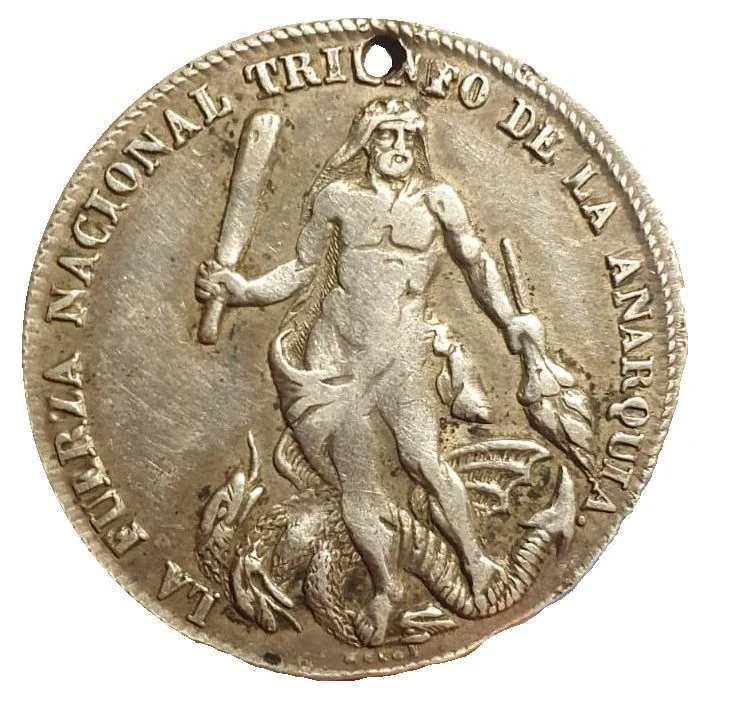
Reverse
Description:
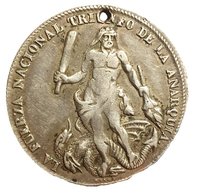
Hercules with a club, standing over a hydra.
Inscription:
LA FUERZA NACIONAL TRIUNFO DE LA ANARQUIA
molon
molon
Script: Latin
Edge
Reeded
Categories
| Person> Politician |
| Mythology> Fantastic animal |
| Animal> Reptile |
| Event> Revolution |
Mints
| Name | Mark |
|---|---|
| Potosi | — |
Mintings
| Year | Mint Mark | Mintage | Quality | Collection |
|---|---|---|---|---|
| 1850 | — | — |
Historical background
In 1850, Bolivia's currency system was a complex and unstable reflection of its turbulent early decades as a republic. Following independence in 1825, the nation inherited a chaotic monetary landscape characterized by a wide circulation of Spanish colonial coins, counterstamped coins from neighboring nations like Peru and Argentina, and even crude silver macacos or moneda feble (debased coinage) minted during wartime. The primary unit was the peso boliviano, theoretically tied to silver, but its value and purity were inconsistent. This period was marked by a severe shortage of small-denomination coinage for everyday transactions, which stifled internal commerce and created significant hardship for the general population.
The root of the monetary instability lay in the state's fiscal desperation and its reliance on the silver mining sector, which was in a prolonged slump. To finance deficits, successive governments, most notably that of General Manuel Isidoro Belzu (1848-1855), resorted to authorizing the minting of debased silver coinage with a face value far exceeding its intrinsic metal content. This practice, effectively a form of seigniorage, led to Gresham's Law in action: "bad money drove out good." Full-weight silver coins were hoarded or exported, leaving the degraded currency in common circulation, which in turn fueled inflation and public distrust. The situation was exacerbated by the circulation of counterfeit coins and the continued use of foreign currency, making a unified national monetary system an elusive goal.
Consequently, the 1850s represent a low point in Bolivian monetary history, immediately preceding a major reform. The chronic instability undermined economic development, complicated tax collection, and eroded confidence in the central government's authority. This fraught environment set the stage for the significant monetary reform that would begin later in the decade under President José María Linares (1857-1861), who sought to stabilize the currency by establishing a new, standardized silver peso and addressing the rampant debasement, laying the groundwork for a more coherent national monetary system.
The root of the monetary instability lay in the state's fiscal desperation and its reliance on the silver mining sector, which was in a prolonged slump. To finance deficits, successive governments, most notably that of General Manuel Isidoro Belzu (1848-1855), resorted to authorizing the minting of debased silver coinage with a face value far exceeding its intrinsic metal content. This practice, effectively a form of seigniorage, led to Gresham's Law in action: "bad money drove out good." Full-weight silver coins were hoarded or exported, leaving the degraded currency in common circulation, which in turn fueled inflation and public distrust. The situation was exacerbated by the circulation of counterfeit coins and the continued use of foreign currency, making a unified national monetary system an elusive goal.
Consequently, the 1850s represent a low point in Bolivian monetary history, immediately preceding a major reform. The chronic instability undermined economic development, complicated tax collection, and eroded confidence in the central government's authority. This fraught environment set the stage for the significant monetary reform that would begin later in the decade under President José María Linares (1857-1861), who sought to stabilize the currency by establishing a new, standardized silver peso and addressing the rampant debasement, laying the groundwork for a more coherent national monetary system.

💎 Extremely Rare