

50 euro – Greece
Add to wishlist
Greece
Context
Year: 2023
Issuer: Greece
Issuing organization: Bank of Greece
Period:
(since 1974)
Currency:
(since 2002)
Total mintage: 1,500
Material
References
KM: #
Numista: #385338
Value
Exchange value: 50 EUR
Bullion value: $153.26
Inflation-adjusted value: 53.33 EUR
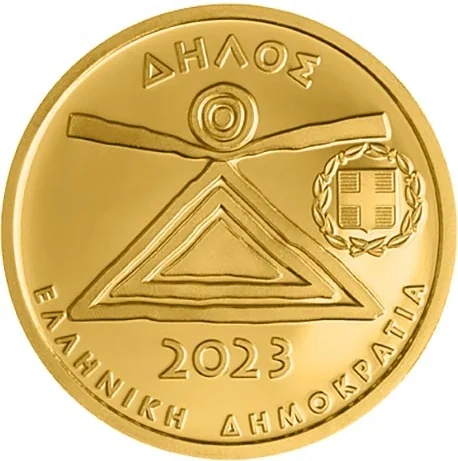
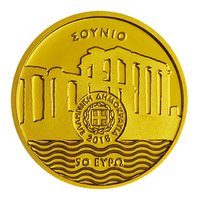
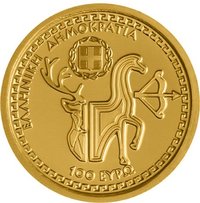
Obverse
Inscription:
ΔΗΛΟΣ
ΕΛΛΗΝΙΚΗ ΔΗΜΟΚΡΑΤΙΑ
ΕΛΛΗΝΙΚΗ ΔΗΜΟΚΡΑΤΙΑ
Translation:
DELOS
HELLENIC REPUBLIC
HELLENIC REPUBLIC
Script: Greek
Language: Greek
Engraver: Maria Andonatou
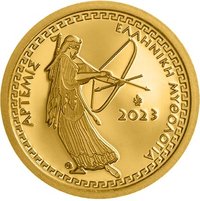
Reverse
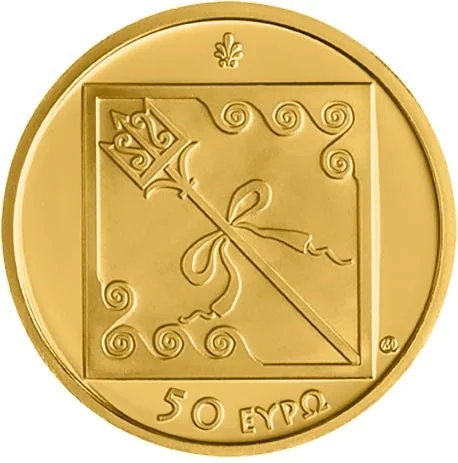
Inscription:
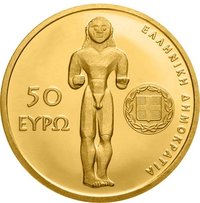
50 ΕΥΡΩ
2023
2023
Translation:
50 EURO
2023
2023
Script: Greek
Language: Greek
Engraver: Maria Andonatou
Edge
Plain
Categories
| Art> Theatre |
| Symbols> Coat of Arms |
Mints
| Name | Mark |
|---|---|
| National Mint of the Bank of Greece | — |
Mintings
| Year | Mint Mark | Mintage | Quality | Collection |
|---|---|---|---|---|
| 2023 | — | 1,500 | Proof |
Historical background
In 2023, Greece remained a full member of the Eurozone, using the euro (€) as its official currency. The acute financial crisis and the dramatic capital controls of the 2010s were firmly in the past, with the country having exited its final enhanced surveillance program in August 2022. This marked a symbolic return to financial normalcy, with Greece regaining full sovereignty over its economic policies and no longer under the strict quarterly reviews of its creditors. The primary focus for the government and the European Central Bank (ECB) was on maintaining stability, managing inflation, and fostering sustainable growth within the single currency framework.
The year was characterized by a continued, though cautious, economic recovery. Key challenges within the currency context included navigating high Eurozone-wide inflation, which peaked in 2022 but remained elevated, putting pressure on household purchasing power. The ECB's successive interest rate hikes to combat inflation increased borrowing costs, affecting mortgages and business loans. However, Greece's banking system was significantly stronger, with reduced non-performing loans and increased deposits, showing restored public confidence in the banking sector compared to the crisis years.
Looking forward, the currency situation was stable but not without underlying concerns. Greece's public debt, though on a declining path, remained the highest in the Eurozone as a percentage of GDP, requiring careful fiscal management to ensure long-term sustainability within the monetary union. The government's investment-grade credit rating, regained in late 2023, was a positive milestone that lowered borrowing costs and reflected improved market confidence. Ultimately, the narrative shifted from survival to growth, with the euro providing a foundation of monetary stability as Greece worked to address legacy issues and build a more resilient economy.
The year was characterized by a continued, though cautious, economic recovery. Key challenges within the currency context included navigating high Eurozone-wide inflation, which peaked in 2022 but remained elevated, putting pressure on household purchasing power. The ECB's successive interest rate hikes to combat inflation increased borrowing costs, affecting mortgages and business loans. However, Greece's banking system was significantly stronger, with reduced non-performing loans and increased deposits, showing restored public confidence in the banking sector compared to the crisis years.
Looking forward, the currency situation was stable but not without underlying concerns. Greece's public debt, though on a declining path, remained the highest in the Eurozone as a percentage of GDP, requiring careful fiscal management to ensure long-term sustainability within the monetary union. The government's investment-grade credit rating, regained in late 2023, was a positive milestone that lowered borrowing costs and reflected improved market confidence. Ultimately, the narrative shifted from survival to growth, with the euro providing a foundation of monetary stability as Greece worked to address legacy issues and build a more resilient economy.
Series: Greek Cultural Heritage


💎 Extremely Rare