

Obverse
Description:
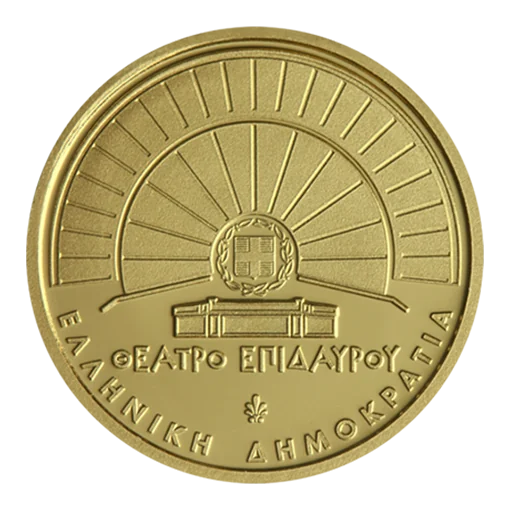
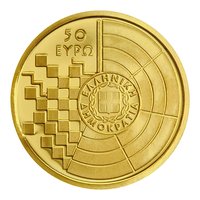
The design shows the theatre layout with the national crest in the center, below which are the Greek inscriptions "ΘΕΑΤΡΟ ΕΠΙΔΑΥΡΟΥ," the mintmark, and "ΕΛΛΗΝΙΚΗ ΔΗΜΟΚΡΑΤΙΑ."
Inscription:
ΘΕΑΤΡΟ ΕΠΙΔΑΥΡΟΥ
ΕΛΛΗΝΙΚΗ ΔΗΜΟΚΡΑΤΙΑ
ΕΛΛΗΝΙΚΗ ΔΗΜΟΚΡΑΤΙΑ
Translation:
THEATRE OF EPIDAURUS
HELLENIC REPUBLIC
HELLENIC REPUBLIC
Script: Greek
Language: Greek
Engraver: Maria Andonatou
Reverse
Description:
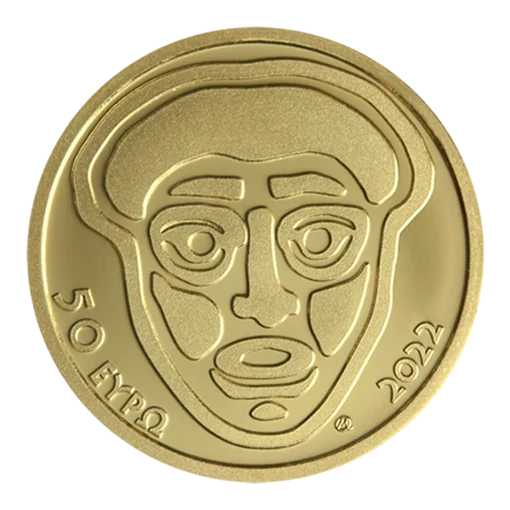
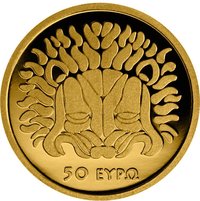
The design features an ancient Greek theatre mask with the denomination "50 EURO" and the year inscribed below.
Inscription:
50 ΕΥΡΩ
2022
2022
Translation:
50 EURO
2022
2022
Script: Greek
Language: Greek
Engraver: Maria Andonatou
Edge
Plain
Categories
| Art> Theatre |
| Symbols> Coat of Arms |
Mints
| Name | Mark |
|---|---|
| National Mint of the Bank of Greece | — |
Mintings
| Year | Mint Mark | Mintage | Quality | Collection |
|---|---|---|---|---|
| 2022 | — | 1,500 | Proof |
Historical background
In 2022, Greece continued its recovery from the decade-long sovereign debt crisis (2009-2018), operating under the stability of the euro as its currency. The country had successfully exited its third and final international bailout program in 2018 and had regained full market access, but the legacy of the crisis was still deeply felt. Key challenges included a public debt-to-GDP ratio hovering near 200% (the highest in the Eurozone), a banking sector burdened by high levels of non-performing loans, and the need to maintain primary budget surpluses to service its debt obligations. The year was also marked by the ongoing economic repercussions of the COVID-19 pandemic and the onset of the energy crisis triggered by the war in Ukraine, which fueled inflation and threatened growth.
The currency situation itself was defined by Greece's irrevocable membership in the Eurozone, which provided monetary stability and eliminated exchange rate risk within the bloc. This was a crucial anchor of confidence, preventing a return to the drachma and the catastrophic capital flight that speculation about "Grexit" had caused during the crisis years. The European Central Bank's (ECB) monetary policy, including low interest rates and pandemic-era bond-buying programs, was essential in keeping Greek borrowing costs manageable. However, this also meant Greece had no independent monetary or exchange rate tools to combat the inflation that surged in 2022, relying instead on constrained fiscal measures and EU-wide energy subsidies.
Looking forward, 2022 was a year of cautious optimism tempered by significant headwinds. The economy showed resilience, with tourism rebounding strongly and growth projections exceeding the Eurozone average. The government focused on implementing reforms linked to Greece's National Recovery and Resilience Plan, funded by the EU's Recovery and Resilience Facility (RRF), to drive digital and green investments. Ultimately, the currency situation underscored a central reality: Greece's financial stability was inextricably tied to the Eurozone's collective policies and its own continued fiscal discipline, as it worked to solidify its recovery while navigating new global economic shocks.
The currency situation itself was defined by Greece's irrevocable membership in the Eurozone, which provided monetary stability and eliminated exchange rate risk within the bloc. This was a crucial anchor of confidence, preventing a return to the drachma and the catastrophic capital flight that speculation about "Grexit" had caused during the crisis years. The European Central Bank's (ECB) monetary policy, including low interest rates and pandemic-era bond-buying programs, was essential in keeping Greek borrowing costs manageable. However, this also meant Greece had no independent monetary or exchange rate tools to combat the inflation that surged in 2022, relying instead on constrained fiscal measures and EU-wide energy subsidies.
Looking forward, 2022 was a year of cautious optimism tempered by significant headwinds. The economy showed resilience, with tourism rebounding strongly and growth projections exceeding the Eurozone average. The government focused on implementing reforms linked to Greece's National Recovery and Resilience Plan, funded by the EU's Recovery and Resilience Facility (RRF), to drive digital and green investments. Ultimately, the currency situation underscored a central reality: Greece's financial stability was inextricably tied to the Eurozone's collective policies and its own continued fiscal discipline, as it worked to solidify its recovery while navigating new global economic shocks.
Series: Greek Cultural Heritage
💎 Extremely Rare