

50 baiocchi – Papal States
Add to wishlist
Vatican City
Context
Years: 1850–1857
Country: Vatican City
Issuer: Papal States
Ruler: Pius IX
Currency:
(1835—1866)
Subdivision: 50 baiocchi = ½ Scudo
Demonetized: Yes
Total mintage: 127,879
Material
References
KM: #
Numista: #38367
Value
Bullion value: $29.67
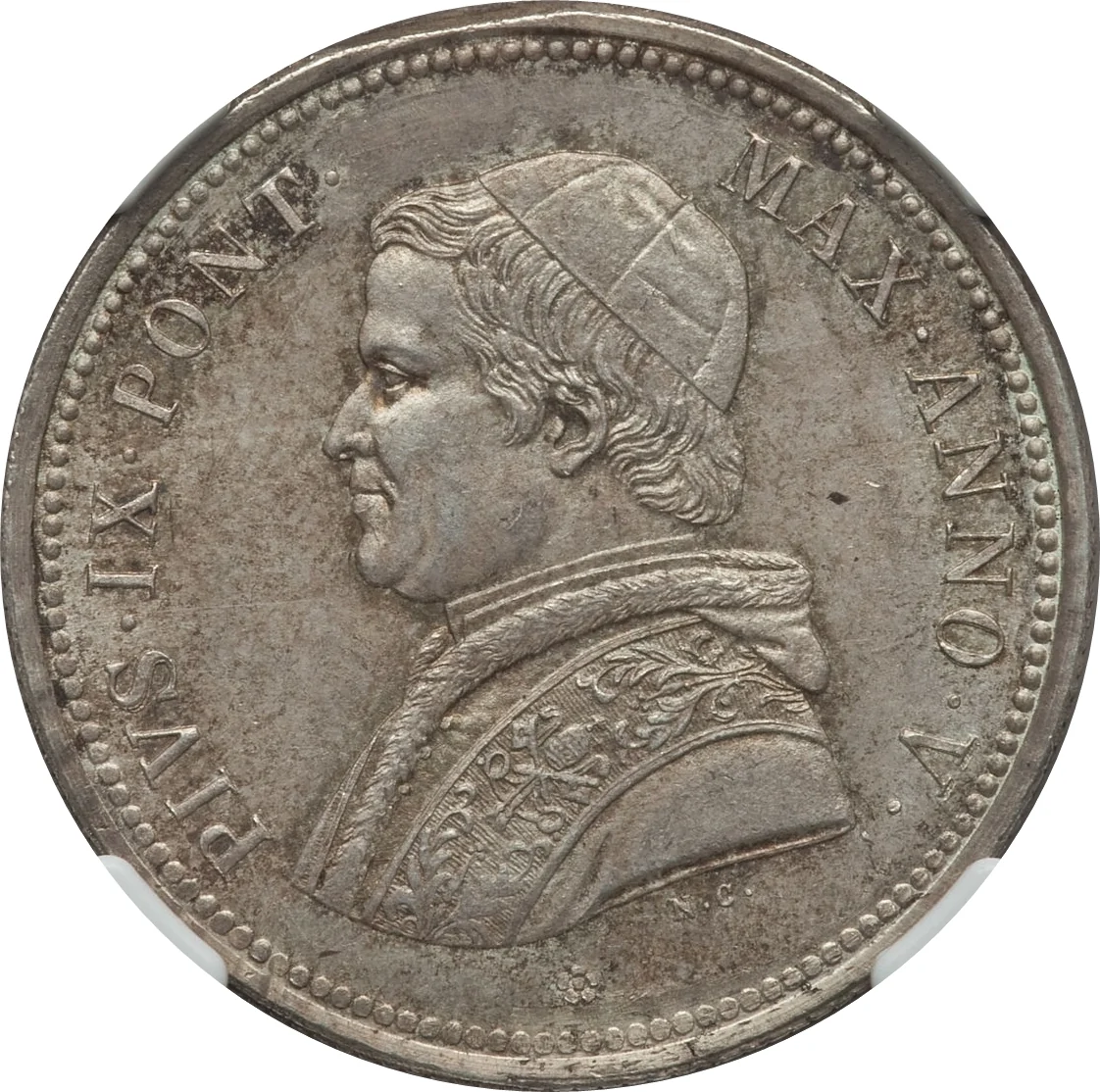
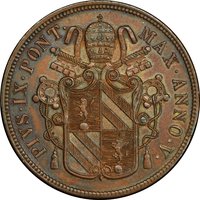
Obverse
Description:
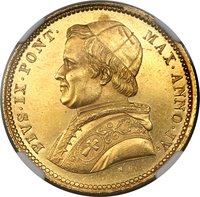
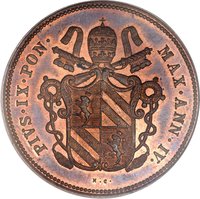
Leftward bust.
Inscription:
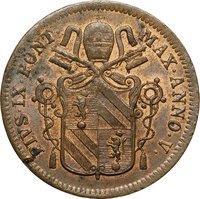
PIVS٠IX٠PONT٠MAX٠ANNO٠V٠
N.C.
N.C.
Translation:
Pius IX, Pontifex Maximus, Year 5.
Script: Latin
Language: Latin
Engraver: Niccolò Cerbara
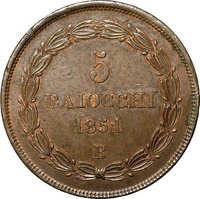
Reverse
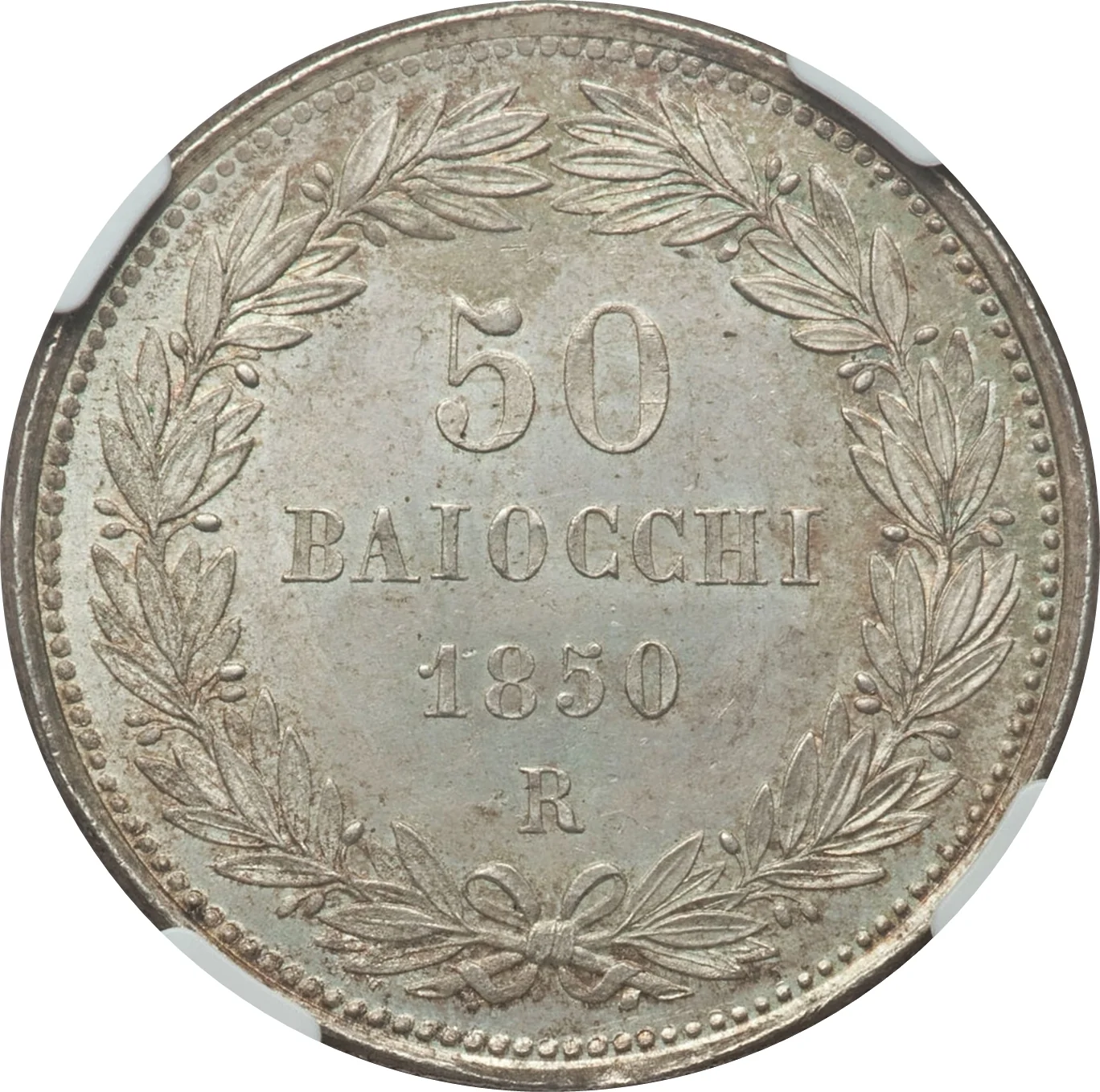
Description:
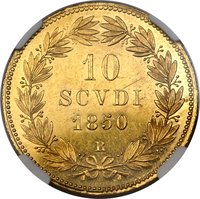
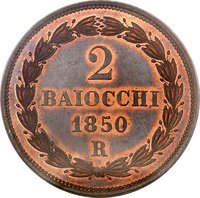
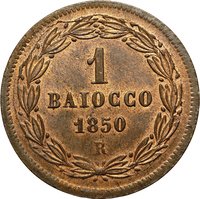
Value, date, mintmark encircled.
Inscription:
50
BAIOCCHI
1850
R
BAIOCCHI
1850
R
Script: Latin
Engraver: Niccolò Cerbara
Edge
Historical background
In 1850, the Papal States found itself in a complex and challenging monetary situation, a direct consequence of the political upheavals of 1848-49. The short-lived Roman Republic and the subsequent exile of Pope Pius IX had caused severe economic disruption, including a flight of capital and a suspension of the state's banking activities. The restored papal government, under significant financial strain from the costs of restoration and maintaining a larger garrison with French assistance, faced a critical shortage of specie (gold and silver coin). This led to a proliferation of unstable paper money and a de facto devaluation, as public confidence in the currency plummeted.
The circulating medium was a chaotic mix of outdated and debased coins. The primary silver coin was the scudo, divided into 100 baiocchi, but its value and metal content had been eroded over time. Alongside these, various foreign coins—particularly French, Austrian, and Tuscan—circulated widely, their values fluctuating based on metal content and arbitrary decree. Most problematic was the abundance of low-value copper coins and small-denomination paper notes, often issued by city governments or even private entities to alleviate the chronic small-change shortage. This created a multi-tiered system where transactions were cumbersome, and trust in the state's monetary authority was weak.
Pope Pius IX's government recognized the need for reform and, in 1850, began laying the groundwork for a comprehensive monetary reorganization. This effort would culminate in the major reform of 1866, which introduced a new lira-based system aligned with the Latin Monetary Union. However, in the immediate post-restoration year of 1850, the situation remained one of transitional disorder. The state was grappling with the immediate pressures of budget deficits and a lack of bullion, while attempting to plan for a stable, modern currency that could facilitate trade and restore fiscal credibility, all within a political climate that was increasingly precarious as the movement for Italian unification gained momentum.
The circulating medium was a chaotic mix of outdated and debased coins. The primary silver coin was the scudo, divided into 100 baiocchi, but its value and metal content had been eroded over time. Alongside these, various foreign coins—particularly French, Austrian, and Tuscan—circulated widely, their values fluctuating based on metal content and arbitrary decree. Most problematic was the abundance of low-value copper coins and small-denomination paper notes, often issued by city governments or even private entities to alleviate the chronic small-change shortage. This created a multi-tiered system where transactions were cumbersome, and trust in the state's monetary authority was weak.
Pope Pius IX's government recognized the need for reform and, in 1850, began laying the groundwork for a comprehensive monetary reorganization. This effort would culminate in the major reform of 1866, which introduced a new lira-based system aligned with the Latin Monetary Union. However, in the immediate post-restoration year of 1850, the situation remained one of transitional disorder. The state was grappling with the immediate pressures of budget deficits and a lack of bullion, while attempting to plan for a stable, modern currency that could facilitate trade and restore fiscal credibility, all within a political climate that was increasingly precarious as the movement for Italian unification gained momentum.
💎 Extremely Rare