

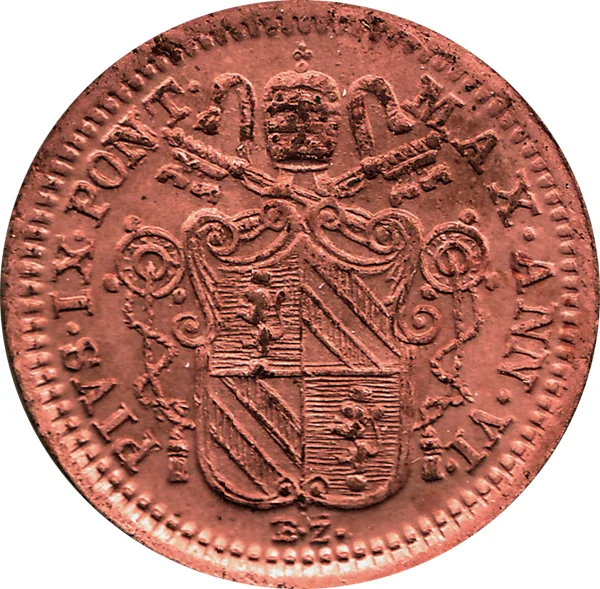
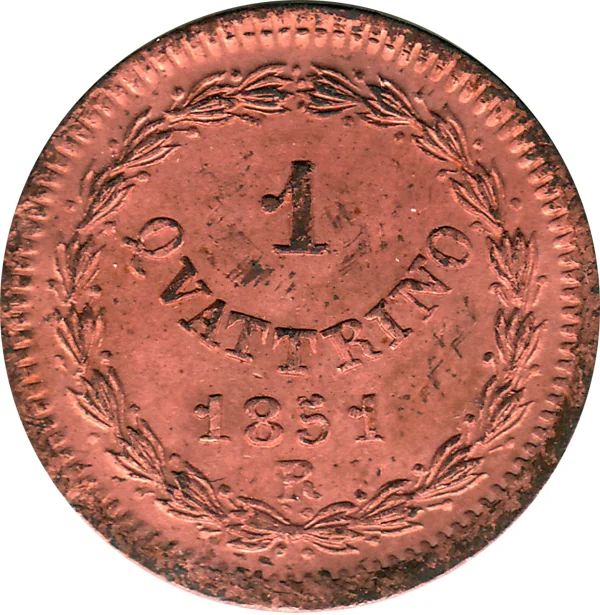
1 quattrino – Papal States
Add to wishlist
Vatican City
Context
Years: 1851–1854
Country: Vatican City
Issuer: Papal States
Ruler: Pius IX
Currency:
(1835—1866)
Demonetized: Yes
Total mintage: 263,250
Material
References
KM: #
Numista: #38347
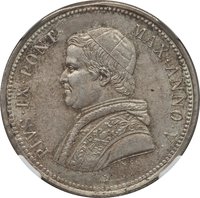
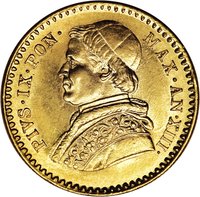
Obverse
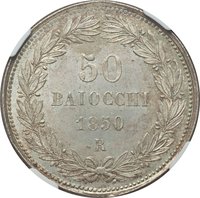
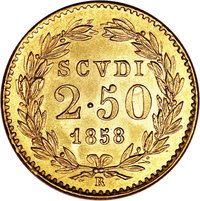
Reverse
Edge
Mintings
| Year | Mint Mark | Mintage | Quality | Collection |
|---|---|---|---|---|
| 1851 | R | 90,000 | ||
| 1854 | B | 173,250 |
Historical background
In 1851, the Papal States found itself in a complex and challenging monetary situation, typical of the fragmented Italian peninsula before unification. The territory lacked a unified, modern currency system, operating instead with a confusing mosaic of coins from various eras and origins. Circulating alongside the official Papal scudo (divided into 100 baiocchi) were older Roman coins, issues from other Italian states like Tuscany and Naples, and even French and Austrian currency, reflecting the political influence of those powers. This proliferation of different coins, each with fluctuating values, created significant obstacles for commerce and daily transactions, hindering economic development.
The root of this disarray was both political and economic. The Papal government, under Pope Pius IX, faced chronic budgetary deficits exacerbated by the costs of maintaining civil administration and a garrison of foreign troops following the revolutions of 1848-49. To raise funds, the state often resorted to debasing its coinage—reducing the precious metal content—which further eroded public trust in the official currency. Consequently, the value of Papal coins was unstable, and their acceptance, especially outside Rome, was inconsistent, with merchants and citizens often preferring foreign specie known for its reliable metallic value.
Ultimately, the monetary chaos of 1851 was a symptom of the Papal States' broader struggle to modernize its medieval administrative and economic structures within the rising tide of nationalism and industrial change. The inability to establish a stable, uniform currency not only hampered internal trade but also symbolized the growing disconnect between the temporal governance of the Papacy and the practical needs of its populace. This financial instability would persist until the Papal States' incorporation into the Kingdom of Italy in 1870, which finally brought the region into a single, national monetary system.
The root of this disarray was both political and economic. The Papal government, under Pope Pius IX, faced chronic budgetary deficits exacerbated by the costs of maintaining civil administration and a garrison of foreign troops following the revolutions of 1848-49. To raise funds, the state often resorted to debasing its coinage—reducing the precious metal content—which further eroded public trust in the official currency. Consequently, the value of Papal coins was unstable, and their acceptance, especially outside Rome, was inconsistent, with merchants and citizens often preferring foreign specie known for its reliable metallic value.
Ultimately, the monetary chaos of 1851 was a symptom of the Papal States' broader struggle to modernize its medieval administrative and economic structures within the rising tide of nationalism and industrial change. The inability to establish a stable, uniform currency not only hampered internal trade but also symbolized the growing disconnect between the temporal governance of the Papacy and the practical needs of its populace. This financial instability would persist until the Papal States' incorporation into the Kingdom of Italy in 1870, which finally brought the region into a single, national monetary system.
💎 Very Rare