

20 kroner (Norwegian Mapping Authority) – Norway
Add to wishlist
Circulating commemorative coins
Commemoration: The Norwegian Mapping Authority 250 Years
Norway
Context
Material
Diameter: 27.5 mm
Weight: 9.9 g
Thickness: 2.2 mm
Shape: Round
Composition: Nickel brass (81% Copper)
Magnetic: No
Technique: Milled
Alignment: Medal alignment
flip
References
KM: #
Numista: #379295
Value
Exchange value: 20 NOK
Inflation-adjusted value: 22.15 NOK
Obverse
Description:
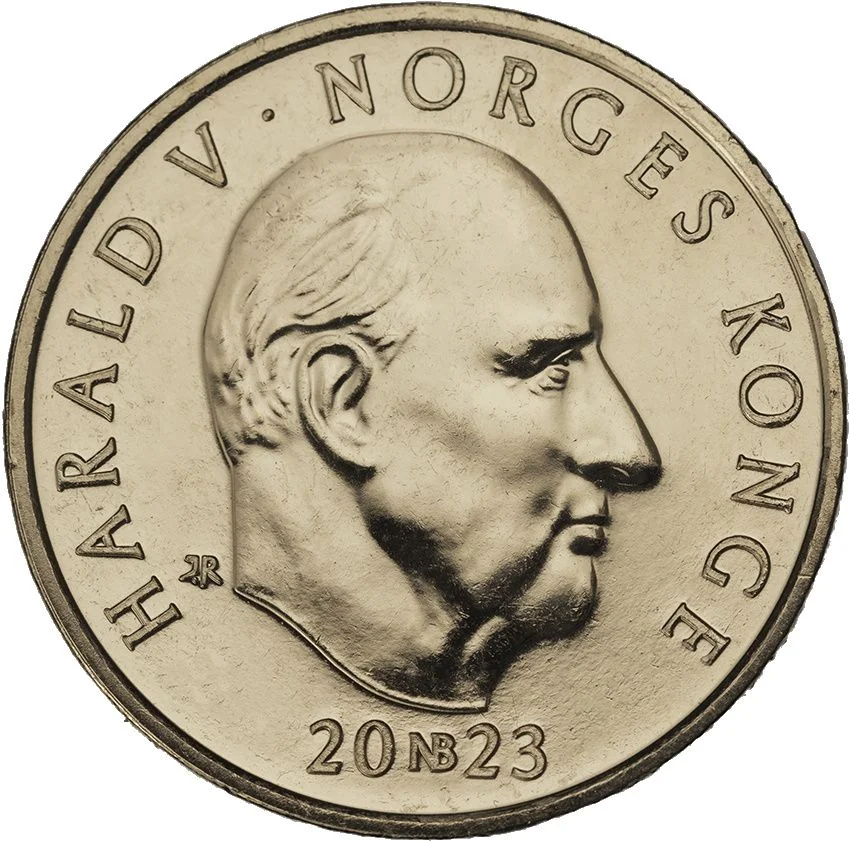
King Harald V bust facing right. Engraver's initials behind bust. Inscription surrounds. Date flanking "NB" below. Solid rim ring.
Inscription:
HARALD V ∙ NORGES KONGE
IAR
20 NB 23
IAR
20 NB 23
Translation:
Harald V, Norway's King
IAR
20 NB 23
IAR
20 NB 23
Script: Latin
Engraver: Ingrid Austlid Rise
Reverse
Description:
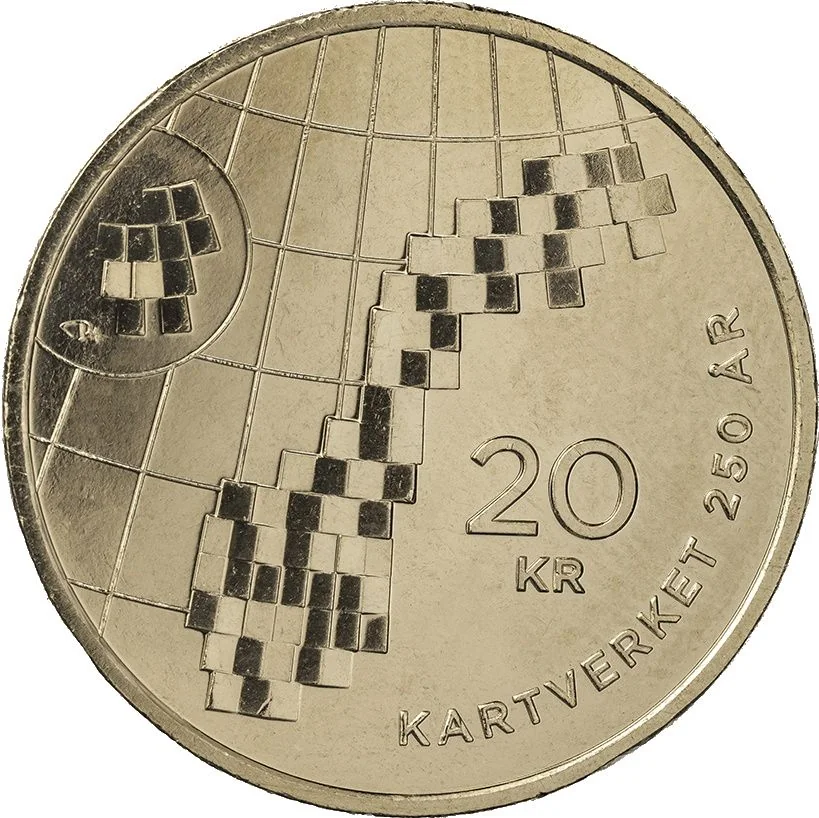
Norway and Svalbard map. Designer initials below Svalbard. Value to the right. Inscription bottom right. Solid rim ring.
Inscription:
TH
20
KR
KARTVERKET 250 ÅR
20
KR
KARTVERKET 250 ÅR
Translation:
The Norwegian Mapping and Cadastre Authority 250 Years
Script: Latin
Language: Norwegian
Engraver: Ingrid Austlid Rise
Designer: Torgeir Husevaag
Edge
Plain
Mints
| Name | Mark |
|---|---|
| Norwegian Mint | — |
Mintings
| Year | Mint Mark | Mintage | Quality | Collection |
|---|---|---|---|---|
| 2023 | — | 500,000 | ||
| 2023 | — | 2,000 | Proof |
Historical background
In 2023, Norway's currency, the krone (NOK), experienced significant depreciation against major currencies like the US dollar and the euro, reaching historically weak levels. This trend, which began in 2022, was primarily driven by a widening interest rate differential. While central banks like the European Central Bank and the Federal Reserve aggressively raised rates to combat inflation, Norges Bank adopted a more cautious and gradual approach. This made krone-denominated assets less attractive to international investors, leading to capital outflows and downward pressure on the currency.
The weak krone presented a complex economic picture for Norway. On one hand, it provided a substantial boost to the country's crucial petroleum sector, as oil and gas exports became more profitable in krone terms, further filling the state's sovereign wealth fund. On the other hand, it increased the cost of imports, contributing to persistent domestic inflation and a higher cost of living for Norwegian households. This created a policy dilemma for Norges Bank, which had to balance fighting inflation with the risk of harming an economy sensitive to higher borrowing costs.
By the end of 2023, the krone showed some signs of stabilization but remained weak. Norges Bank continued its tightening cycle, implementing further rate hikes with a clear signal that rates would stay "high for longer." The bank explicitly cited the weak currency as a contributing factor to inflation, making its strength a consideration in monetary policy. Ultimately, the year highlighted Norway's vulnerability to global capital flows and the challenging trade-offs between a weak currency's export benefits and its domestic inflationary consequences.
The weak krone presented a complex economic picture for Norway. On one hand, it provided a substantial boost to the country's crucial petroleum sector, as oil and gas exports became more profitable in krone terms, further filling the state's sovereign wealth fund. On the other hand, it increased the cost of imports, contributing to persistent domestic inflation and a higher cost of living for Norwegian households. This created a policy dilemma for Norges Bank, which had to balance fighting inflation with the risk of harming an economy sensitive to higher borrowing costs.
By the end of 2023, the krone showed some signs of stabilization but remained weak. Norges Bank continued its tightening cycle, implementing further rate hikes with a clear signal that rates would stay "high for longer." The bank explicitly cited the weak currency as a contributing factor to inflation, making its strength a consideration in monetary policy. Ultimately, the year highlighted Norway's vulnerability to global capital flows and the challenging trade-offs between a weak currency's export benefits and its domestic inflationary consequences.
🌟 Limited