

20 kroner (Hans Nielsen Hauge) – Norway
Add to wishlist
Circulating commemorative coins
Commemoration: Hans Nielsen Hauge 250 years birth anniversary
Norway
Context
Material
References
KM: #
Numista: #297869
Value
Exchange value: 20 NOK
Inflation-adjusted value: 24.24 NOK
Obverse
Description:
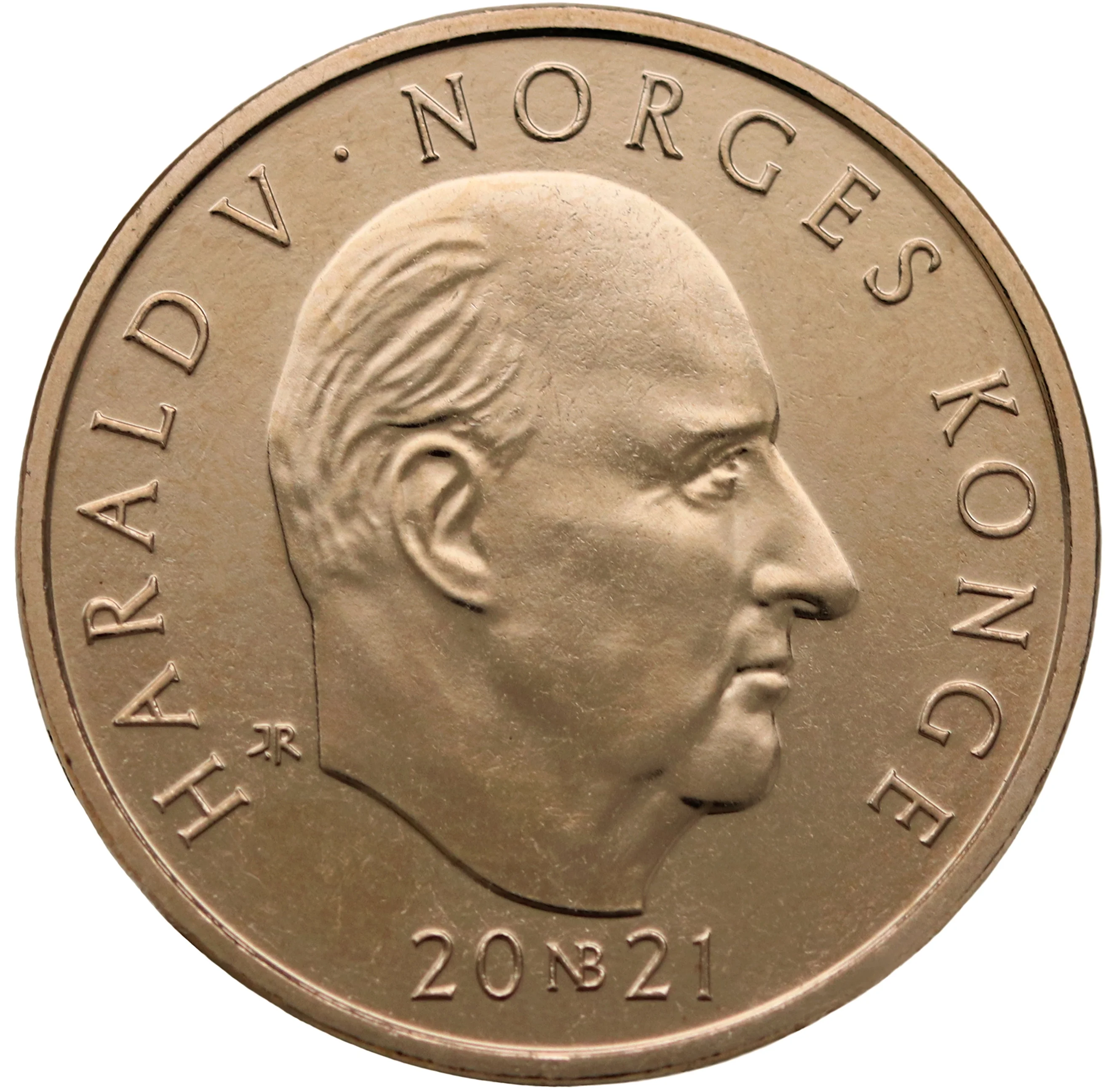
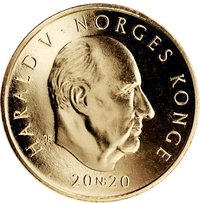
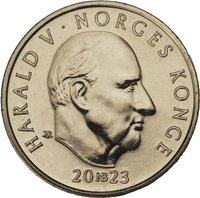
King Harald V bust facing right. Engraver's initials behind bust. Inscription surrounds. Date flanking "NB" below. Solid rim ring.
Inscription:
HARALD V ∙ NORGES KONGE
IAR
20 NB 21
IAR
20 NB 21
Translation:
Harald V, Norway's King
IAR
20 NB 21
IAR
20 NB 21
Script: Latin
Engraver: Ingrid Austlid Rise
Reverse
Description:
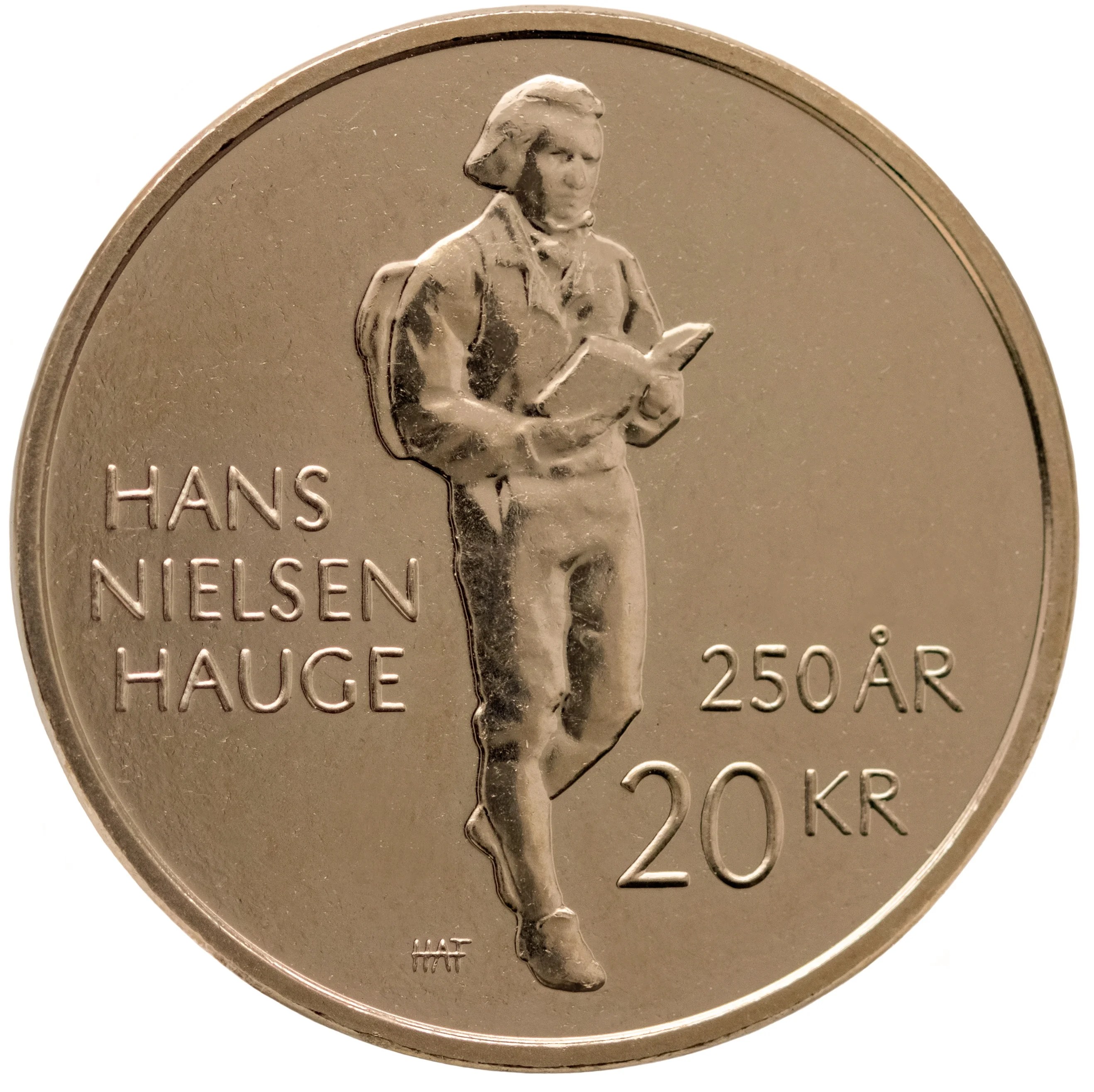
Hans Nielsen Hauge walking, reading a book. Inscriptions left and right, value on the right. Designer initials bottom left. Solid rim ring.
Inscription:
HANS
NIELSEN
HAUGE | 250 ÅR
20 KR
HAF
NIELSEN
HAUGE | 250 ÅR
20 KR
HAF
Translation:
HANS
NIELSEN
HAUGE | 250 YEARS
20 KR
HAF
NIELSEN
HAUGE | 250 YEARS
20 KR
HAF
Script: Latin
Language: Norwegian
Engraver: Ingrid Austlid Rise
Designer: Håkon Anton Fagerås
Edge
Plain
Mints
| Name | Mark |
|---|---|
| Norwegian Mint | — |
Mintings
| Year | Mint Mark | Mintage | Quality | Collection |
|---|---|---|---|---|
| 2021 | — | 519,600 | ||
| 2021 | — | 2,100 | Proof |
Historical background
In 2021, Norway's currency, the krone (NOK), remained significantly weaker than its pre-pandemic and long-term historical averages against major currencies like the euro and the US dollar. This weakness was primarily driven by the enduring low-interest-rate environment set by Norges Bank, which maintained its policy rate at a record-low 0% for most of the year to support the economic recovery. Furthermore, periods of heightened global risk aversion and volatility in oil prices—a key export—continued to exert downward pressure on the krone, as it is often considered a risk-sensitive currency.
Despite the persistent weakness, the latter half of 2021 marked a turning point as Norges Bank became one of the first major Western central banks to begin tightening monetary policy. In September, the bank raised its key policy rate from 0% to 0.25%, signaling a clear shift away from the emergency stimulus of the pandemic. This hawkish move was based on a strong rebound in the Norwegian economy, falling unemployment, and rising household debt and housing prices, which raised financial stability concerns. The rate hike provided some support for the krone, though its effects were tempered by global factors.
Overall, the year was characterized by a tension between domestic strength and external headwinds. Norway's robust economic recovery, fueled by high vaccination rates and substantial fiscal support, contrasted with the krone's subdued performance. The currency's trajectory was a balancing act between the supportive fundamentals of rising oil and gas prices and the normalizing domestic monetary policy on one side, and the broader influences of global investor sentiment and divergent central bank policies abroad on the other.
Despite the persistent weakness, the latter half of 2021 marked a turning point as Norges Bank became one of the first major Western central banks to begin tightening monetary policy. In September, the bank raised its key policy rate from 0% to 0.25%, signaling a clear shift away from the emergency stimulus of the pandemic. This hawkish move was based on a strong rebound in the Norwegian economy, falling unemployment, and rising household debt and housing prices, which raised financial stability concerns. The rate hike provided some support for the krone, though its effects were tempered by global factors.
Overall, the year was characterized by a tension between domestic strength and external headwinds. Norway's robust economic recovery, fueled by high vaccination rates and substantial fiscal support, contrasted with the krone's subdued performance. The currency's trajectory was a balancing act between the supportive fundamentals of rising oil and gas prices and the normalizing domestic monetary policy on one side, and the broader influences of global investor sentiment and divergent central bank policies abroad on the other.
🌟 Uncommon