

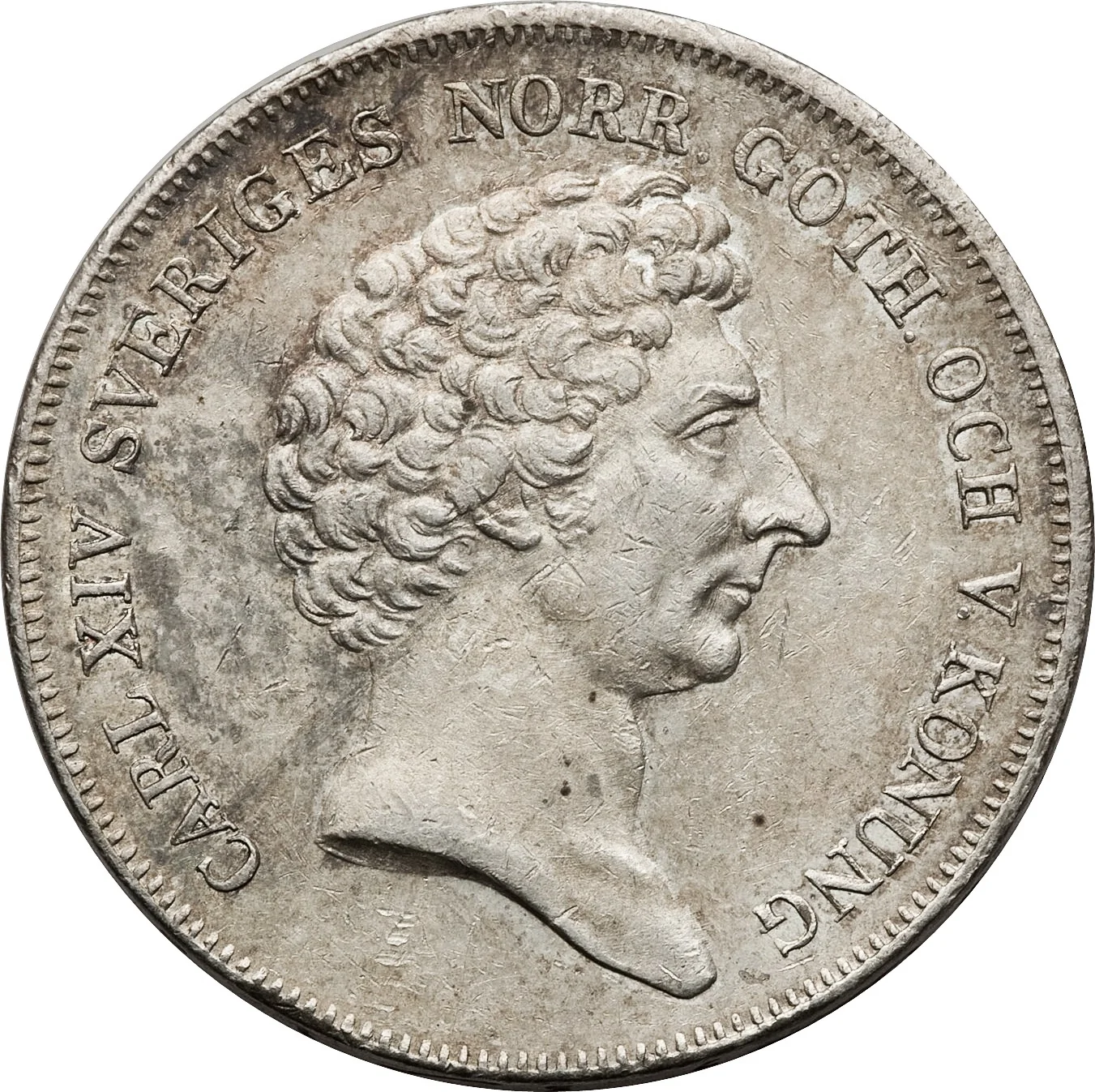
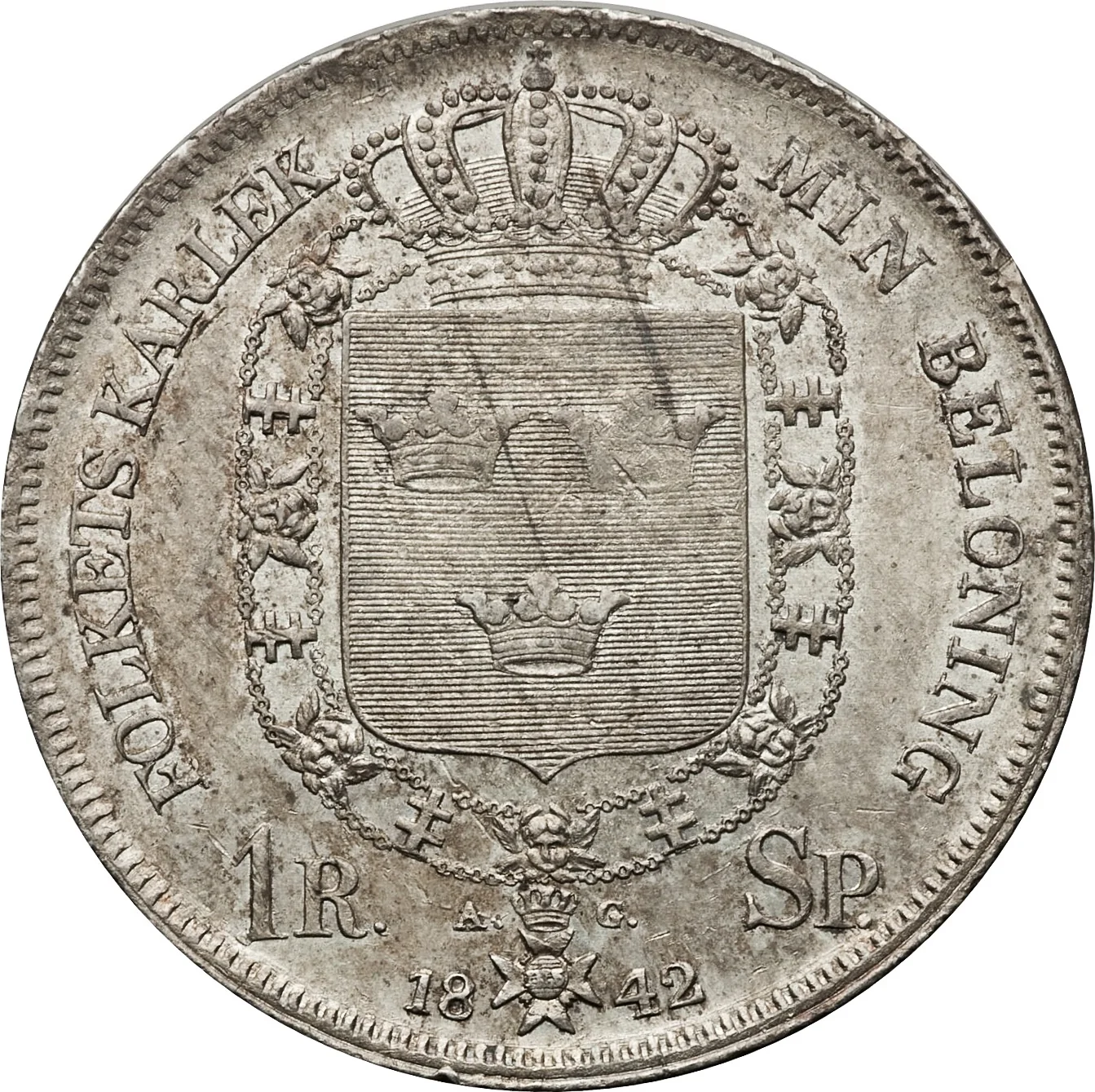
1 riksdaler specie – Sweden
Add to wishlist
Sweden
Context
Years: 1842–1843
Issuer: Sweden
Ruler: Charles XIV John
Currency:
(1830—1855)
Demonetized: Yes
Total mintage: 287,877
Material
References
KM: #
Numista: #37768
Value
Bullion value: $64.91
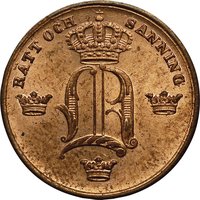
Obverse
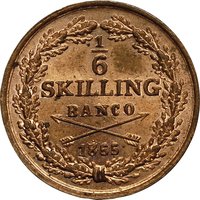
Reverse
Edge
Smooth with incuse lettering
Legend:
75/100 DELAR FINSILVER
Translation:
Seventy-five hundredths fine silver.
Language: Swedish
Categories
| Symbols> Coat of Arms |
Mintings
| Year | Mint Mark | Mintage | Quality | Collection |
|---|---|---|---|---|
| 1842 | AG | 287,877 | ||
| 1843 | AG | — |
Historical background
In 1842, Sweden found itself in a complex monetary situation, characterized by a dual-currency system that was both cumbersome and unstable. Since 1776, the country had operated with two parallel standards: the riksdaler riksmynt (Riksdaler specie), a silver-based currency intended for international trade, and the riksdaler banco, a fiat paper money issued by the central bank (Riksbanken). The value of the paper riksdaler banco fluctuated significantly against the silver riksdaler, leading to confusion, exchange difficulties, and economic uncertainty for both businesses and the public.
This instability was a legacy of the Napoleonic Wars, during which the Riksbank had issued excessive amounts of paper money to finance state expenditures, leading to inflation and a severe depreciation of the banco notes. By the 1830s, the disparity between the two currencies had become a major obstacle to economic modernization and trade. A significant reform in 1834 had attempted to stabilize the system by pegging the riksdaler banco to the silver standard at a fixed rate of 128 skilling banco to 1 riksdaler specie, but this was a theoretical rather than a practical solution, as the bank lacked sufficient silver reserves to fully back its notes.
Therefore, the context in 1842 was one of transition and mounting pressure for definitive reform. The Riksdag (parliament) was actively debating the path toward a unified, stable, and silver-backed currency. The situation demanded decisive action, which would culminate just two years later in the major currency reform of 1844. This reform established a single, new riksdaler divided into 100 öre, firmly placing Sweden on a silver standard and finally abolishing the confusing dual system, paving the way for greater economic integration and growth.
This instability was a legacy of the Napoleonic Wars, during which the Riksbank had issued excessive amounts of paper money to finance state expenditures, leading to inflation and a severe depreciation of the banco notes. By the 1830s, the disparity between the two currencies had become a major obstacle to economic modernization and trade. A significant reform in 1834 had attempted to stabilize the system by pegging the riksdaler banco to the silver standard at a fixed rate of 128 skilling banco to 1 riksdaler specie, but this was a theoretical rather than a practical solution, as the bank lacked sufficient silver reserves to fully back its notes.
Therefore, the context in 1842 was one of transition and mounting pressure for definitive reform. The Riksdag (parliament) was actively debating the path toward a unified, stable, and silver-backed currency. The situation demanded decisive action, which would culminate just two years later in the major currency reform of 1844. This reform established a single, new riksdaler divided into 100 öre, firmly placing Sweden on a silver standard and finally abolishing the confusing dual system, paving the way for greater economic integration and growth.
✨ Legendary