

4 Ducats – Sweden
Sweden
Context
Years: 1837–1843
Issuer: Sweden 
Ruler: Charles XIV John
Currency:
(1830—1855)
Demonetized: Yes
Total mintage: 10,739
Material
References
KM: #Click to copy to clipboard645
Numista: #37766
Value
Bullion value: $2273.03
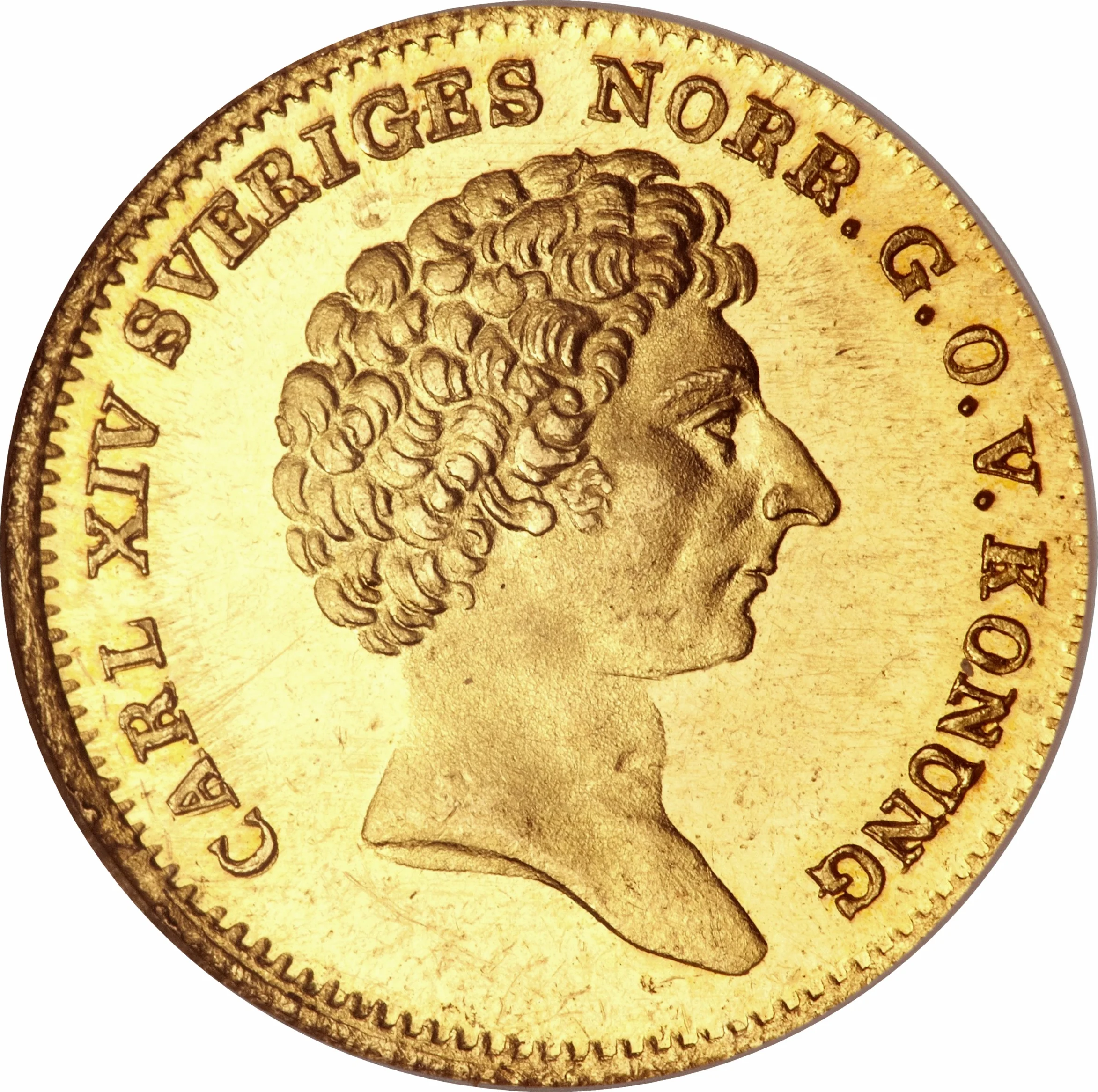
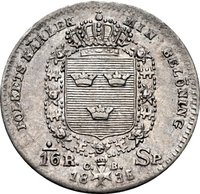
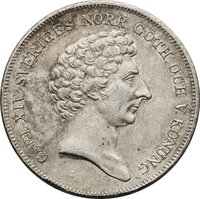
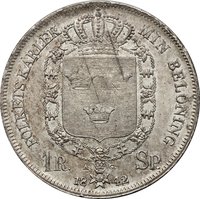
Obverse
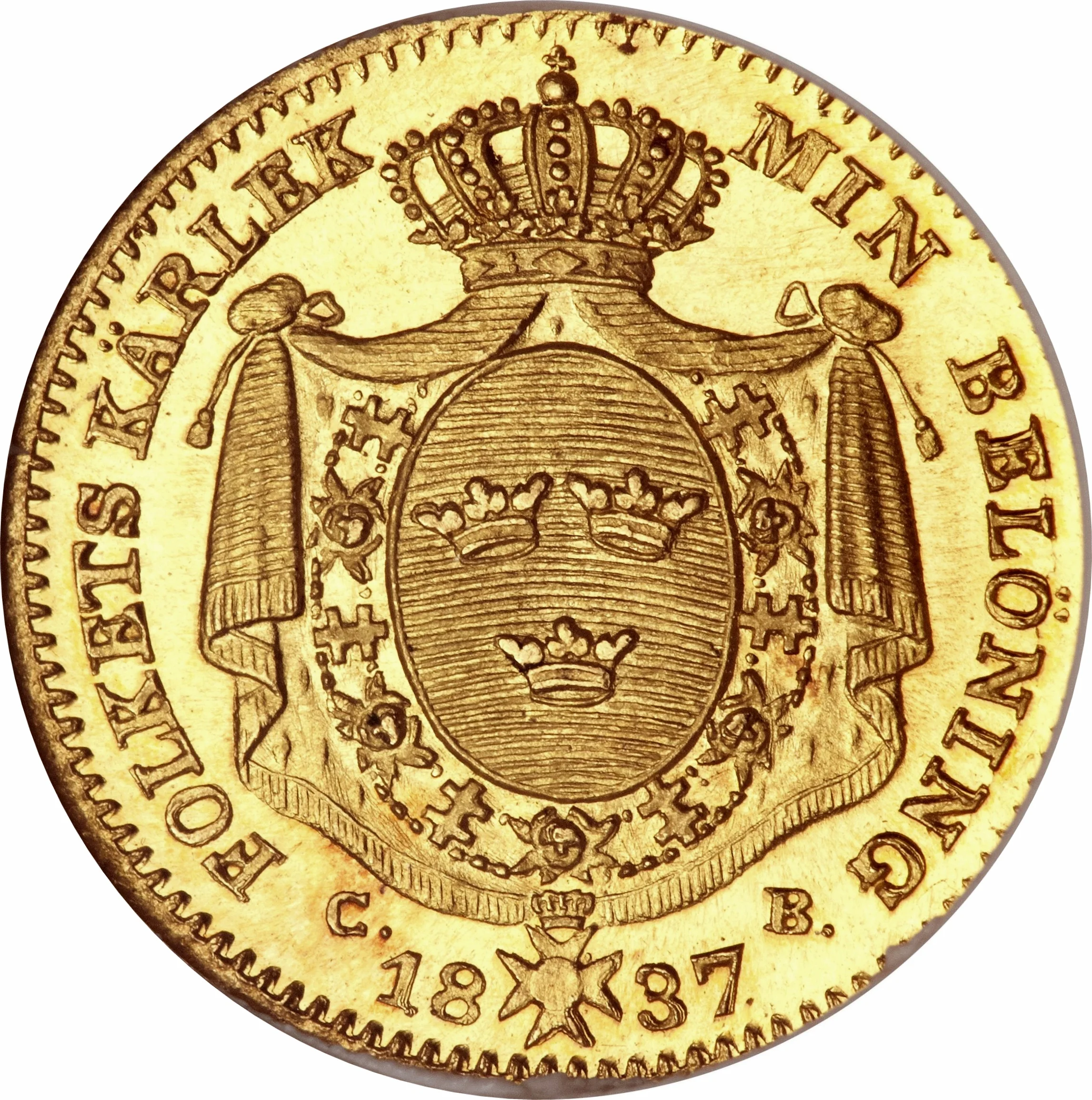
Reverse
Edge
Categories
| Symbols> Coat of Arms |
Mintings
| Year | Mint Mark | Mintage | Quality | Collection |
|---|---|---|---|---|
| 1837 | CB | 1,625 | ||
| 1838 | AG | 625 | ||
| 1839 | AG | 2,000 | ||
| 1841 | AG | 2,084 | ||
| 1843 | AG | 4,405 |
Historical background
In 1837, Sweden operated under a complex and strained monetary system, a legacy of the early 19th-century Napoleonic Wars. The nation was officially on a silver standard, with the riksdaler riksmynt as the primary unit. However, the reality was a chronic shortage of silver coinage, leading to a parallel and dominant circulation of paper money issued by the private Riksens Ständers Bank (the precursor to the Riksbank). This paper, known as riksgäldssedlar, was not freely convertible to silver, causing its value to fluctuate below its face value and creating a de facto dual-currency system that hampered trade and economic predictability.
The situation was further complicated by the existence of older, large copper coins called daler kopparmynt, a remnant of an earlier commodity-based system. These were officially rated against the silver riksdaler, but their actual market value was lower, adding another layer of confusion. This monetary fragmentation created significant practical problems for merchants and the public, who had to navigate between overvalued and undervalued currencies, with exchange rates between paper, silver, and copper being a daily concern.
Consequently, 1837 fell within a period of intense debate and gradual reform. The government and the Bank of the Estates of the Realm were under growing pressure to stabilize the currency and restore confidence. The key goal, which would culminate in the successful reforms of the 1840s and 1850s, was to establish a unified, trustworthy paper currency fully backed by and convertible to silver, thereby moving Sweden toward a modern and functional monetary standard.
The situation was further complicated by the existence of older, large copper coins called daler kopparmynt, a remnant of an earlier commodity-based system. These were officially rated against the silver riksdaler, but their actual market value was lower, adding another layer of confusion. This monetary fragmentation created significant practical problems for merchants and the public, who had to navigate between overvalued and undervalued currencies, with exchange rates between paper, silver, and copper being a daily concern.
Consequently, 1837 fell within a period of intense debate and gradual reform. The government and the Bank of the Estates of the Realm were under growing pressure to stabilize the currency and restore confidence. The key goal, which would culminate in the successful reforms of the 1840s and 1850s, was to establish a unified, trustworthy paper currency fully backed by and convertible to silver, thereby moving Sweden toward a modern and functional monetary standard.
✨ Legendary