

⅙ skilling banco – Sweden
Add to wishlist
Sweden
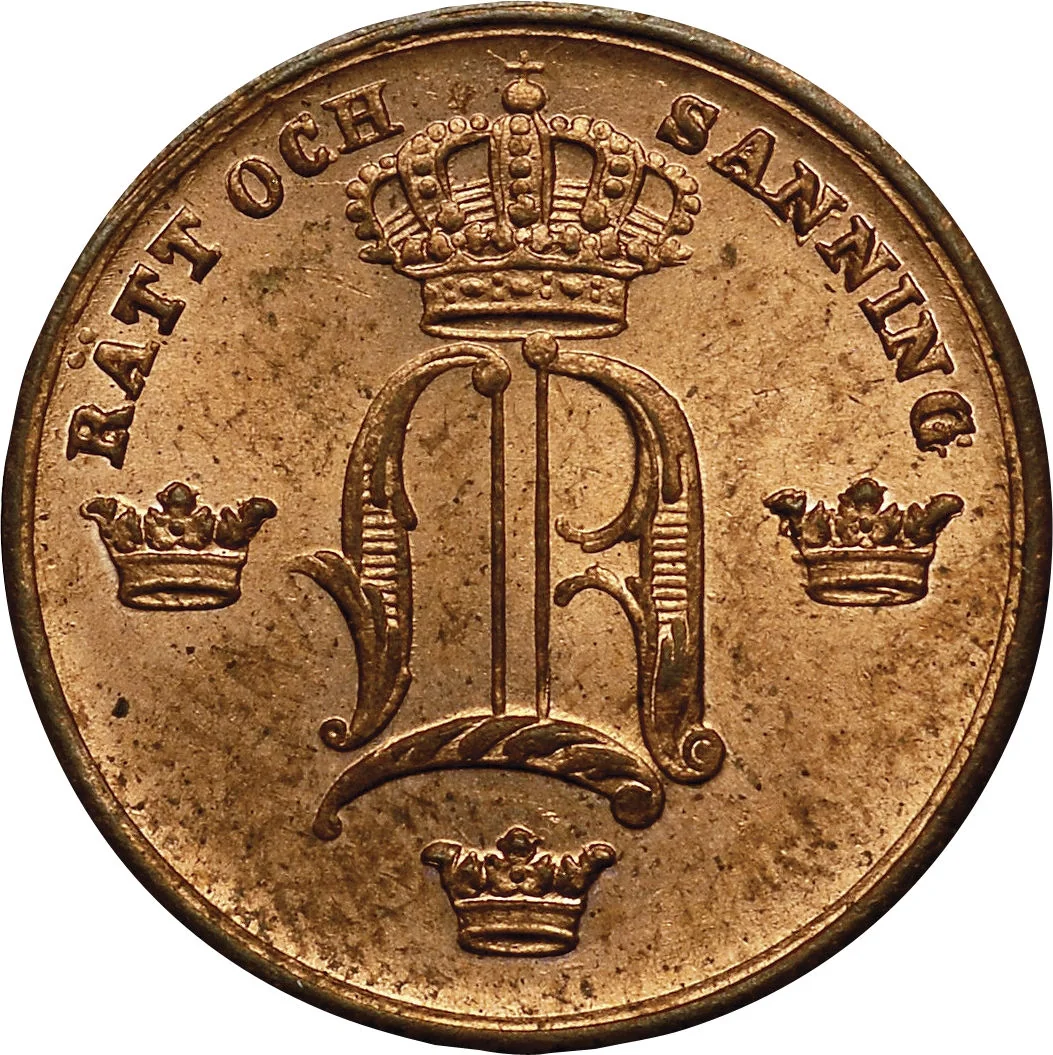
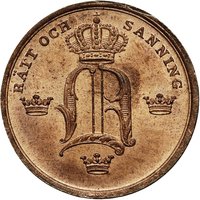
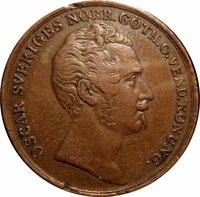
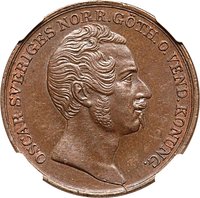
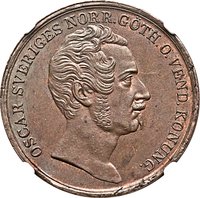
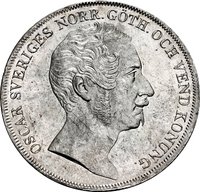
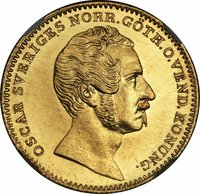
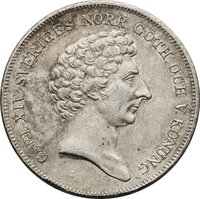
Obverse
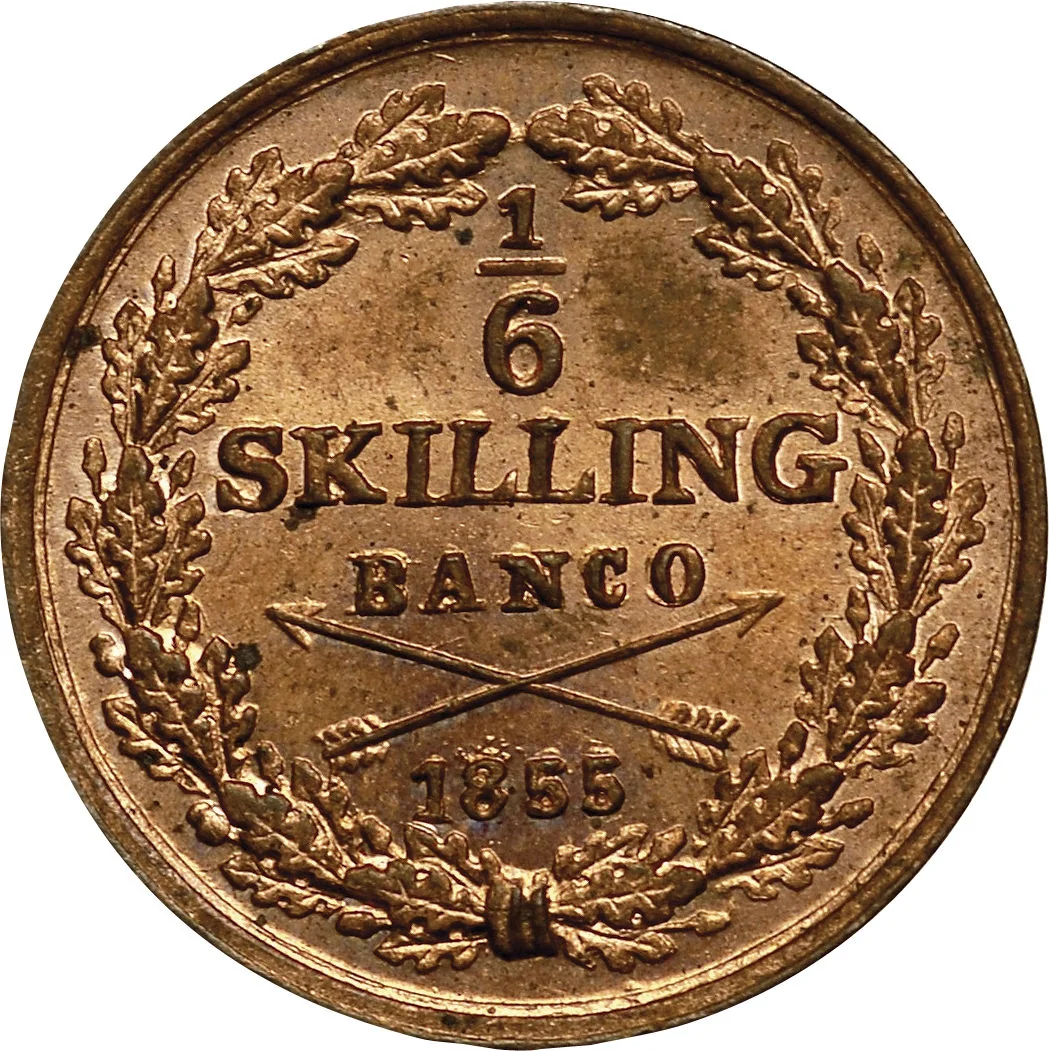
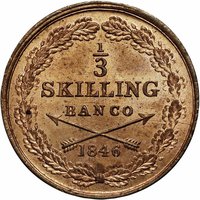
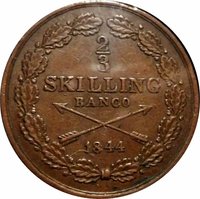
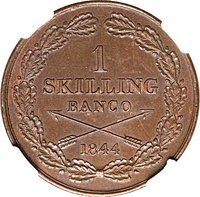
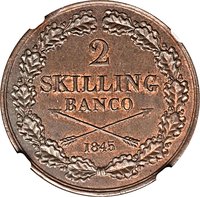
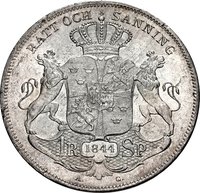
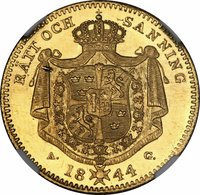
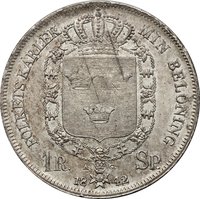
Reverse
Description:
Crossed arrows divide the date and denomination within an oak wreath.
Inscription:
1/6
SKILLING
BANCO
1852
SKILLING
BANCO
1852
Script: Latin
Edge
Plain
Mintings
| Year | Mint Mark | Mintage | Quality | Collection |
|---|---|---|---|---|
| 1844 | — | 291,300 | ||
| 1845 | — | 92,160 | ||
| 1846 | — | 67,104 | ||
| 1847 | — | 822,528 | ||
| 1849 | — | 536,544 | ||
| 1850 | — | 406,944 | ||
| 1851 | — | 486,144 | ||
| 1852 | — | 461,664 | ||
| 1853 | — | 126,144 | ||
| 1854 | — | 421,920 | ||
| 1855 | — | 311,040 |
Historical background
In 1844, Sweden's currency situation was characterized by a bimetallic system that was under significant strain. Since 1834, the country had officially operated on a dual standard, with both silver and gold coins recognized as legal tender at a fixed ratio of 1:15.5. However, this system was unstable because the market value of silver had begun to fall relative to gold, making it profitable to melt down and export silver coins. Consequently, full-weight silver riksdaler coins were disappearing from circulation, leaving a mix of underweight worn coins and banknotes in daily use, which undermined public confidence in the currency.
The primary circulating coin for everyday transactions was the riksdaler riksmynt, a silver-based unit, but its physical representation was problematic. The state was issuing paper money, known as Riksgälds notes, which were theoretically convertible to silver. Yet, due to the scarcity of silver coinage, this convertibility was often theoretical rather than practical. This created a disjointed monetary environment where the unit of account and the actual media of exchange were misaligned, hampering trade and economic predictability.
The year 1844 itself was a point of transition. It marked the death of King Karl XIV Johan, whose reign had seen the establishment of the bimetallic law. His successor, Oscar I, inherited these monetary challenges. While no major reform was enacted in that specific year, the persistent problems of 1844 set the stage for the pivotal currency reform that would follow in 1855. This later reform would decisively abandon bimetallism and adopt a new gold standard, introducing the riksdaler riksmynt as a decimal-based currency fully backed by gold reserves.
The primary circulating coin for everyday transactions was the riksdaler riksmynt, a silver-based unit, but its physical representation was problematic. The state was issuing paper money, known as Riksgälds notes, which were theoretically convertible to silver. Yet, due to the scarcity of silver coinage, this convertibility was often theoretical rather than practical. This created a disjointed monetary environment where the unit of account and the actual media of exchange were misaligned, hampering trade and economic predictability.
The year 1844 itself was a point of transition. It marked the death of King Karl XIV Johan, whose reign had seen the establishment of the bimetallic law. His successor, Oscar I, inherited these monetary challenges. While no major reform was enacted in that specific year, the persistent problems of 1844 set the stage for the pivotal currency reform that would follow in 1855. This later reform would decisively abandon bimetallism and adopt a new gold standard, introducing the riksdaler riksmynt as a decimal-based currency fully backed by gold reserves.
Series: 1844 Sweden circulation coins
🌱 Fairly Common