

10 Francs – Sweden
Sweden
Context
Years: 1868–1872
Issuer: Sweden 
Ruler: Charles XV
Currency:
(1855—1873)
Subdivision: 10 Francs = 1 Carolin
Demonetized: Yes
Total mintage: 81,202
Material
References
KM: #Click to copy to clipboard716
Numista: #37759
Value
Bullion value: $484.69
Obverse
Description:
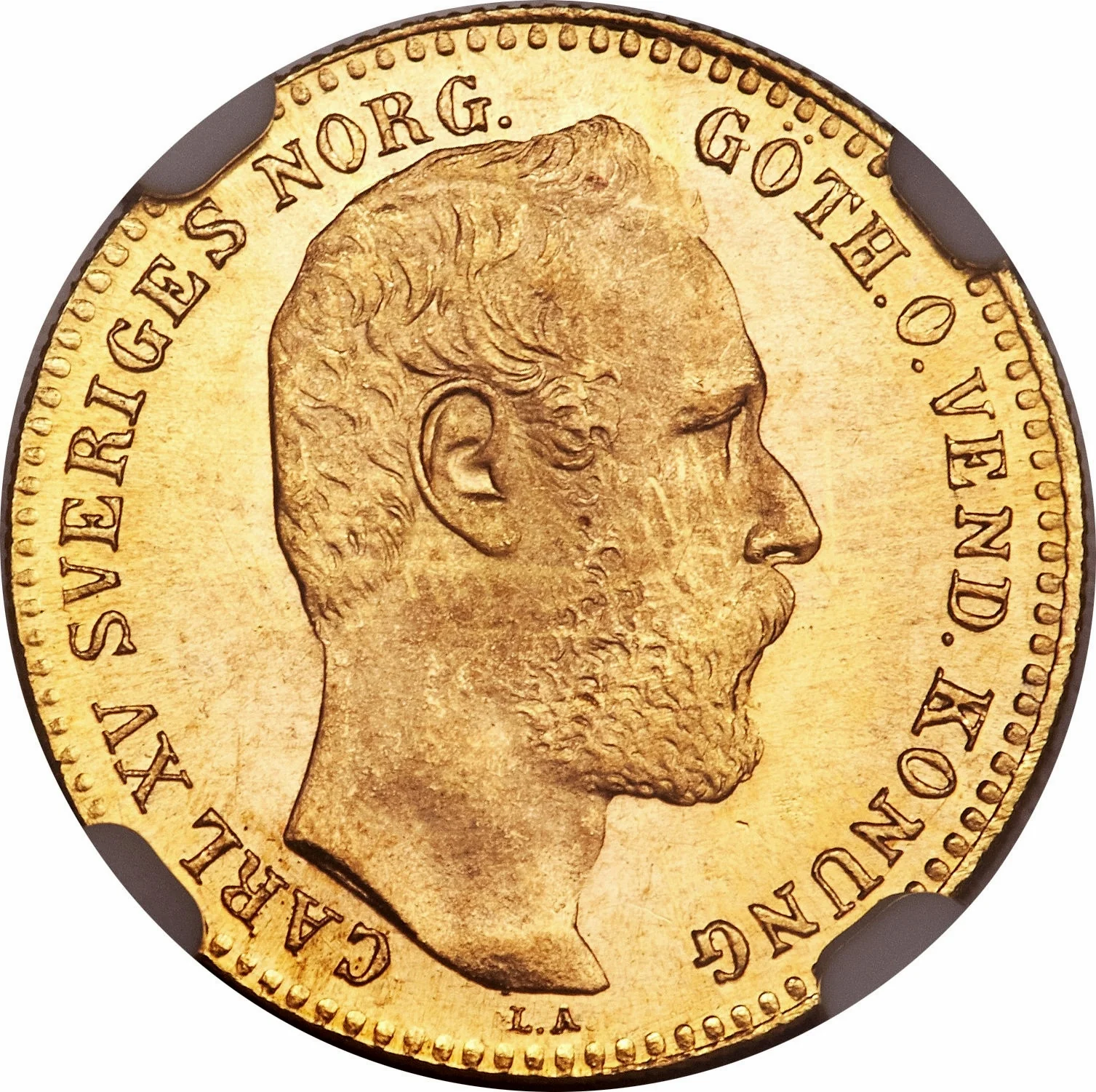
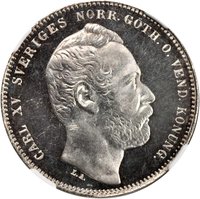
King's head right, encircled by inscription. Engraver's initials below neck.
Inscription:
CARL XV SVERIGES NORG. GÖTH. O. VEND. KONUNG
L.A.
L.A.
Translation:
CARL XV KING OF SWEDEN, NORWAY, THE GOTHS AND THE WENDS
Script: Latin
Language: Swedish
Engraver: Lea Ahlborn
Reverse
Description:
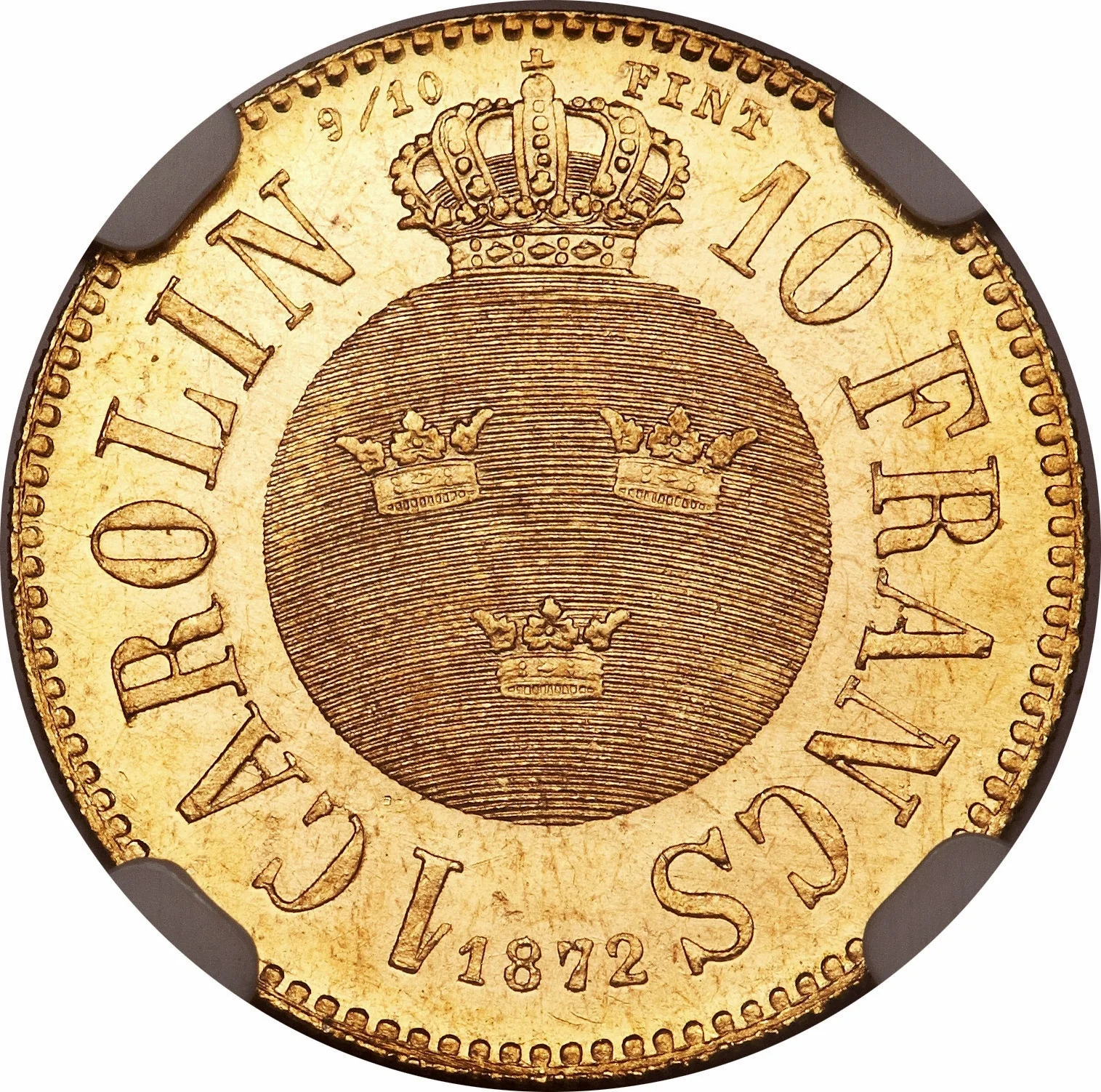
Swedish crown with orb, flanked by value; date below.
Inscription:
9/10 FINT
1 CAROLIN 10 FRANCS
1872
1 CAROLIN 10 FRANCS
1872
Translation:
Nine-tenths Fine Gold
One Carolin Ten Francs
1872
One Carolin Ten Francs
1872
Script: Latin
Engraver: Lea Ahlborn
Edge
Reeded
Categories
| Symbols> Coat of Arms |
Mints
| Name | Mark |
|---|---|
| Kungliga Myntet | — |
Mintings
| Year | Mint Mark | Mintage | Quality | Collection |
|---|---|---|---|---|
| 1868 | — | 33,468 | ||
| 1869 | — | 30,622 | ||
| 1871 | — | 5,153 | ||
| 1872 | — | 11,959 |
Historical background
In 1868, Sweden was in the midst of a significant monetary transition, moving from a centuries-old silver standard to a new gold-based system. This shift was driven by broader European trends, as major trading partners like Britain and the emerging German Empire had adopted gold, making international commerce and exchange rates more complex for nations on silver. Domestically, Sweden's currency, the riksdaler riksmynt, was theoretically backed by silver, but the system was strained and seen as outdated for a modernizing industrial economy.
The practical situation was one of a dual currency system. Alongside the official silver riksdaler, gold coins circulated widely, and the Riksbank (the central bank) held substantial gold reserves. This created instability, as the market value of silver began to fall globally in the 1870s, threatening to devalue Sweden's silver-backed money. Consequently, the Swedish parliament, the Riksdag, had already taken decisive action in 1868 by preparing for the formal adoption of the gold standard, which would legally take effect a few years later, in 1873.
Therefore, the year 1868 represents a pivotal preparatory phase. The political and economic consensus had been reached to abandon silver, and legislative groundwork was being laid. The key outcome of this period was the Scandinavian Monetary Union, established in 1873 in partnership with Denmark, which created a unified currency system based on gold. This move aimed to stabilize the currency, facilitate trade, and integrate Sweden more fully into the European financial system, setting the stage for the country's industrial expansion in the late 19th century.
The practical situation was one of a dual currency system. Alongside the official silver riksdaler, gold coins circulated widely, and the Riksbank (the central bank) held substantial gold reserves. This created instability, as the market value of silver began to fall globally in the 1870s, threatening to devalue Sweden's silver-backed money. Consequently, the Swedish parliament, the Riksdag, had already taken decisive action in 1868 by preparing for the formal adoption of the gold standard, which would legally take effect a few years later, in 1873.
Therefore, the year 1868 represents a pivotal preparatory phase. The political and economic consensus had been reached to abandon silver, and legislative groundwork was being laid. The key outcome of this period was the Scandinavian Monetary Union, established in 1873 in partnership with Denmark, which created a unified currency system based on gold. This move aimed to stabilize the currency, facilitate trade, and integrate Sweden more fully into the European financial system, setting the stage for the country's industrial expansion in the late 19th century.
💎 Extremely Rare