

2 riksdaler riksmynt – Sweden
Add to wishlist
Sweden
Context
Year: 1871
Issuer: Sweden
Ruler: Charles XV
Currency:
(1855—1873)
Demonetized: Yes
Total mintage: 7,557
Material
References
KM: #
Numista: #37650
Value
Bullion value: $32.00
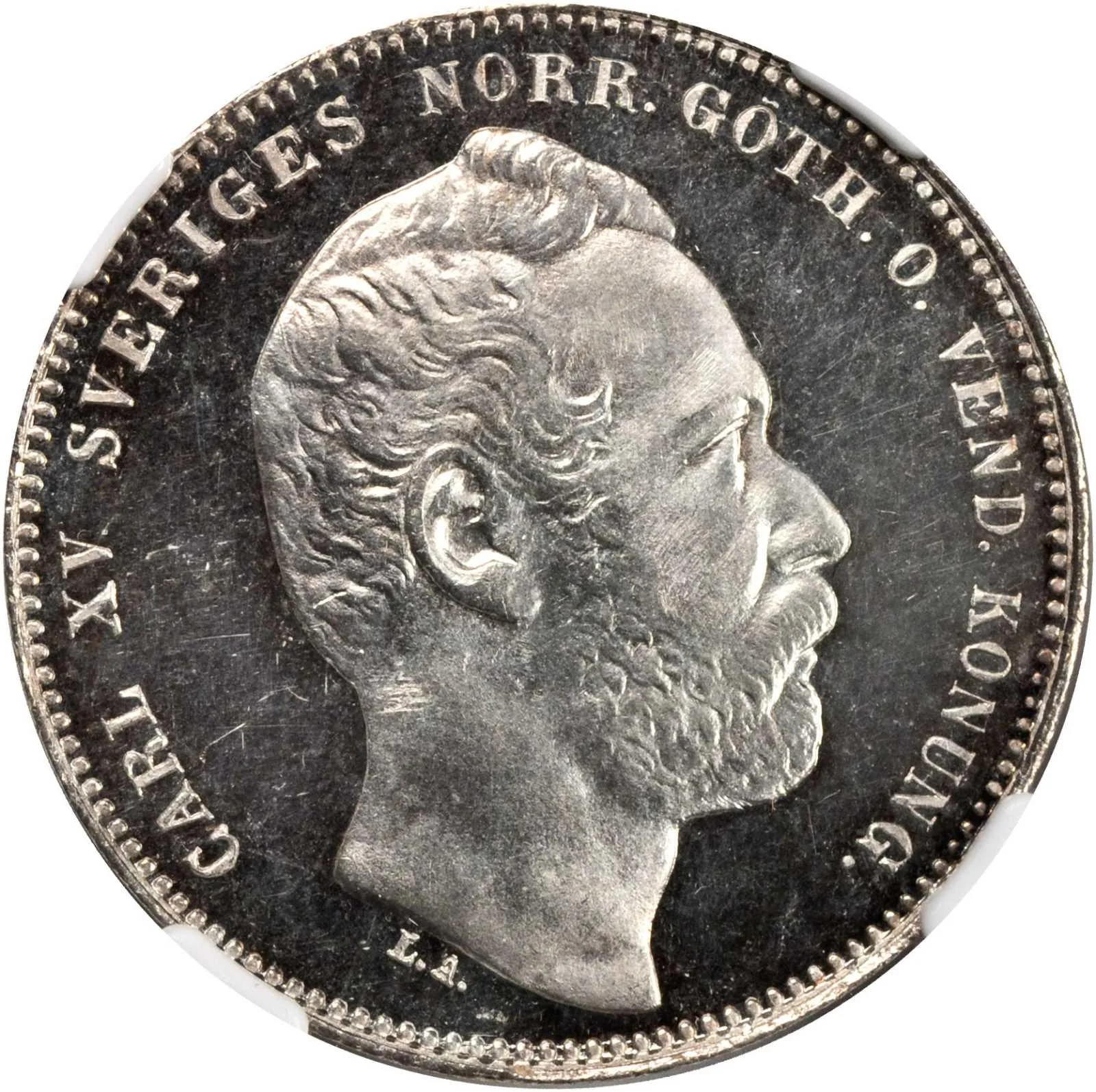
Obverse
Description:
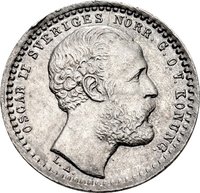
King's head right, encircled by inscription. Engraver's initials below neck.
Inscription:
CARL XV SVERIGES NORR. GÖTH. O. VEND. KONUNG.
L.A.
L.A.
Translation:
CARL XV SWEDEN'S NORR. GÖTH. AND VEND. KING.
L.A.
L.A.
Script: Latin
Language: Swedish
Engraver: Lea Ahlborn
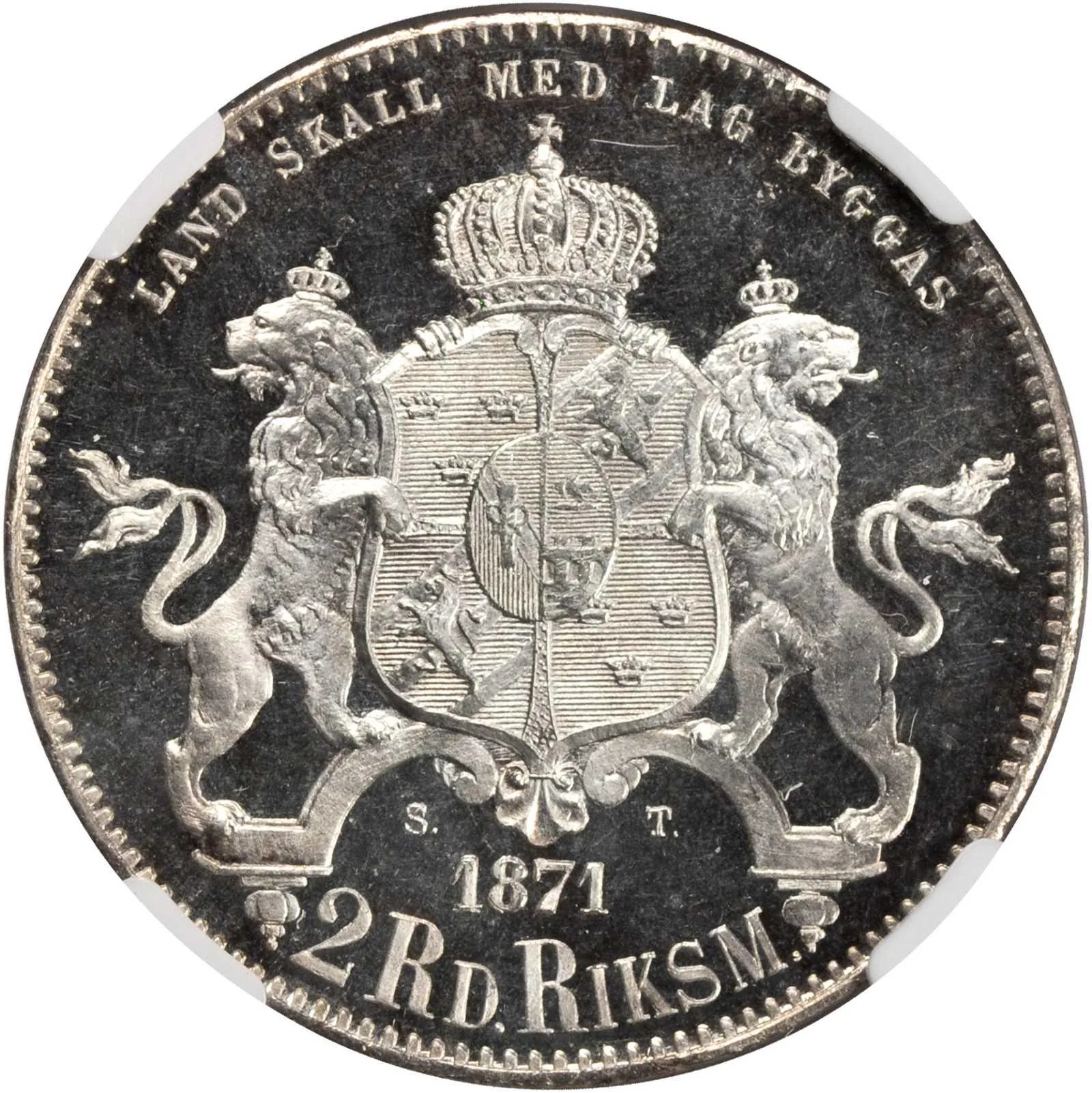
Reverse
Description:
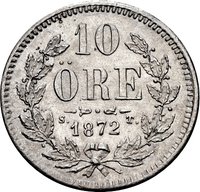
Sweden's royal arms, flanked by lions. Above: the king's motto. Below: mintmark, date, and value.
Inscription:
LAND SKALL MED LAG BYGGAS
S. T.
1871
2 RD.RIKSM.
S. T.
1871
2 RD.RIKSM.
Translation:
The land shall be built with law.
S. T.
1871
2 RD.RIKSM.
S. T.
1871
2 RD.RIKSM.
Script: Latin
Language: Swedish
Engraver: Lea Ahlborn
Edge
Smooth with incused lettering.
Legend:
75/100 DELAR FINSILVER
Translation:
Seventy-five hundredths fine silver.
Language: Swedish
Categories
| Symbols> Coat of Arms |
Mints
| Name | Mark |
|---|---|
| Kungliga Myntet | — |
Mintings
| Year | Mint Mark | Mintage | Quality | Collection |
|---|---|---|---|---|
| 1871 | — | 7,557 |
Historical background
By 1871, Sweden was in the final stages of a significant monetary transition, moving from a complex and outdated system to a modern, standardized one. For centuries, the country had used the riksdaler riksmynt as its primary unit of account, but its circulation was a confusing mix of paper notes issued by the private Riksens Ständers Bank (precursor to the Riksbank) and various silver coins, often alongside foreign currencies. This lack of uniformity hindered trade and economic calculation, especially as industrialization accelerated and international commerce grew.
The pivotal reform came with the Scandinavian Monetary Union, established in 1873 (formally enacted in Sweden in 1875). The groundwork for this was laid in the years immediately prior, including 1871. The Riksdag had already decided in principle to adopt the gold standard and to decimalize the currency, replacing the old riksdaler divided into 100 öre with a new unit: the krona (crown), also subdivided into 100 öre. This placed Sweden in alignment with its neighbour Denmark, with Norway joining shortly after, creating a unified currency zone.
Thus, in 1871, Sweden was in a state of monetary anticipation and preparation. The old riksdaler notes and coins remained in circulation, but the legal and administrative framework for the new krona was being finalized. The year represents the quiet before a major change, as the state and financial institutions prepared to replace the entire circulating medium with a decimal, gold-backed currency, thereby integrating Sweden more firmly into the European financial system and providing the stable monetary foundation required for its industrial age.
The pivotal reform came with the Scandinavian Monetary Union, established in 1873 (formally enacted in Sweden in 1875). The groundwork for this was laid in the years immediately prior, including 1871. The Riksdag had already decided in principle to adopt the gold standard and to decimalize the currency, replacing the old riksdaler divided into 100 öre with a new unit: the krona (crown), also subdivided into 100 öre. This placed Sweden in alignment with its neighbour Denmark, with Norway joining shortly after, creating a unified currency zone.
Thus, in 1871, Sweden was in a state of monetary anticipation and preparation. The old riksdaler notes and coins remained in circulation, but the legal and administrative framework for the new krona was being finalized. The year represents the quiet before a major change, as the state and financial institutions prepared to replace the entire circulating medium with a decimal, gold-backed currency, thereby integrating Sweden more firmly into the European financial system and providing the stable monetary foundation required for its industrial age.
✨ Legendary