

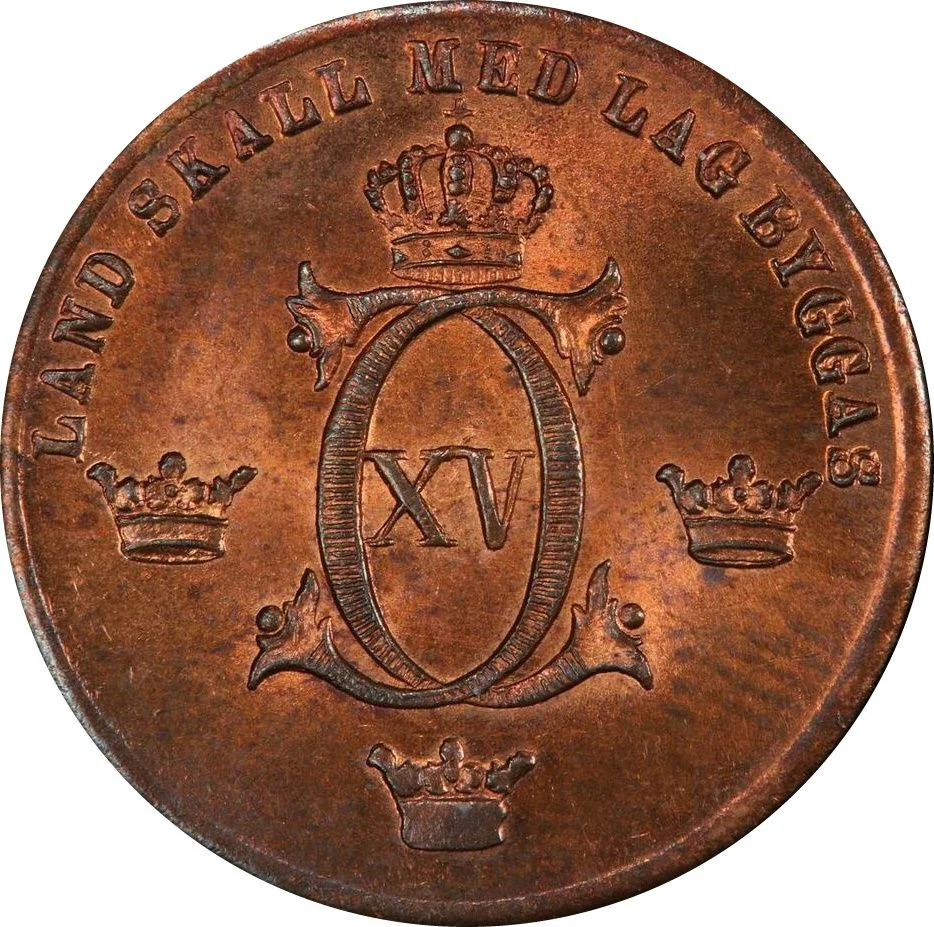
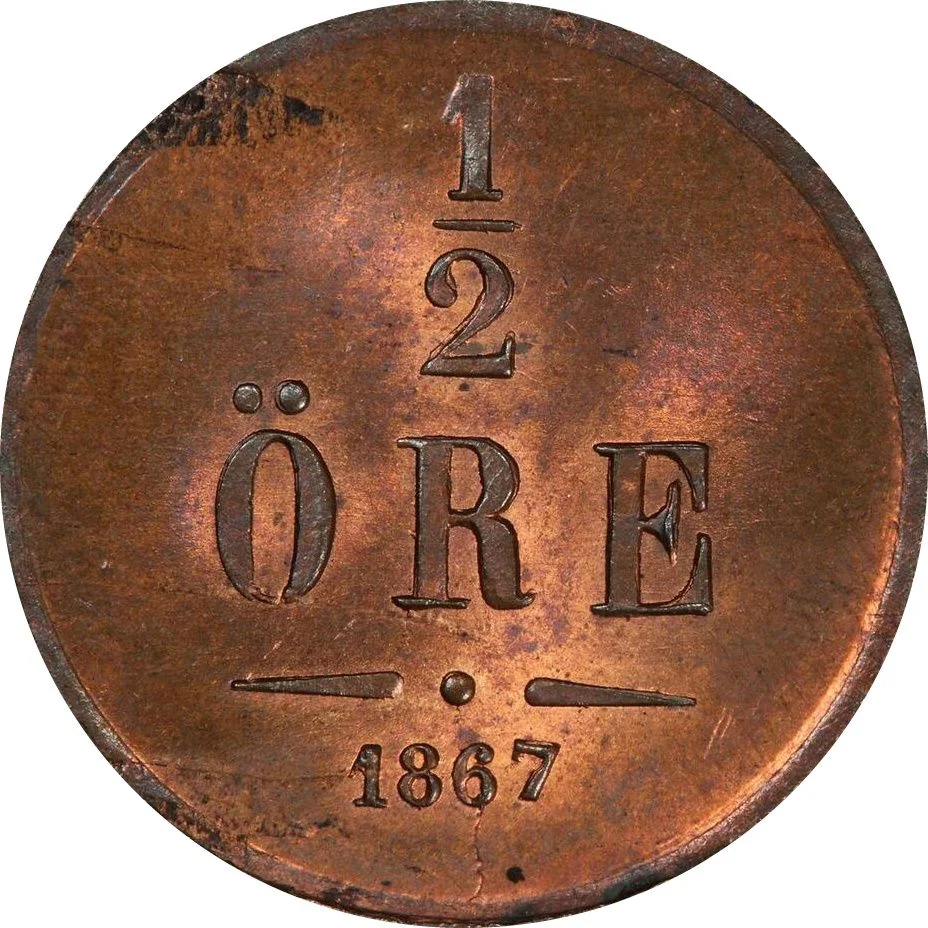
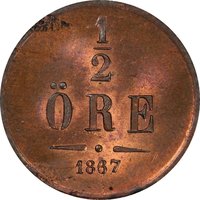
½ Öre – Sweden
Sweden
Context
Year: 1867
Issuer: Sweden 
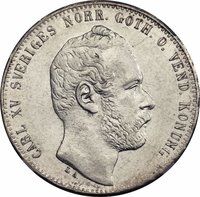
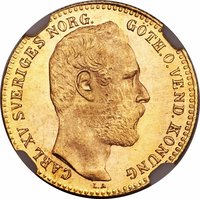
Ruler: Charles XV
Currency:
(1855—1873)
Demonetized: Yes
Total mintage: 64,300
Material
References
KM: #Click to copy to clipboard715
Numista: #37756
Obverse
Reverse
Edge
Plain
Mints
| Name | Mark |
|---|---|
| Kungliga Myntet | — |
Mintings
| Year | Mint Mark | Mintage | Quality | Collection |
|---|---|---|---|---|
| 1867 | — | 64,300 |
Historical background
In 1867, Sweden was in a period of monetary transition, operating under a complex dual-currency system. The official currency was the Riksdaler Riksmynt, which was on a silver standard. However, alongside it circulated the older Riksdaler Specie, valued at four times the Riksmynt. This cumbersome system, with its awkward exchange rates, created practical difficulties for daily commerce and financial accounting, highlighting the need for modernization to facilitate trade and economic growth.
This situation was a direct legacy of the Scandinavian Monetary Union, established with Denmark in 1873 (and soon joined by Norway). The preparations and debates leading to this union were already shaping policy in 1867. The goal was to replace both the Riksdaler Riksmynt and the Specie with a new, decimalized currency: the Krona (crown), divided into 100 öre. The krona was to be placed on the gold standard, aligning Sweden with the dominant international financial system of the era.
Thus, 1867 represents a pivotal prelude. The Riksdag (parliament) was actively discussing the necessary legislation, which would be passed in 1873. The economic rationale was clear: to simplify the monetary system, stabilize the currency through gold convertibility, and deepen financial integration with key trading partners. Therefore, the currency situation of 1867 was one of acknowledged inefficiency, on the cusp of being resolved by a sweeping reform that would define the Swedish currency for the next century and a half.
This situation was a direct legacy of the Scandinavian Monetary Union, established with Denmark in 1873 (and soon joined by Norway). The preparations and debates leading to this union were already shaping policy in 1867. The goal was to replace both the Riksdaler Riksmynt and the Specie with a new, decimalized currency: the Krona (crown), divided into 100 öre. The krona was to be placed on the gold standard, aligning Sweden with the dominant international financial system of the era.
Thus, 1867 represents a pivotal prelude. The Riksdag (parliament) was actively discussing the necessary legislation, which would be passed in 1873. The economic rationale was clear: to simplify the monetary system, stabilize the currency through gold convertibility, and deepen financial integration with key trading partners. Therefore, the currency situation of 1867 was one of acknowledged inefficiency, on the cusp of being resolved by a sweeping reform that would define the Swedish currency for the next century and a half.
💎 Very Rare