

1 Peso – Philippines
Philippines
Context
Years: 1972–1975
Issuer: Philippines 
Period:
(since 1946)
Currency:
(since 1967)
Demonetization: 2 January 1998
Total mintage: 186,833,178
Material
References
KM: #Click to copy to clipboard203
Numista: #3749
Value
Exchange value: 1 PHP = $0.02
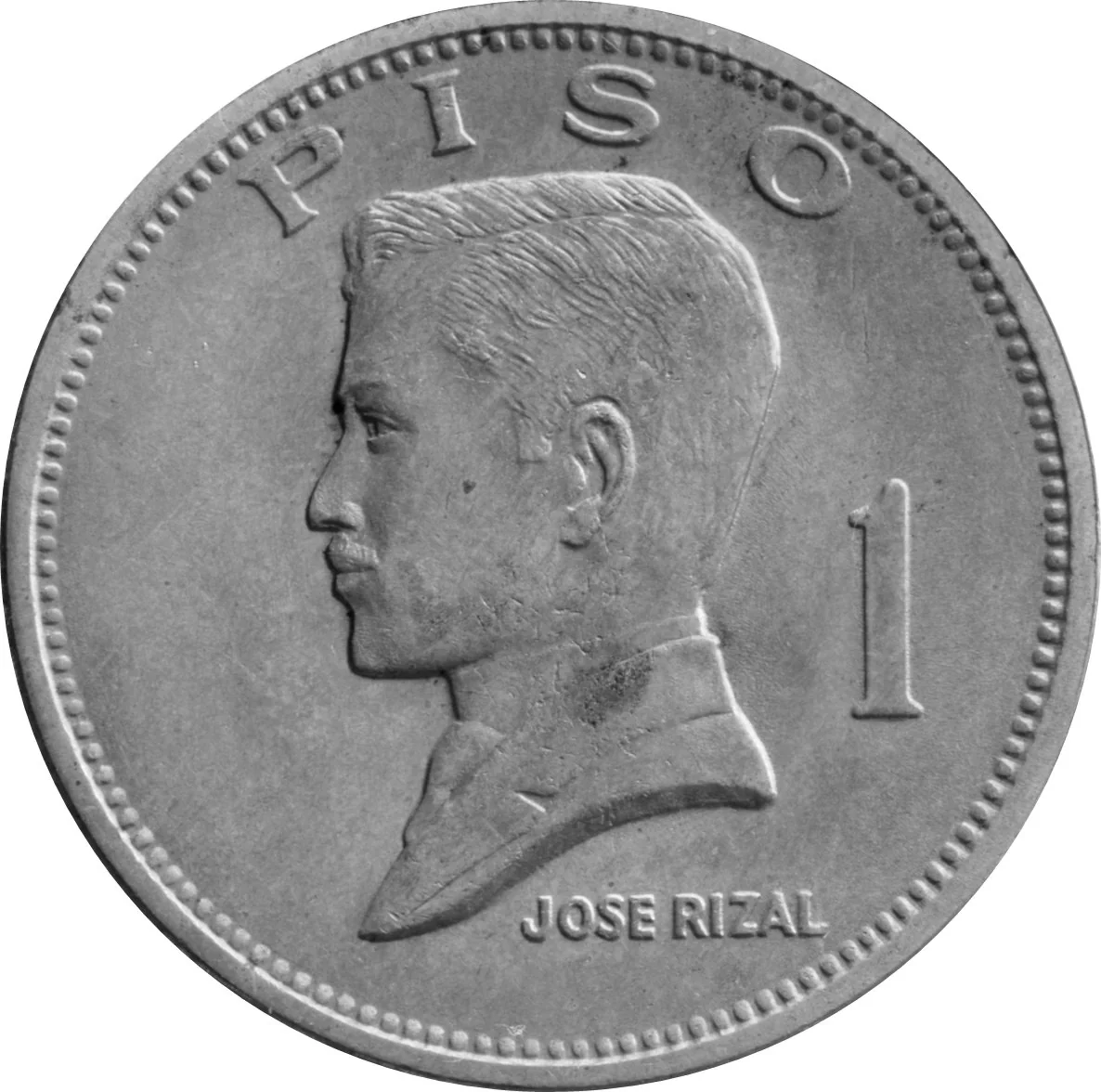
Obverse
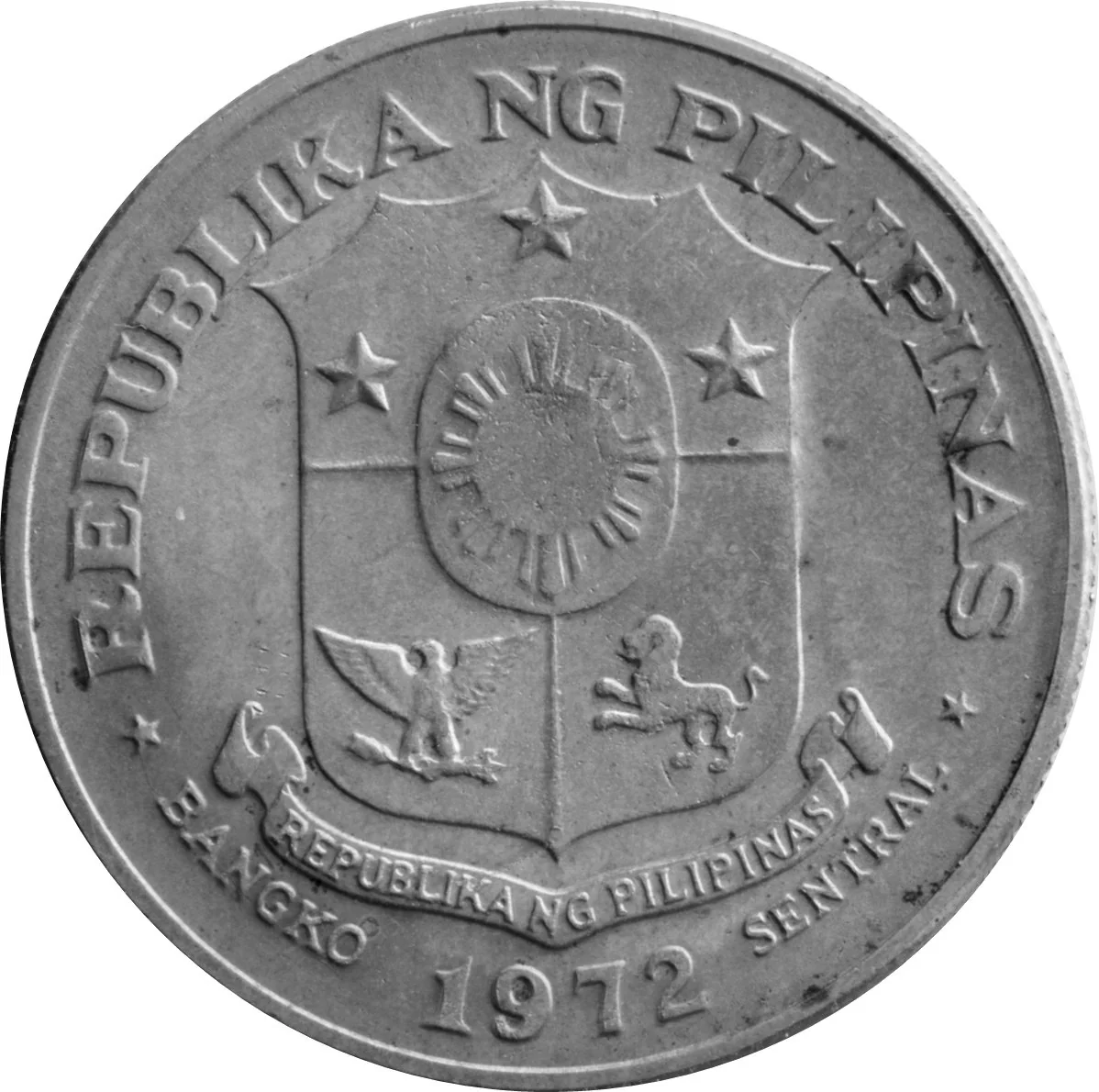
Reverse
Description:
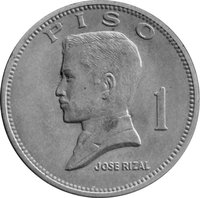
José Rizal facing left.
Inscription:
PISO
1
JOSE RIZAL
FG
1
JOSE RIZAL
FG
Script: Latin
Engraver: Frank Gasparro
Edge
Reeded
Categories
| Symbols> Coat of Arms |
Mints
| Name | Mark |
|---|---|
| United States Mint of Denver | — |
| United States Mint of San Francisco | — |
Mintings
| Year | Mint Mark | Mintage | Quality | Collection |
|---|---|---|---|---|
| 1972 | — | 121,821,000 | ||
| 1974 | 1974-1975 | 65,002,178 | ||
| 1974 | — | 10,000 | Proof |
Historical background
In 1972, the Philippines was grappling with significant economic instability, which served as a key justification for President Ferdinand Marcos's declaration of Martial Law in September of that year. The peso was under severe pressure, with the country facing a balance of payments crisis, high inflation, and a growing budget deficit. Widespread smuggling and tax evasion further eroded government revenues, while a period of heavy borrowing and public spending had led to a precarious foreign debt situation. This economic turmoil created a sense of crisis, which Marcos argued required authoritarian measures to stabilize.
The currency situation was directly impacted by the global monetary shifts of the early 1970s. Following the collapse of the Bretton Woods system, the Philippine peso, which had been peged to the US dollar at a fixed rate of ₱3.90 to $1 since 1965, came under intense speculative attack. Massive capital flight drained the country's foreign reserves, which plummeted from over $200 million in 1970 to a critically low $73 million by early 1972. This forced the Central Bank to desperately defend the peg, expending precious reserves and imposing strict exchange controls, which stifled trade and business confidence.
Within this context, Marcos used the economic and currency crisis to centralize power. Shortly after declaring Martial Law, his administration moved to fundamentally alter the financial system. One of the first decrees, Presidential Decree No. 72, repealed the old Central Bank charter and granted the president sweeping authority over monetary policy. This paved the way for a major devaluation in 1973, where the peso was floated and quickly depreciated to nearly ₱6.80 to the dollar. Thus, the 1972 currency crisis was not just an economic event but a pivotal political tool that facilitated the Marcos regime's consolidation of control over the nation's economy.
The currency situation was directly impacted by the global monetary shifts of the early 1970s. Following the collapse of the Bretton Woods system, the Philippine peso, which had been peged to the US dollar at a fixed rate of ₱3.90 to $1 since 1965, came under intense speculative attack. Massive capital flight drained the country's foreign reserves, which plummeted from over $200 million in 1970 to a critically low $73 million by early 1972. This forced the Central Bank to desperately defend the peg, expending precious reserves and imposing strict exchange controls, which stifled trade and business confidence.
Within this context, Marcos used the economic and currency crisis to centralize power. Shortly after declaring Martial Law, his administration moved to fundamentally alter the financial system. One of the first decrees, Presidential Decree No. 72, repealed the old Central Bank charter and granted the president sweeping authority over monetary policy. This paved the way for a major devaluation in 1973, where the peso was floated and quickly depreciated to nearly ₱6.80 to the dollar. Thus, the 1972 currency crisis was not just an economic event but a pivotal political tool that facilitated the Marcos regime's consolidation of control over the nation's economy.
Series: Pilipino Series
🌱 Very Common