

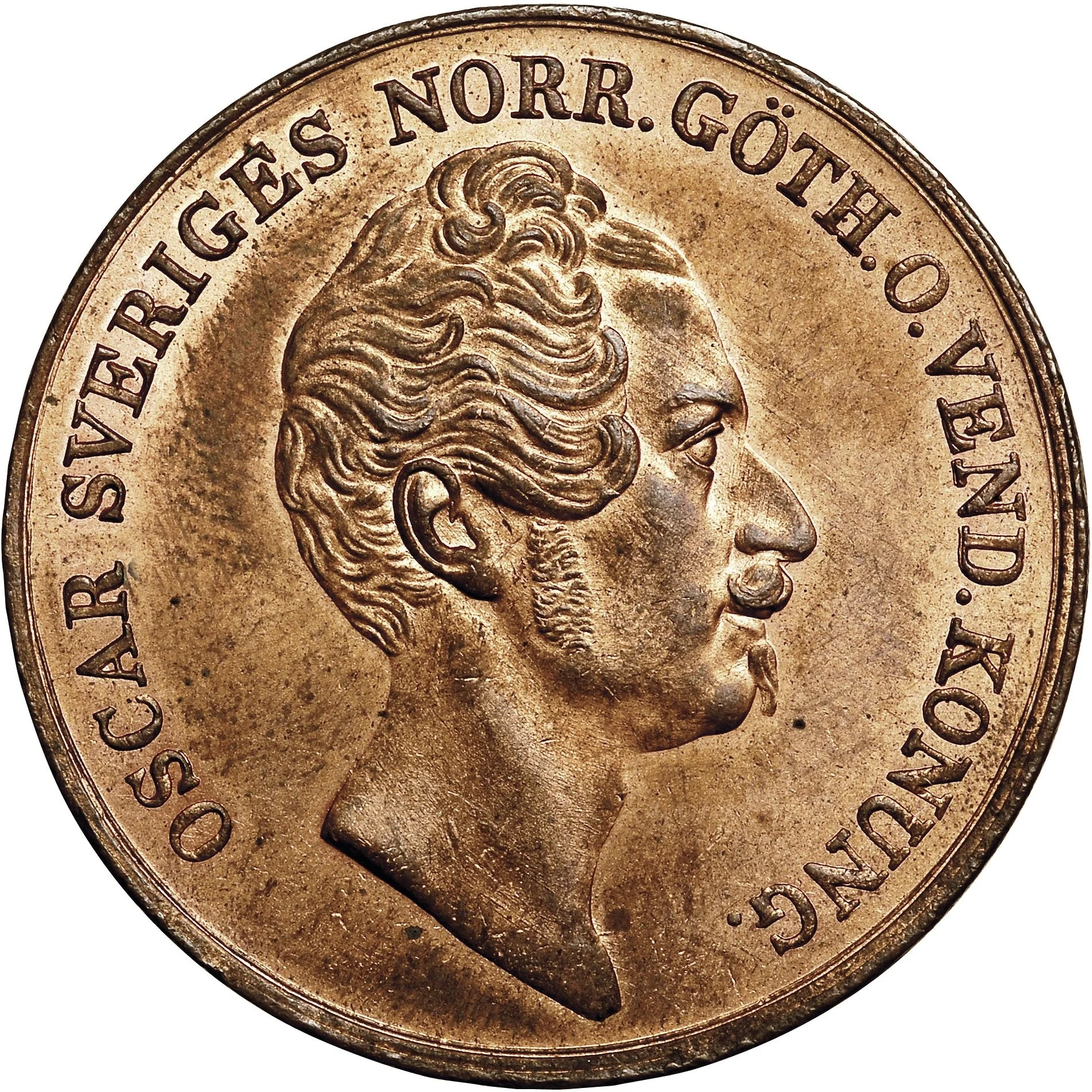

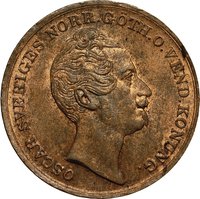
Obverse
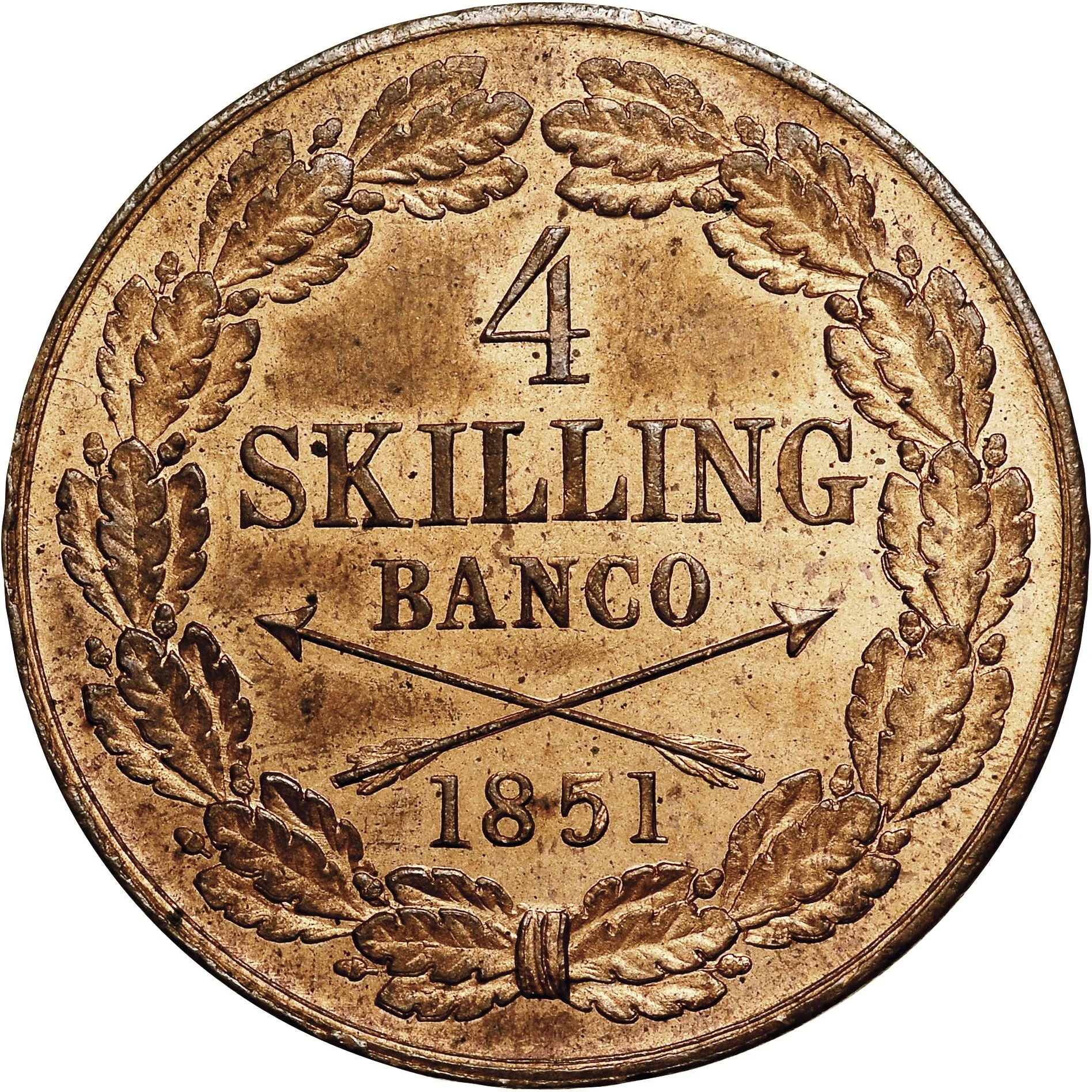
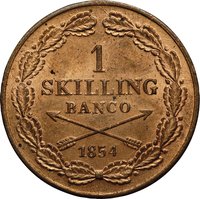
Reverse
Description:
Crossed arrows and oak wreath flanking the date and denomination.
Inscription:
4
SKILLING
BANCO
1851
SKILLING
BANCO
1851
Script: Latin
Edge
Plain
Mintings
| Year | Mint Mark | Mintage | Quality | Collection |
|---|---|---|---|---|
| 1849 | — | 443,604 | ||
| 1850 | — | 169,776 | ||
| 1851 | — | 38,256 | ||
| 1852 | — | 37,620 | ||
| 1855 | — | — |
Historical background
In 1849, Sweden found itself in a complex monetary transition, operating under a bimetallic system that was proving increasingly unstable. Officially, since 1834, the Riksbank had maintained a fixed exchange rate between silver and gold, defining the Swedish riksdaler riksmynt in terms of both metals. However, the global market value of gold had risen, making it profitable to export Swedish gold coins and leaving the country with a de facto silver standard. This led to a chronic shortage of small, practical coinage for everyday transactions, as silver coins were hoarded or melted down.
The practical consequences for the economy and public were significant. While large transactions used silver riksdaler, the scarcity of divisional coins created reliance on inconvenient and unreliable substitutes. These included privately issued tokens, obsolete copper daler coins from the older "Carolin" system, and even foreign coins, which circulated at fluctuating values. This monetary confusion hampered commerce and highlighted the system's inefficiency, fueling debates between proponents of a pure silver standard and those advocating for a modern, gold-based currency to align with major trading partners like Britain.
The year 1849 itself was a point of mounting pressure rather than decisive change. The Riksdag (parliament) was actively investigating the currency question, with a key parliamentary committee publishing a major report that would lay the groundwork for future reform. The discussions centered on abandoning bimetallism altogether. Ultimately, this period of confusion culminated in the major reform of 1855, which formally adopted a gold standard, introducing the new riksdaler riksmynt as a decimal currency fully backed by gold, finally resolving the instability of the 1840s.
The practical consequences for the economy and public were significant. While large transactions used silver riksdaler, the scarcity of divisional coins created reliance on inconvenient and unreliable substitutes. These included privately issued tokens, obsolete copper daler coins from the older "Carolin" system, and even foreign coins, which circulated at fluctuating values. This monetary confusion hampered commerce and highlighted the system's inefficiency, fueling debates between proponents of a pure silver standard and those advocating for a modern, gold-based currency to align with major trading partners like Britain.
The year 1849 itself was a point of mounting pressure rather than decisive change. The Riksdag (parliament) was actively investigating the currency question, with a key parliamentary committee publishing a major report that would lay the groundwork for future reform. The discussions centered on abandoning bimetallism altogether. Ultimately, this period of confusion culminated in the major reform of 1855, which formally adopted a gold standard, introducing the new riksdaler riksmynt as a decimal currency fully backed by gold, finally resolving the instability of the 1840s.
🌟 Limited