

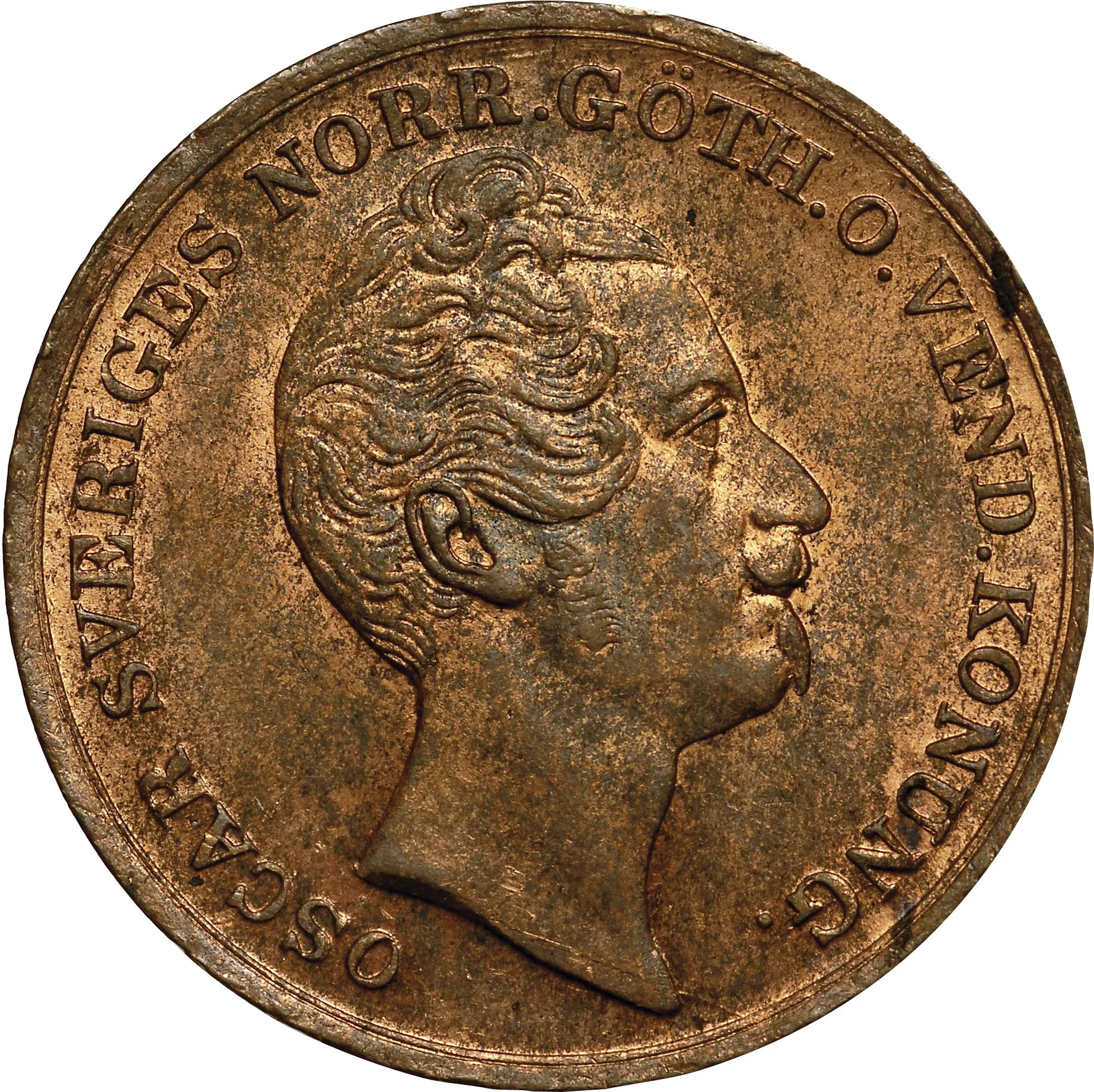

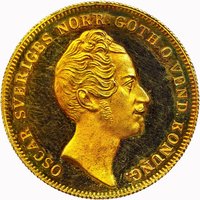
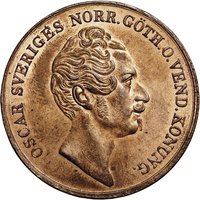
Obverse
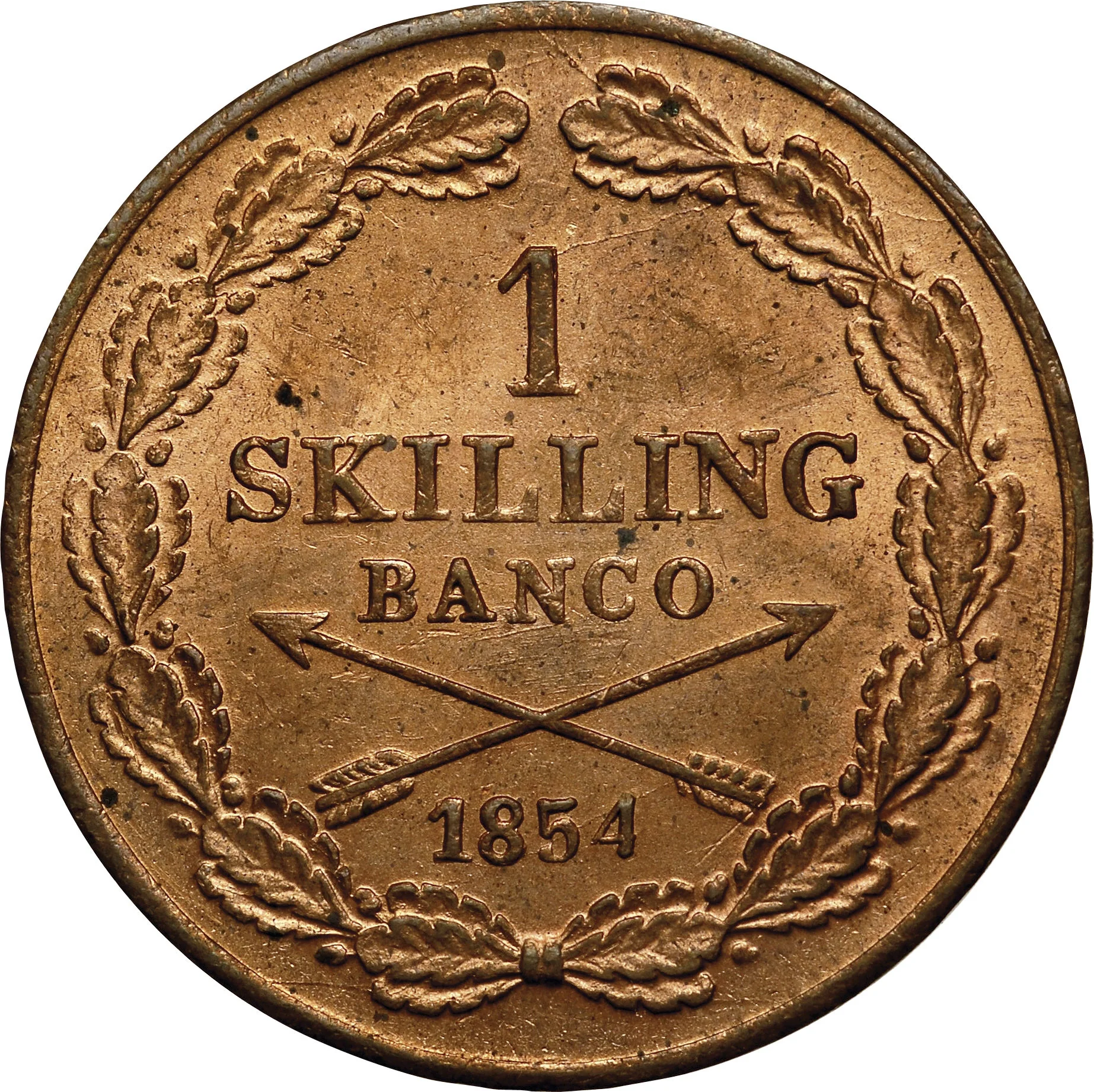
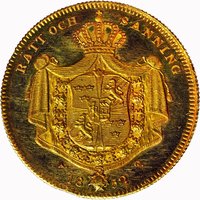
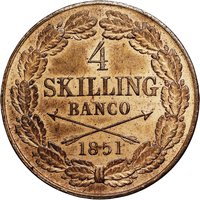
Reverse
Description:
Crossed arrows divide the date and denomination within an oak wreath.
Inscription:
1
SKILLING
BANCO
1854
SKILLING
BANCO
1854
Script: Latin
Edge
Plain
Mintings
| Year | Mint Mark | Mintage | Quality | Collection |
|---|---|---|---|---|
| 1847 | — | 147,616 | ||
| 1849 | — | 305,904 | ||
| 1850 | — | 136,944 | ||
| 1851 | — | 150,720 | ||
| 1852 | — | 153,600 | ||
| 1853 | — | 31,488 | ||
| 1854 | — | 64,320 | ||
| 1855 | — | 39,840 |
Historical background
In 1847, Sweden's currency system was in a state of transition and considerable complexity, operating under a bimetallic standard that was proving increasingly unworkable. Officially, the Riksdaler Riksmynt was the unit of account, with its value defined by law in terms of both silver and gold. However, the fixed legal ratio between the two metals did not align with their fluctuating market values, leading to the phenomenon described by Gresham's Law: undervalued coins were hoarded or exported, while overvalued coins flooded into circulation. This created chronic instability, with a shortage of sound specie and a confusing mix of older and newer coins in everyday use.
The situation was further complicated by the existence of the Riksgälds (the National Debt Office), which issued inconvertible paper money known as Riksgäldssedlar. These notes were not backed by silver or gold but by government credit, and they circulated alongside and at a discount to the theoretical silver Riksdaler. This created a dual system where prices were often quoted in both the silver Riksdaler and the paper Riksgälds notes, causing confusion and inefficiency in commerce. The public's trust in this fiat paper money was limited, and its value was unstable.
Consequently, 1847 fell within a period of intense debate and reform. The shortcomings of bimetallism and the undesirable paper currency had become widely acknowledged by both government and business leaders. This year was part of the final decade of struggle before a major monetary reform, which would eventually be enacted in 1855. That reform would successfully establish a new, stable silver standard with the Riksdaler Riksmynt as a unified, convertible currency, finally resolving the chaotic dual system that characterized the mid-1840s.
The situation was further complicated by the existence of the Riksgälds (the National Debt Office), which issued inconvertible paper money known as Riksgäldssedlar. These notes were not backed by silver or gold but by government credit, and they circulated alongside and at a discount to the theoretical silver Riksdaler. This created a dual system where prices were often quoted in both the silver Riksdaler and the paper Riksgälds notes, causing confusion and inefficiency in commerce. The public's trust in this fiat paper money was limited, and its value was unstable.
Consequently, 1847 fell within a period of intense debate and reform. The shortcomings of bimetallism and the undesirable paper currency had become widely acknowledged by both government and business leaders. This year was part of the final decade of struggle before a major monetary reform, which would eventually be enacted in 1855. That reform would successfully establish a new, stable silver standard with the Riksdaler Riksmynt as a unified, convertible currency, finally resolving the chaotic dual system that characterized the mid-1840s.
🌟 Limited