

1 sol – Peru
Add to wishlist
Peru
Context
Year: 2018
Issuer: Peru
Issuing organization: Central Reserve Bank of Peru
Period:
(since 1822)
Total mintage: 10,000,000
Material
Diameter: 25.5 mm
Weight: 7.32 g
Thickness: 2 mm
Shape: Round
Composition: Nickel brass
Magnetic: No
Technique: Milled
Alignment: Coin alignment
flip
References
KM: #
Numista: #141812
Value
Exchange value: 1 PEN
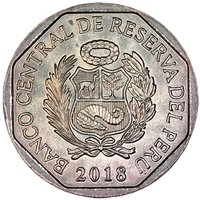
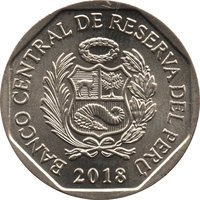
Obverse
Description:
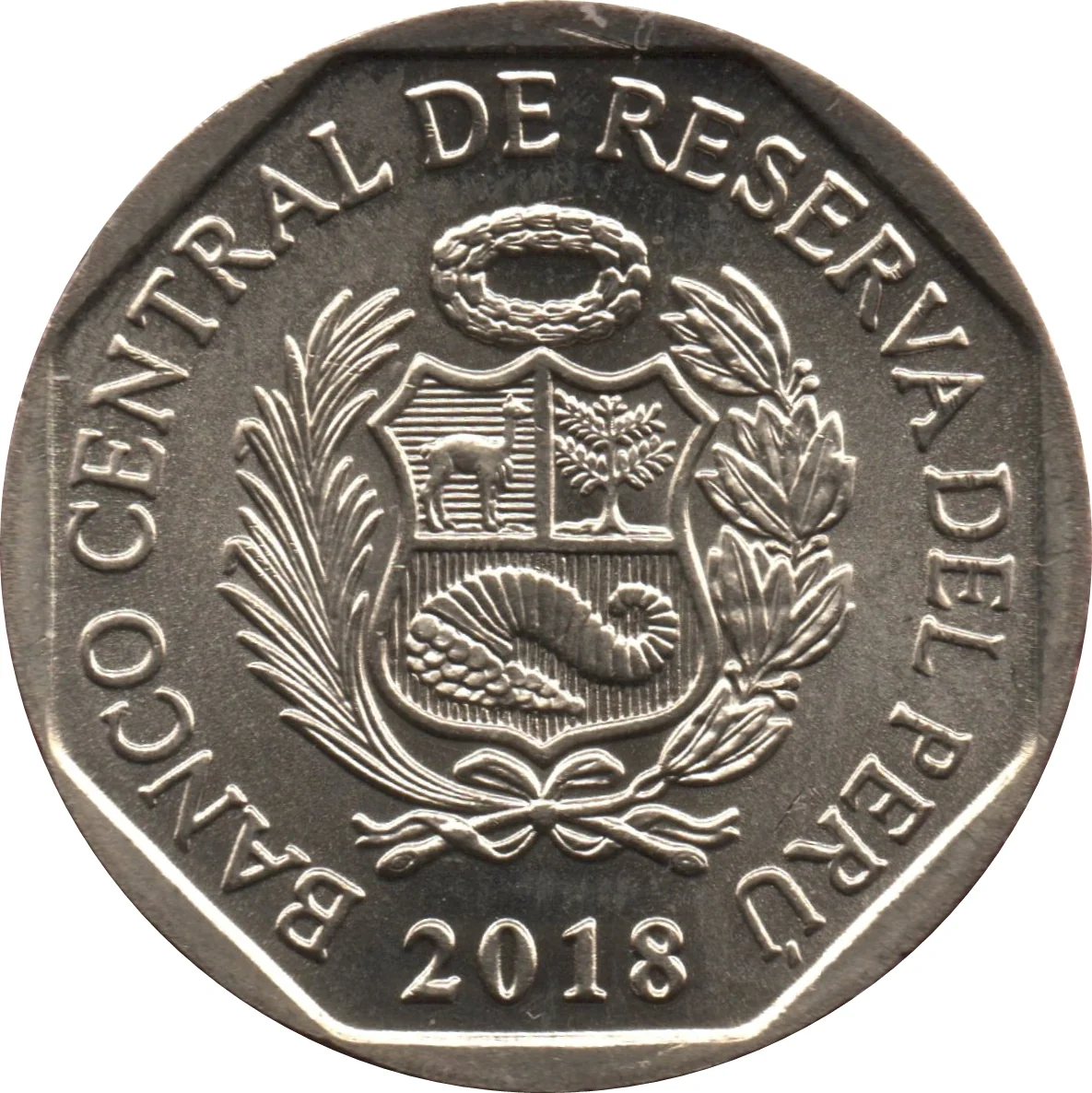
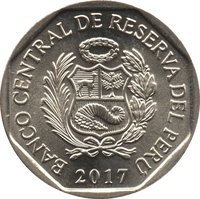
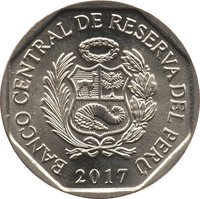
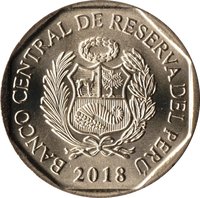
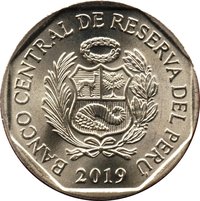
Coat of arms over date.
Inscription:
BANCO CENTRAL DE RESERVA DEL PERÚ
2018
2018
Translation:
CENTRAL RESERVE BANK OF PERU
2018
2018
Script: Latin
Language: Spanish
Engraver: Felipe Escalante Chuñocca
Designer: Felipe Escalante C.
Reverse
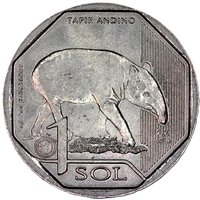
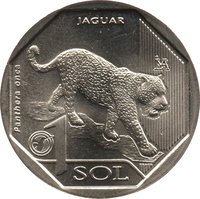
Description:
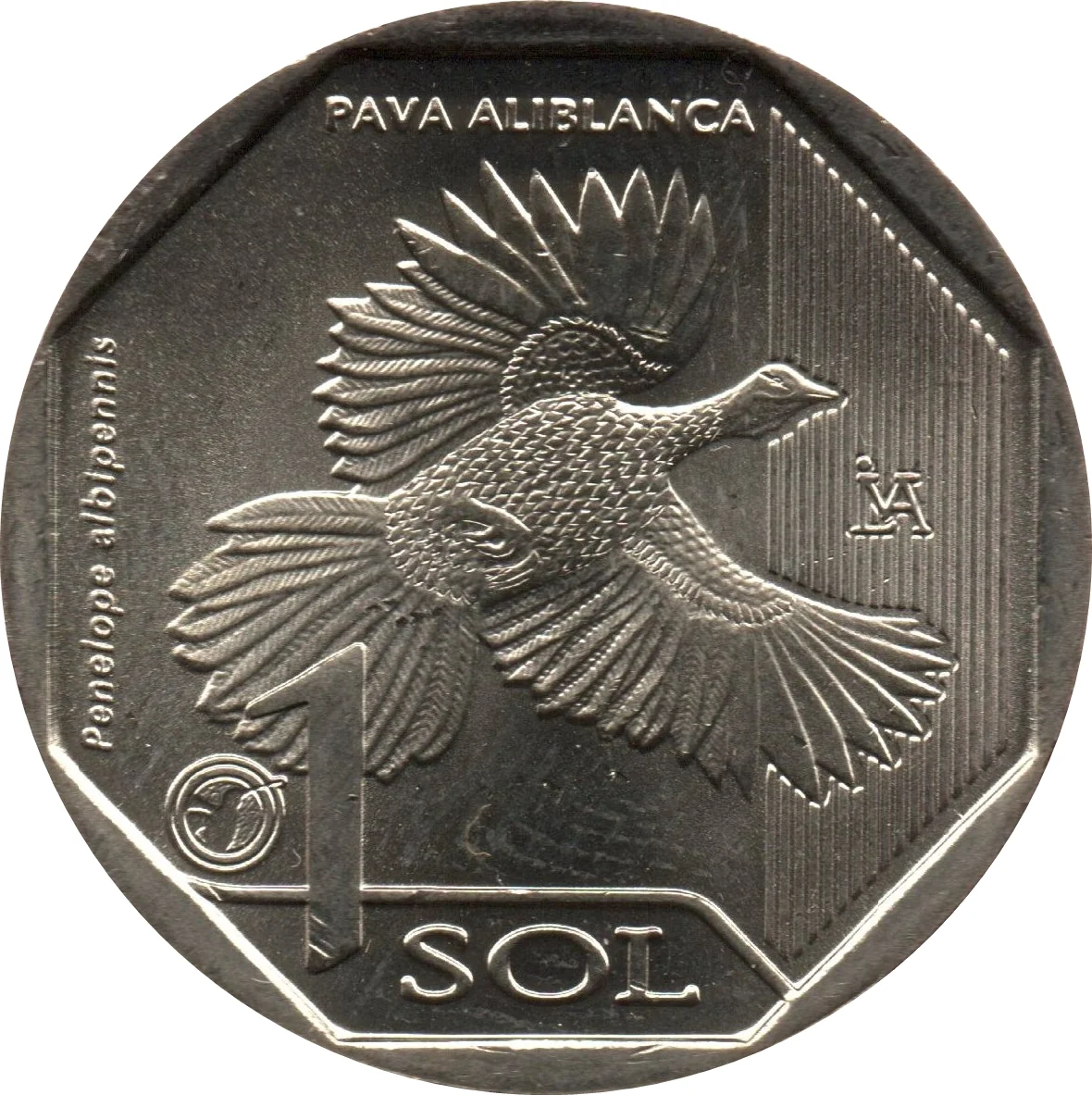
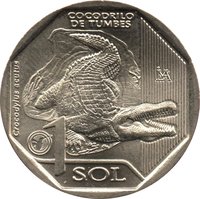
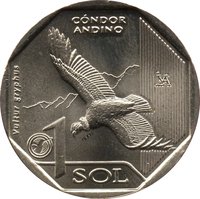
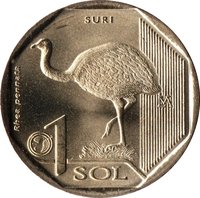
White-winged Guan, critically endangered.
Inscription:
PAVA ALIBLANCA
Penelope albipennis
1
SOL
Penelope albipennis
1
SOL
Translation:
White-winged Peacock
1
Sun
1
Sun
Script: Latin
Language: Latin
Engraver: Felipe Escalante Chuñocca
Designer: Felipe Escalante C.
Edge
Reeded
Mints
| Name | Mark |
|---|---|
| Lima | LIMA |
Mintings
| Year | Mint Mark | Mintage | Quality | Collection |
|---|---|---|---|---|
| 2018 | LIMA | 10,000,000 |
Historical background
In 2018, Peru's currency, the sol (PEN), navigated a year of relative stability and modest depreciation against the US dollar, a notable performance amidst regional volatility. The sol ended the year approximately 4% weaker, a manageable decline largely attributed to a stronger US dollar globally and investor caution toward emerging markets. This resilience was underpinned by Peru's strong macroeconomic fundamentals, including low inflation (ending the year around 2.2%), consistent GDP growth, and substantial foreign reserves, which provided a buffer against external shocks.
The primary external pressure stemmed from global factors, particularly the US Federal Reserve's interest rate hikes, which encouraged capital outflows from emerging economies like Peru. Internally, political uncertainty posed a intermittent headwind. The year began with the resignation of President Pedro Pablo Kuczynski in March amid corruption allegations, followed by the succession of Vice President Martín Vizcarra. While Vizcarra's administration initially fostered market confidence with a pro-business stance, his later push for an anti-corruption referendum and clashes with the opposition-led Congress introduced periods of political noise that occasionally weighed on investor sentiment and the currency.
Despite these pressures, the Central Reserve Bank of Peru (BCRP) maintained a proactive and credible monetary policy. It utilized foreign exchange interventions—both dollar purchases to build reserves and occasional sales to smooth volatility—without deviating from its inflation-targeting regime. This careful management, combined with Peru's history of prudent fiscal policy and its status as a major metals exporter benefiting from stable commodity prices, ensured that the currency fluctuations remained orderly. Consequently, 2018 was characterized not by a currency crisis, but by a controlled adjustment of the sol within a framework of overall economic stability.
The primary external pressure stemmed from global factors, particularly the US Federal Reserve's interest rate hikes, which encouraged capital outflows from emerging economies like Peru. Internally, political uncertainty posed a intermittent headwind. The year began with the resignation of President Pedro Pablo Kuczynski in March amid corruption allegations, followed by the succession of Vice President Martín Vizcarra. While Vizcarra's administration initially fostered market confidence with a pro-business stance, his later push for an anti-corruption referendum and clashes with the opposition-led Congress introduced periods of political noise that occasionally weighed on investor sentiment and the currency.
Despite these pressures, the Central Reserve Bank of Peru (BCRP) maintained a proactive and credible monetary policy. It utilized foreign exchange interventions—both dollar purchases to build reserves and occasional sales to smooth volatility—without deviating from its inflation-targeting regime. This careful management, combined with Peru's history of prudent fiscal policy and its status as a major metals exporter benefiting from stable commodity prices, ensured that the currency fluctuations remained orderly. Consequently, 2018 was characterized not by a currency crisis, but by a controlled adjustment of the sol within a framework of overall economic stability.
Series: Endangered Fauna from Peru
🌱 Common