


Obverse
Description:
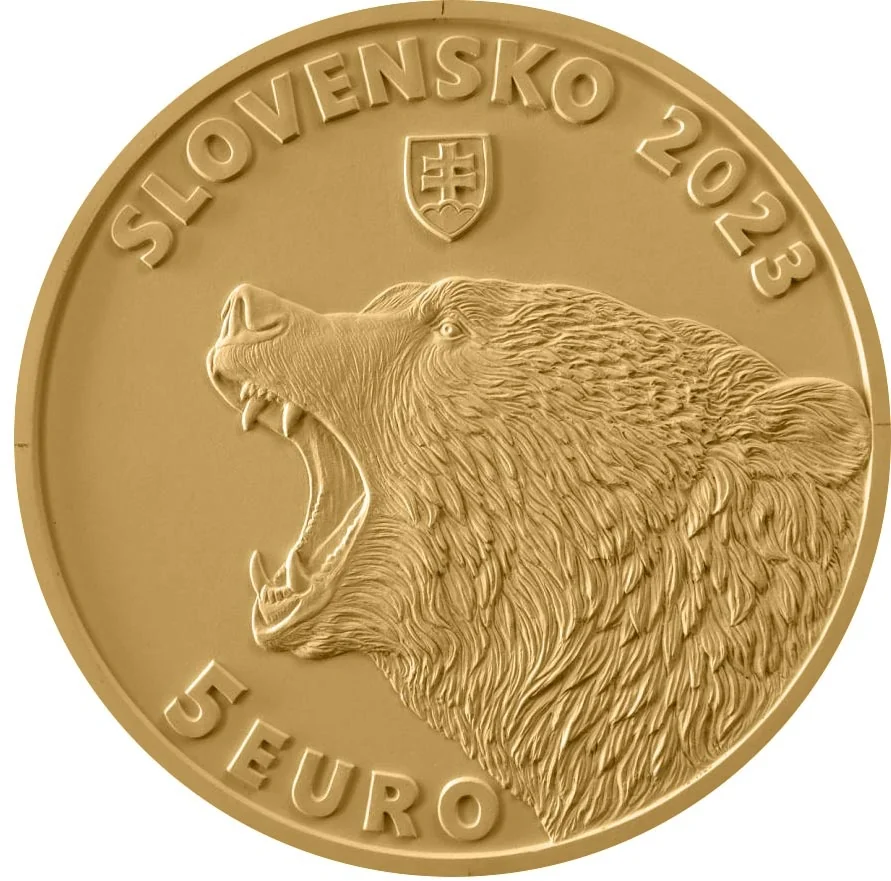
The coin's obverse features a brown bear in profile, topped by the Slovak coat of arms. "5 EURO" is at the lower left, "SLOVENSKO 2023" along the upper edge, and the Kremnica Mint mark ("MK" between dies) at the right.
Inscription:
SLOVENSKO 2023
5 EURO
MK
5 EURO
MK
Script: Latin
Engraver: Dalibor Schmidt
Designer: Tomáš Lamač
Reverse
Description:
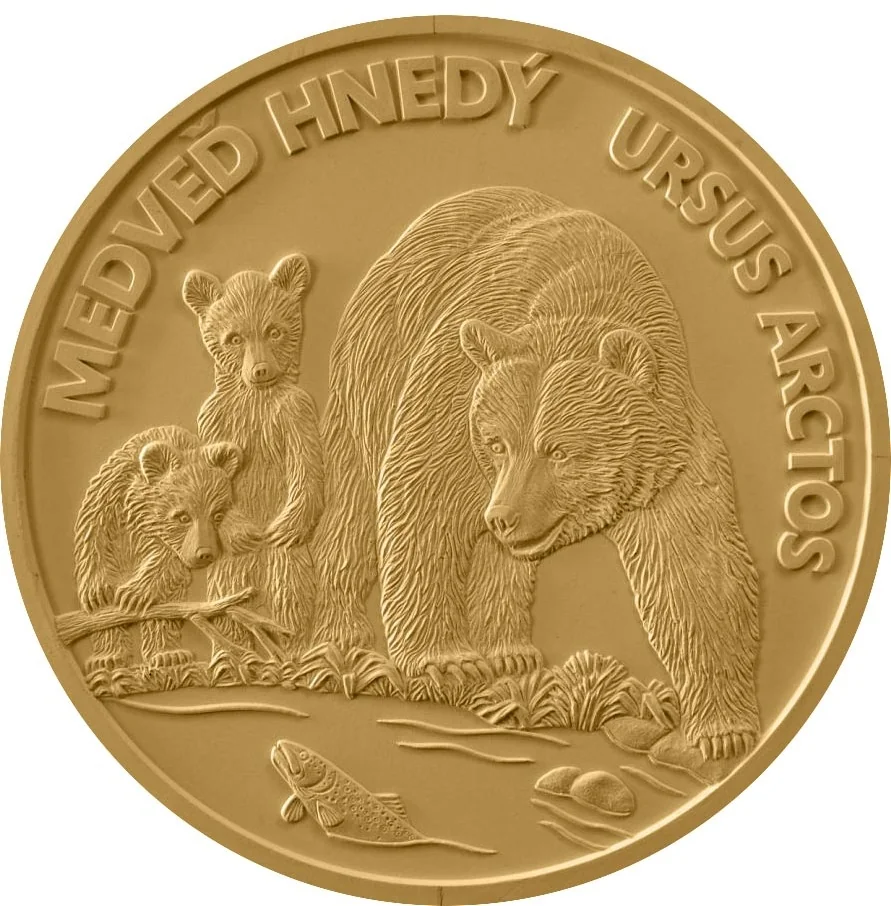
The reverse depicts a brown bear and two cubs fishing, inscribed above with "MEDVEĎ HNEDÝ" and "URSUS ARCTOS." The designer's initials "TL" (Tomáš Lamač) appear at the lower right.
Inscription:
MEDVEĎ HNEDÝ
URSUS ARCTOS
TL
URSUS ARCTOS
TL
Translation:
Brown Bear
Brown Bear
Brown Bear
Brown Bear
Brown Bear
Script: Latin
Engraver: Dalibor Schmidt
Designer: Tomáš Lamač
Edge
Milled
Mints
| Name | Mark |
|---|---|
| Kremnica | (MK) |
Mintings
| Year | Mint Mark | Mintage | Quality | Collection |
|---|---|---|---|---|
| 2023 | MK | 40,000 |
Historical background
In 2023, Slovakia's currency situation was defined by its continued use of the euro, which it adopted in 2009. As a member of the Eurozone, the country's monetary policy was set by the European Central Bank (ECB), which spent the year aggressively combating high inflation across the bloc. The ECB's successive interest rate hikes aimed to cool the economy and bring down price growth, which also peaked in Slovakia at levels slightly above the Eurozone average, driven primarily by high energy and food costs. Consequently, the Slovak koruna was a historical footnote, with all domestic prices, wages, and financial transactions conducted in the common European currency.
The year was marked by significant economic and political pressures related to currency-area membership. While the euro provided stability and shielded Slovakia from volatile currency fluctuations, it also meant the country had no independent monetary tools to address its specific economic conditions. The tight monetary policy from Frankfurt helped gradually lower inflation from its peak, but it also increased borrowing costs, slowing economic growth and investment. This tension was a key point of domestic debate, particularly as the government, led by Prime Minister Ľudovít Ódor and later Robert Fico, navigated the need for fiscal consolidation while managing public discontent over the cost-of-living crisis.
Looking externally, the euro's exchange rate against major currencies like the US dollar experienced volatility, influenced by the ECB's policy divergence with the Federal Reserve and global uncertainty. For Slovakia, a small, open, export-oriented economy (notably in the automotive sector), a weaker euro during parts of the year provided a competitive boost for its key industrial exports. Overall, the 2023 currency narrative was one of navigating the trade-offs of Eurozone membership: enjoying the benefits of a stable, strong currency while managing the one-size-fits-all policy constraints during a period of economic adjustment and heightened inflation.
The year was marked by significant economic and political pressures related to currency-area membership. While the euro provided stability and shielded Slovakia from volatile currency fluctuations, it also meant the country had no independent monetary tools to address its specific economic conditions. The tight monetary policy from Frankfurt helped gradually lower inflation from its peak, but it also increased borrowing costs, slowing economic growth and investment. This tension was a key point of domestic debate, particularly as the government, led by Prime Minister Ľudovít Ódor and later Robert Fico, navigated the need for fiscal consolidation while managing public discontent over the cost-of-living crisis.
Looking externally, the euro's exchange rate against major currencies like the US dollar experienced volatility, influenced by the ECB's policy divergence with the Federal Reserve and global uncertainty. For Slovakia, a small, open, export-oriented economy (notably in the automotive sector), a weaker euro during parts of the year provided a competitive boost for its key industrial exports. Overall, the 2023 currency narrative was one of navigating the trade-offs of Eurozone membership: enjoying the benefits of a stable, strong currency while managing the one-size-fits-all policy constraints during a period of economic adjustment and heightened inflation.
Series: Fauna and Flora in Slovakia
🌟 Uncommon