

100 euro (Rudolf's coronation) – Slovakia
Add to wishlist
Non-circulating coins
Commemoration: 450th anniversary of the coronation of Rudolf
Slovakia
Context
Material
References
KM: #
Numista: #355993
Value
Exchange value: 100 EUR
Bullion value: $1303.49
Inflation-adjusted value: 132.46 EUR
Obverse
Description:
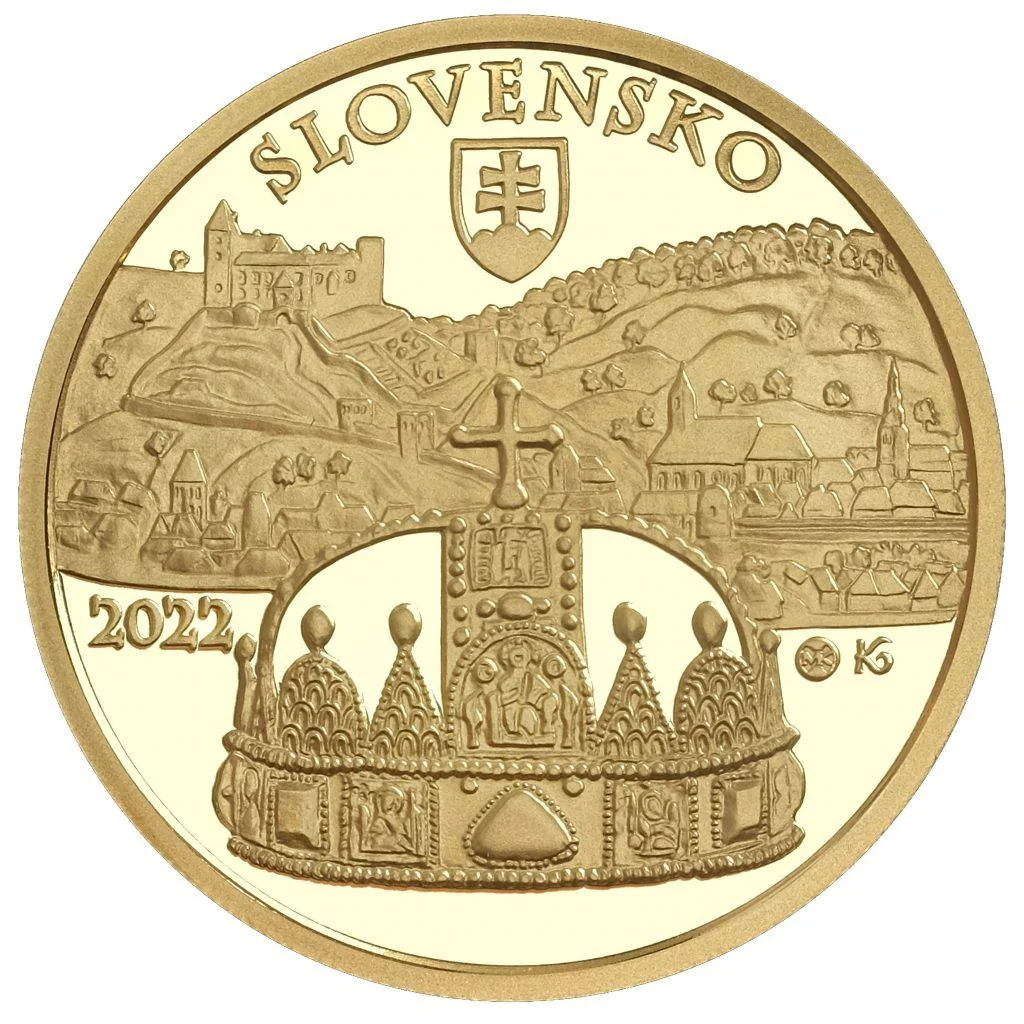
The lower obverse features the Hungarian royal crown before a historic view of Bratislava. "SLOVENSKO" arches above the Slovak coat of arms, with "2022" at lower left. The Kremnica Mint mark (MK) and designer Karol Ličko's initials (KL) are to the crown's right.
Inscription:
SLOVENSKO
2022
K
2022
K
Script: Latin
Engraver: Dalibor Schmidt
Designer: Karol Ličko
Reverse
Description:
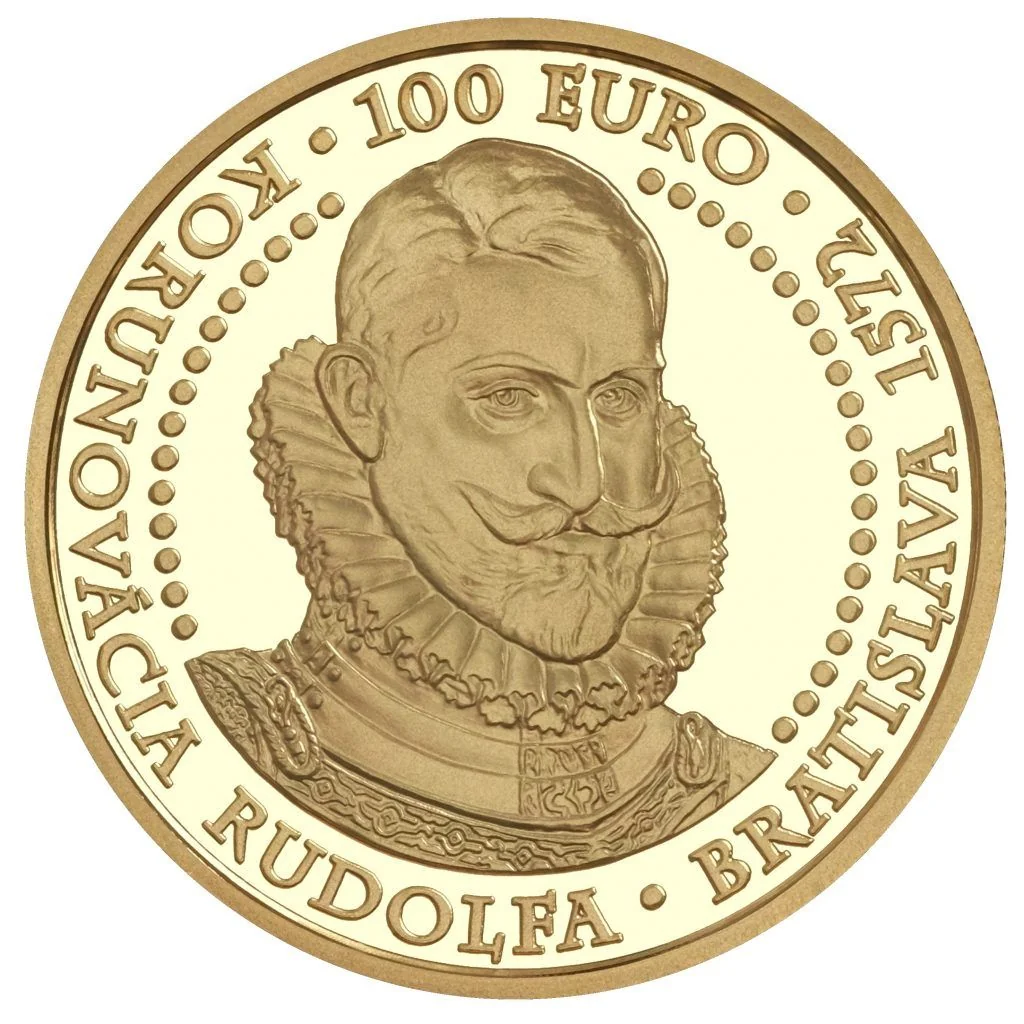
The reverse features King Rudolf's portrait flanked by semicircular beading. "100 EURO" with dots is inscribed above, while "KORUNOVÁCIA RUDOLFA" and "BRATISLAVA 1572," separated by a dot, curve around the upper edge.
Inscription:
· 100 EURO ·
KORUNOVÁCIA RUDOLFA · BRATISLAVA 1572
KORUNOVÁCIA RUDOLFA · BRATISLAVA 1572
Translation:
· 100 EURO ·
Coronation of Rudolf · Bratislava 1572
Coronation of Rudolf · Bratislava 1572
Script: Latin
Language: Slovak
Engraver: Dalibor Schmidt
Designer: Karol Ličko
Edge
Categories
| Event> Coronation |
| Geography> Town |
| Symbol> Crown |
| Building> Castle or fortification |
| Person> Monarch |
| Symbols> Coat of Arms |
Mints
| Name | Mark |
|---|---|
| Kremnica | (MK) |
Mintings
| Year | Mint Mark | Mintage | Quality | Collection |
|---|---|---|---|---|
| 2022 | MK | 4,200 | Proof |
Historical background
In 2022, Slovakia's currency situation was defined by its continued membership in the Eurozone, having adopted the euro in 2009. As such, the country did not have an independent monetary policy; its interest rates and broader monetary stance were set by the European Central Bank (ECB) in response to Eurozone-wide inflation. This year was particularly significant as the ECB began a historic cycle of interest rate hikes in July to combat soaring inflation, which directly impacted the cost of credit and economic conditions in Slovakia. The Slovak koruna was no longer in circulation, eliminating direct exchange rate risk with the euro but also removing a potential national tool for economic adjustment.
The primary domestic economic pressure was exceptionally high inflation, which peaked at over 15% by the end of 2022, significantly above the Eurozone average. This was driven by the same global shocks affecting all of Europe: soaring energy prices exacerbated by the war in Ukraine and persistent post-pandemic supply chain issues. However, Slovakia's inflation was amplified by specific national factors, including a heavy reliance on energy-intensive industry and government fiscal measures, such as pandemic-related stimulus, which boosted domestic demand. The lack of a national currency meant Slovakia could not devalue to gain trade competitiveness or set interest rates specifically for its own economic cycle.
Consequently, the key debates within Slovakia focused on fiscal policy and energy security as the main tools to address the cost-of-living crisis. The government implemented several costly packages of subsidies and price caps on energy and basic food items to shield households and businesses, leading to a substantial widening of the budget deficit. The currency situation, therefore, framed Slovakia's economic challenges in 2022 as one of navigating Eurozone monetary tightening while using national fiscal measures to mitigate the social impact, all within the constraints of a shared currency.
The primary domestic economic pressure was exceptionally high inflation, which peaked at over 15% by the end of 2022, significantly above the Eurozone average. This was driven by the same global shocks affecting all of Europe: soaring energy prices exacerbated by the war in Ukraine and persistent post-pandemic supply chain issues. However, Slovakia's inflation was amplified by specific national factors, including a heavy reliance on energy-intensive industry and government fiscal measures, such as pandemic-related stimulus, which boosted domestic demand. The lack of a national currency meant Slovakia could not devalue to gain trade competitiveness or set interest rates specifically for its own economic cycle.
Consequently, the key debates within Slovakia focused on fiscal policy and energy security as the main tools to address the cost-of-living crisis. The government implemented several costly packages of subsidies and price caps on energy and basic food items to shield households and businesses, leading to a substantial widening of the budget deficit. The currency situation, therefore, framed Slovakia's economic challenges in 2022 as one of navigating Eurozone monetary tightening while using national fiscal measures to mitigate the social impact, all within the constraints of a shared currency.

✨ Legendary