

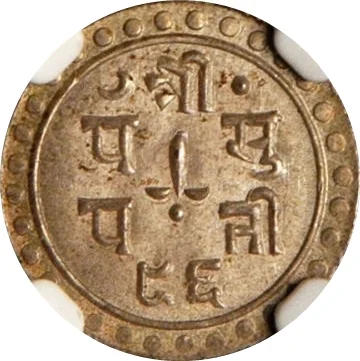
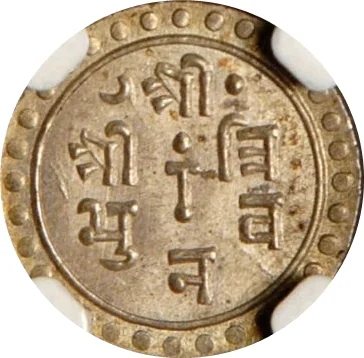
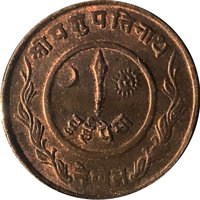
1⁄16 Rupee – Nepal
Nepal
Context
Year: 1939
Vikram Samvat Year: 1996
Issuer: Nepal 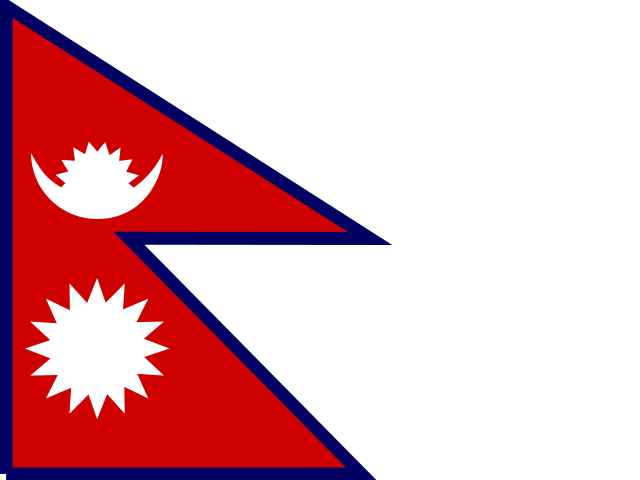
Ruler: Tribhuvan Bir Bikram Shah
Currency:
(since 1932)
Demonetized: Yes
Material
References
KM: #Click to copy to clipboard713
Numista: #37036
Value
Exchange value: 1⁄16 NPR
Bullion value: $1.99
Obverse
Reverse
Edge
Mintings
| Year | Mint Mark | Mintage | Quality | Collection |
|---|---|---|---|---|
| 1939 | — | — |
Historical background
In 1939, Nepal's currency system was in a period of transition, still fundamentally tied to the silver standard and operating under a dual-currency reality. The official currency was the silver Mohar, with its value pegged to the Indian Rupee, which was itself on a silver standard until India shifted to a sterling exchange standard in 1927. This created a complex dynamic, as the Indian Rupee remained the dominant medium for trade and economic interaction with British India, Nepal's primary economic partner. Internally, the government of the Rana dynasty also issued copper and bronze Paisa coins for smaller transactions, but the system was often strained by shortages of minted coinage, leading to the continued circulation of older, debased coins and even cowry shells in remote areas.
The outbreak of World War II in September 1939 had an immediate, though indirect, impact on Nepal's currency situation. While Nepal was not a direct participant, its economy was deeply interlinked with India's, which became a major supplier to the Allied war effort. This connection led to inflationary pressures as demand for goods increased. More critically, global silver prices began to rise sharply due to wartime demand, threatening the stability of the silver-based Mohar. The fixed exchange rate with the Indian Rupee (which was now managed against sterling) meant that Nepal's silver coins risked being worth more as bullion than as currency, creating a potential for them to be melted down and smuggled out of the country.
Consequently, by the end of 1939, the Rana administration was facing growing monetary instability. The pressures of wartime economics exposed the vulnerabilities of a precious-metal currency in a small, trade-dependent nation. This environment set the stage for significant monetary reforms in the early 1940s, most notably the introduction of the Nepalese Rupee in 1945 to replace the Mohar, and the establishment of a more formalized and government-controlled currency system to better manage the economy in a changing global landscape.
The outbreak of World War II in September 1939 had an immediate, though indirect, impact on Nepal's currency situation. While Nepal was not a direct participant, its economy was deeply interlinked with India's, which became a major supplier to the Allied war effort. This connection led to inflationary pressures as demand for goods increased. More critically, global silver prices began to rise sharply due to wartime demand, threatening the stability of the silver-based Mohar. The fixed exchange rate with the Indian Rupee (which was now managed against sterling) meant that Nepal's silver coins risked being worth more as bullion than as currency, creating a potential for them to be melted down and smuggled out of the country.
Consequently, by the end of 1939, the Rana administration was facing growing monetary instability. The pressures of wartime economics exposed the vulnerabilities of a precious-metal currency in a small, trade-dependent nation. This environment set the stage for significant monetary reforms in the early 1940s, most notably the introduction of the Nepalese Rupee in 1945 to replace the Mohar, and the establishment of a more formalized and government-controlled currency system to better manage the economy in a changing global landscape.

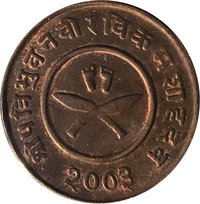
💎 Extremely Rare