

2 Paisa – Nepal
Nepal
Context
Years: 1942–1948
Issuer: Nepal 
Ruler: Tribhuvan Bir Bikram Shah
Currency:
(since 1932)
Demonetized: Yes
Material
References
KM: #Click to copy to clipboard710
Numista: #16407
Value
Exchange value: 0.02 NPR
Obverse
Description:
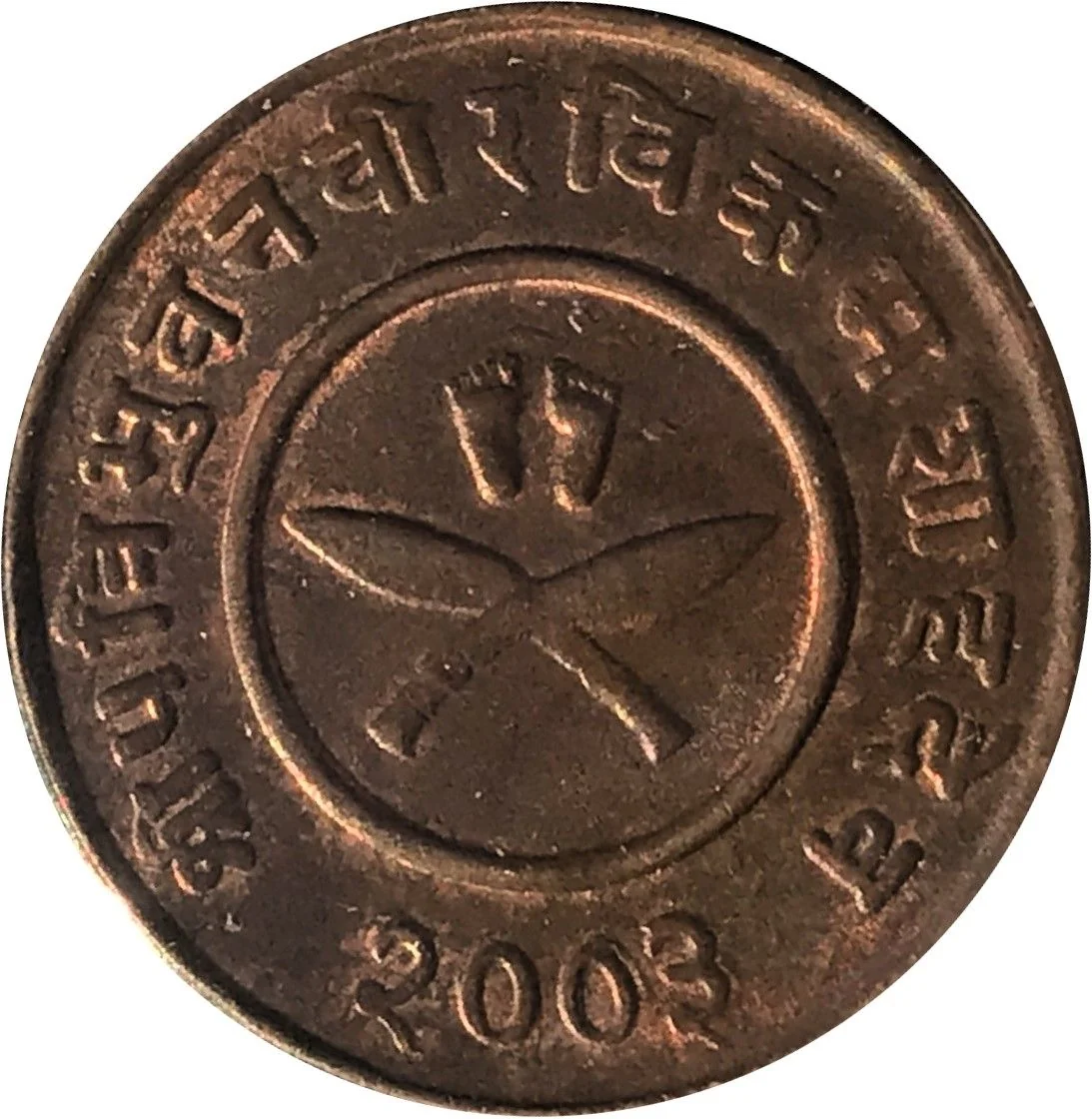
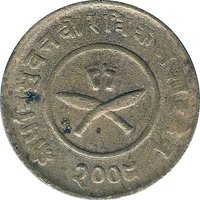
Crossed daggers and footprints in a circle.
Reverse
Description:
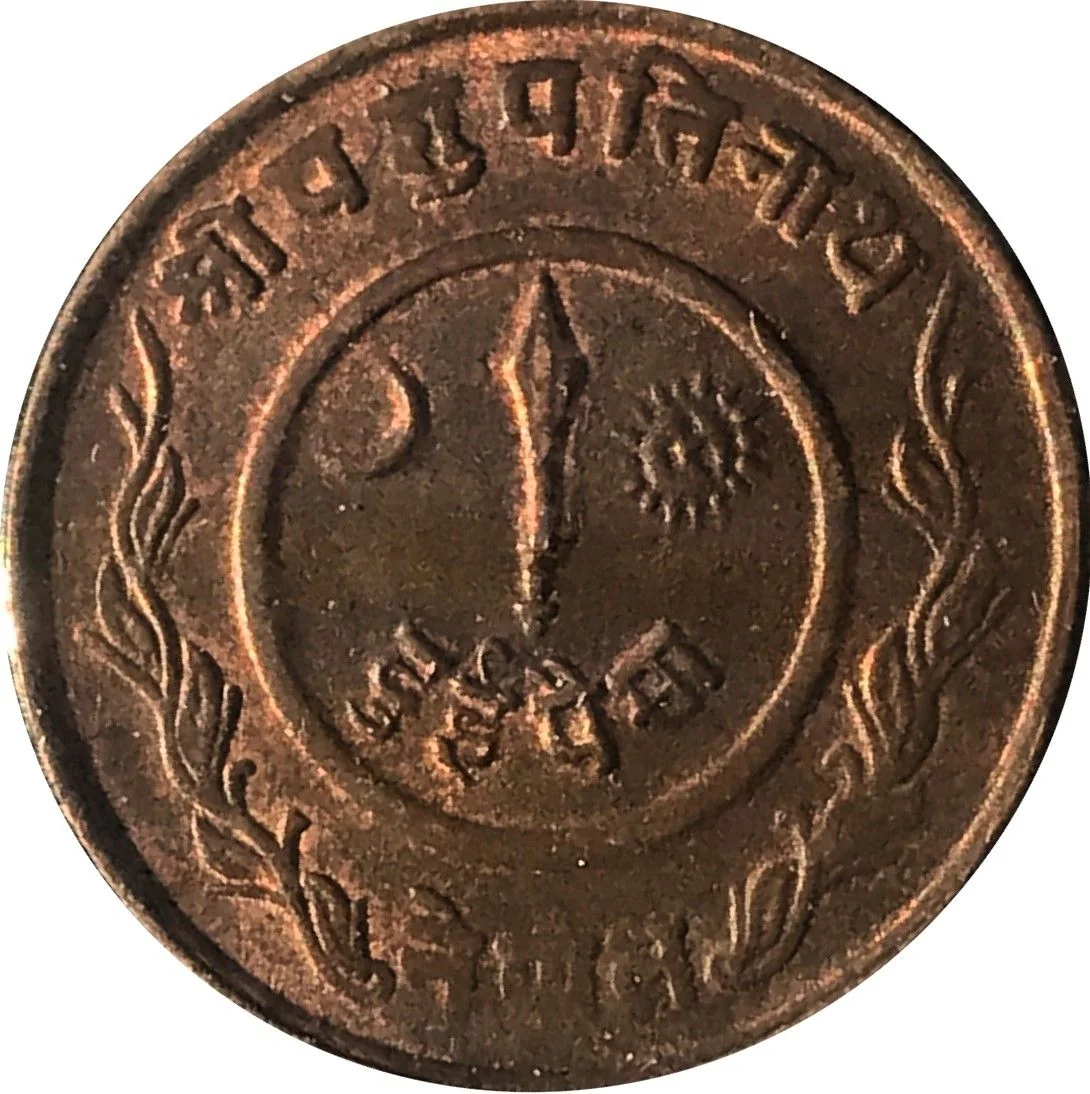
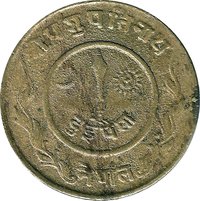
Crescent, star, and dagger.
Edge
Plain
Mintings
| Year | Mint Mark | Mintage | Quality | Collection |
|---|---|---|---|---|
| 1942 | — | — | ||
| 1943 | — | — | ||
| 1946 | — | — | ||
| 1948 | — | — |
Historical background
In 1942, Nepal's currency situation was fundamentally shaped by its dual monetary system and the immense economic pressures of World War II. The country operated on a bimetallic standard, with both silver Mohars (and Rupees) and copper Paisa coins in circulation, but the system was heavily influenced by its economic and political ties to British India. The Nepalese Rupee was pegged at par with the Indian Rupee, which itself was managed by the colonial British administration. This link meant that monetary policy in Kathmandu was largely reactive to decisions made in Delhi and London, especially as the war effort intensified.
The war created severe strains, most notably through a dramatic influx of Indian currency into Nepal. This was primarily due to the large-scale recruitment of Nepalese Gurkha soldiers into the British Indian Army and the expenditure of Allied military units stationed in or transiting through the region. The resulting surge in money supply, without a corresponding increase in domestic goods, fueled significant inflation and posed a threat to the stability of Nepal's own coinage. Furthermore, global silver shortages disrupted the minting of silver coins, exacerbating the monetary imbalance and causing widespread public concern over the value and authenticity of circulating currency.
In response to this crisis, the Rana government under Prime Minister Juddha Shumsher Jang Bahadur Rana took decisive action. In 1942, he ordered the recall and melting of all existing silver coins to be reminted into new, debased coins with a lower silver content. This move, while controversial, was a pragmatic attempt to control the money supply, curb inflation, and profit the state. Concurrently, the government issued new nickel and copper coins to facilitate smaller transactions. These measures of 1942 were critical in asserting a degree of monetary sovereignty during a period of external shock, laying groundwork for the eventual establishment of the Nepal Rastra Bank as the central bank in 1956.
The war created severe strains, most notably through a dramatic influx of Indian currency into Nepal. This was primarily due to the large-scale recruitment of Nepalese Gurkha soldiers into the British Indian Army and the expenditure of Allied military units stationed in or transiting through the region. The resulting surge in money supply, without a corresponding increase in domestic goods, fueled significant inflation and posed a threat to the stability of Nepal's own coinage. Furthermore, global silver shortages disrupted the minting of silver coins, exacerbating the monetary imbalance and causing widespread public concern over the value and authenticity of circulating currency.
In response to this crisis, the Rana government under Prime Minister Juddha Shumsher Jang Bahadur Rana took decisive action. In 1942, he ordered the recall and melting of all existing silver coins to be reminted into new, debased coins with a lower silver content. This move, while controversial, was a pragmatic attempt to control the money supply, curb inflation, and profit the state. Concurrently, the government issued new nickel and copper coins to facilitate smaller transactions. These measures of 1942 were critical in asserting a degree of monetary sovereignty during a period of external shock, laying groundwork for the eventual establishment of the Nepal Rastra Bank as the central bank in 1956.
🌱 Common