

1 mun – Joseon
Add to wishlist
Context
Material
Diameter: 24.5 mm
Weight: 4.68 g
Shape: Round with a square hole
Composition: Copper
Magnetic: No
Alignment: Medal alignment
flip
References
KM: #
Numista: #367668
Obverse
Description:
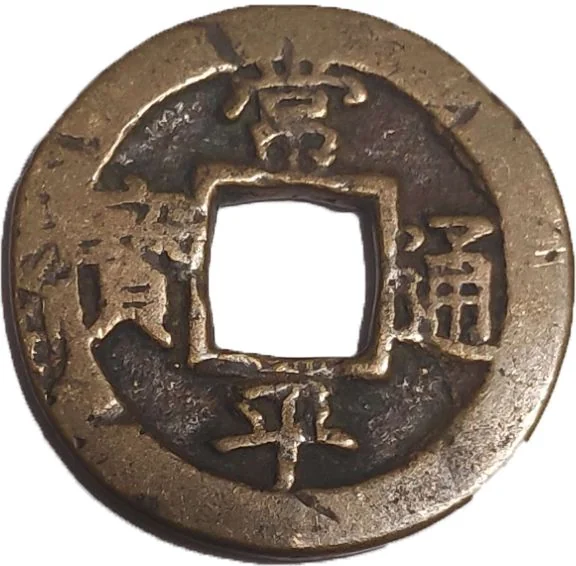
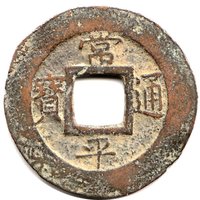
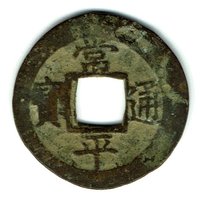
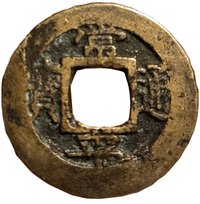
常平通寶 (Sang pyong Tong bo) - Yi Dynasty Korean currency.
Inscription:
常
寶 通
平
寶 通
平
Translation:
Eternal Treasure
Circulating Currency
Circulating Currency
Scripts: Chinese (traditional, regular script)
Language: Chinese
Reverse
Description:
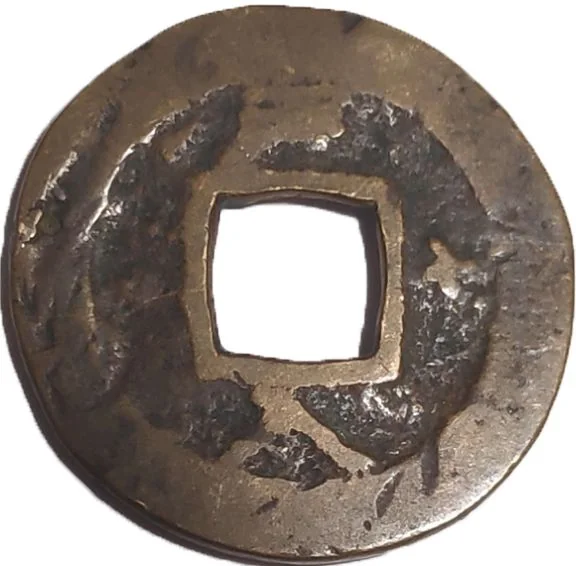
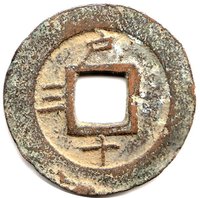
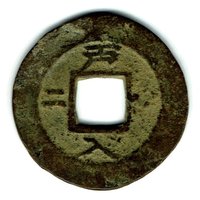
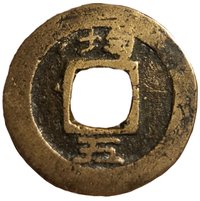
Mint mark top, serial bottom. Left circle, right series number, bottom "Il 入 *户 (Ho): Treasury."
Inscription:
户
○ 七
入
○ 七
入
Translation:
Household
Seven
Enter
Seven
Enter
Scripts: Chinese (traditional, regular script)
Language: Chinese
Edge
Plain
Mints
| Name | Mark |
|---|---|
| Treasury Department | 戸 |
Mintings
| Year | Mint Mark | Mintage | Quality | Collection |
|---|---|---|---|---|
| — | 户 | — |
Historical background
In 1806, the currency system of Joseon Korea was in a state of profound dysfunction, caught between the legacy of a commodity-based economy and the destabilizing effects of a poorly managed coinage. The primary circulating currency was the yeopjeon, a brass coin minted with a square hole in the center, but its value and public trust had severely eroded. Decades of chronic debasement—reducing the copper content and increasing lead—alongside rampant counterfeiting by both private operators and corrupt government mints had flooded the market with inferior coins. This led to severe inflation, where the nominal value of coins was far detached from their intrinsic metal worth, causing prices for essential goods like rice to fluctuate wildly and punishing the peasantry who paid taxes in grain but bought goods with devalued cash.
The monetary chaos was exacerbated by a deep-seated societal resistance to a full monetary economy, particularly from the yangban aristocracy. Many elites viewed coinage with suspicion, preferring the stability of a rice-and-cloth standard and hoarding wealth in land and grain. This limited the velocity and reach of currency, confining its most active use to commercial transactions in the capital, Hanseong, and a few major port cities. Furthermore, the state’s fiscal policy was contradictory; it needed currency to pay for administrative costs and military expenditures, yet its own minting practices and failure to control counterfeiters directly undermined the system's credibility, creating a vicious cycle of depreciation.
Consequently, by 1806, King Sunjo’s court faced a critical economic impasse. The government periodically attempted reforms, such as issuing new coin series or cracking down on counterfeit rings, but these measures were largely reactive and ineffective against the structural problems. The result was a dual economy: a fragile, inflationary cash economy coexisting uneasily with a more stable but inefficient barter economy. This monetary instability weakened central authority, fueled social discontent, and highlighted the Joseon state’s struggle to manage a modernizing financial system within its rigid Confucian framework.
The monetary chaos was exacerbated by a deep-seated societal resistance to a full monetary economy, particularly from the yangban aristocracy. Many elites viewed coinage with suspicion, preferring the stability of a rice-and-cloth standard and hoarding wealth in land and grain. This limited the velocity and reach of currency, confining its most active use to commercial transactions in the capital, Hanseong, and a few major port cities. Furthermore, the state’s fiscal policy was contradictory; it needed currency to pay for administrative costs and military expenditures, yet its own minting practices and failure to control counterfeiters directly undermined the system's credibility, creating a vicious cycle of depreciation.
Consequently, by 1806, King Sunjo’s court faced a critical economic impasse. The government periodically attempted reforms, such as issuing new coin series or cracking down on counterfeit rings, but these measures were largely reactive and ineffective against the structural problems. The result was a dual economy: a fragile, inflationary cash economy coexisting uneasily with a more stable but inefficient barter economy. This monetary instability weakened central authority, fueled social discontent, and highlighted the Joseon state’s struggle to manage a modernizing financial system within its rigid Confucian framework.
✨ Legendary