

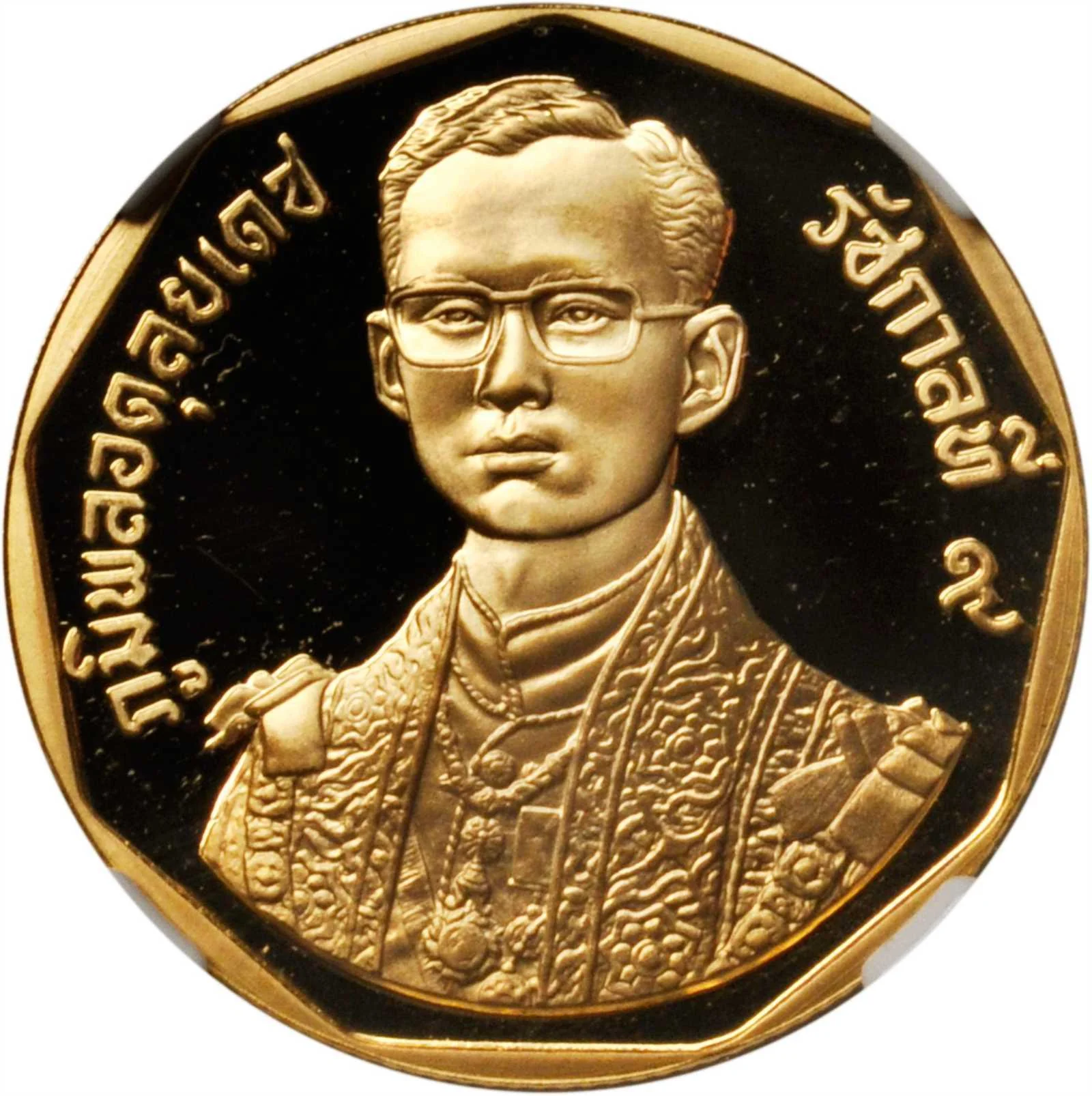
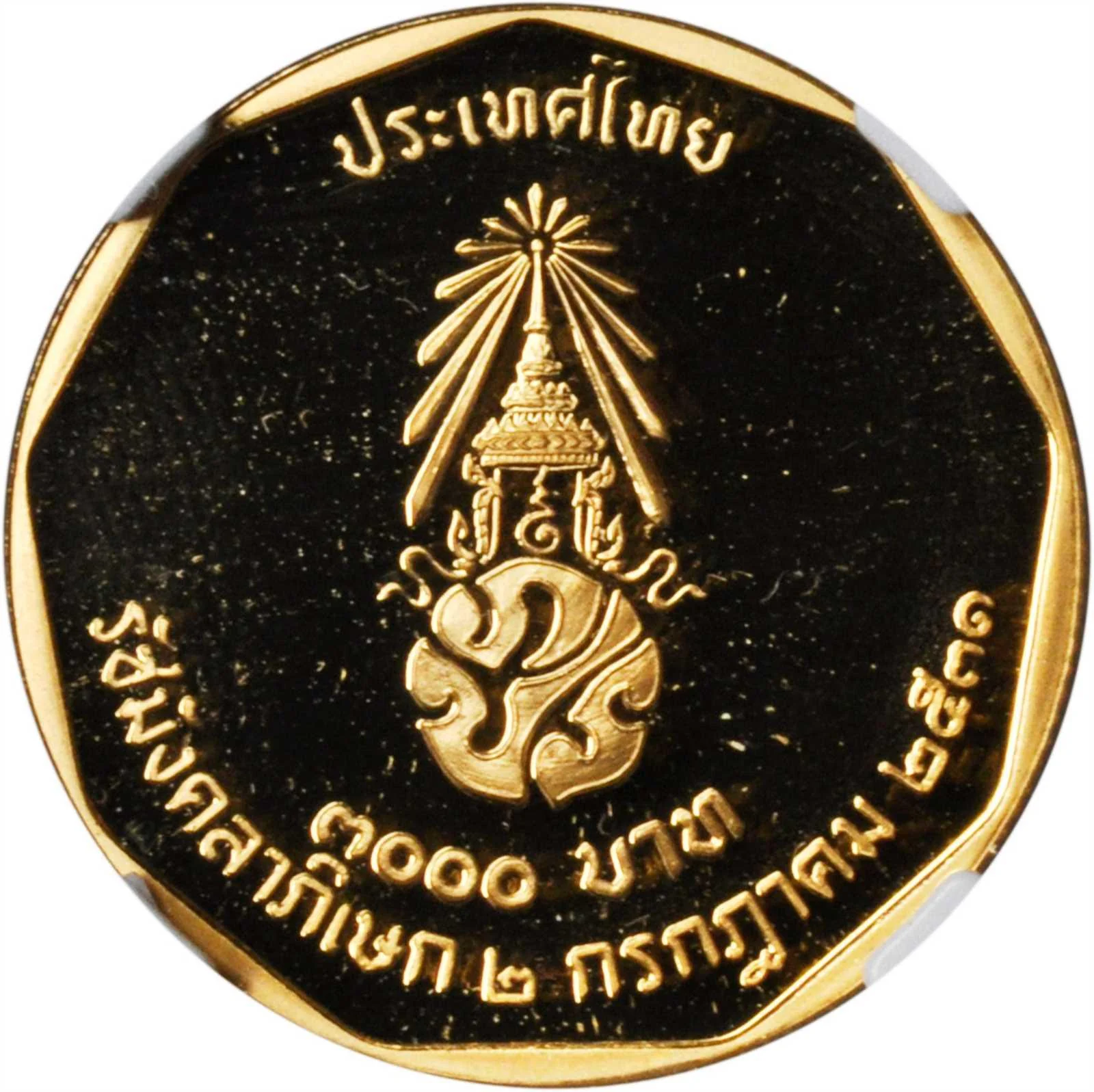
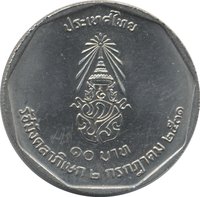
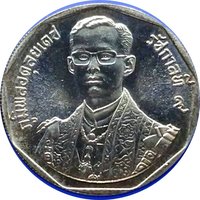
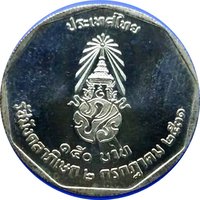
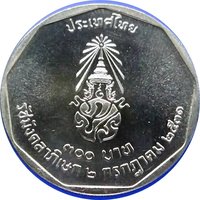
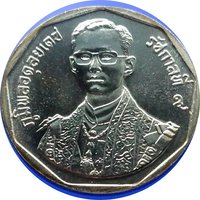
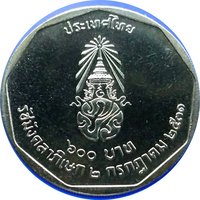
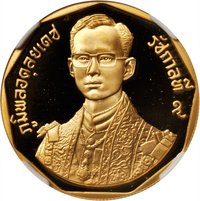
3000 Bahts (King Rama IX) – Thailand
Non-circulating coins
Commemoration: 42nd Anniversary - Reign of King Rama IX
Series: Rajamangala Celebrations
Thailand
Context
Year: 1989
Thai Year: 2531
Issuer: Thailand 
Ruler: Bhumibol Adulyadej
Currency:
(since 1897)
Total mintage: 8,684
Material

References
Numista: #362221
Value
Exchange value: 3000 THB = $96.59
Bullion value: $1125.43
Mintings
| Year | Mint Mark | Mintage | Quality | Collection |
|---|---|---|---|---|
| 1989 | — | 7,904 | ||
| 1989 | — | 780 | Proof |
Historical background
In 1989, Thailand's currency situation was characterized by a managed float of the baht, which was pegged to a basket of currencies dominated by the US dollar. This system, established in the early 1980s following a devaluation crisis, provided a crucial anchor for monetary stability and export competitiveness. The Bank of Thailand carefully managed the exchange rate within a narrow band, a policy that fostered confidence among foreign investors and supported the nation's rapidly expanding export-oriented economy, then in the midst of a historic boom often called the "Asian Tiger" period.
This period of stability, however, was beginning to encounter underlying pressures. Thailand's remarkable economic growth, averaging over 10% annually in the late 1980s, led to a large and growing current account deficit. This was fueled by strong domestic demand for imports and heavy capital investment in infrastructure and industry. Furthermore, the baht's close linkage to the appreciating US dollar made Thai exports relatively more expensive compared to those of competitors, subtly eroding the very competitiveness the peg was designed to ensure.
Consequently, 1989 stood as a pivotal calm before the storm. The managed peg was largely successful in its immediate goals, providing a stable financial environment for growth. Yet, the accumulating macroeconomic imbalances—the significant current account deficit, inflationary pressures, and the rigidity of the exchange rate—were creating vulnerabilities. These fault lines, though not yet causing crisis, would be dramatically exposed later in the 1990s when speculative pressures culminated in the 1997 Asian Financial Crisis, which forced the abandonment of the baht peg.
This period of stability, however, was beginning to encounter underlying pressures. Thailand's remarkable economic growth, averaging over 10% annually in the late 1980s, led to a large and growing current account deficit. This was fueled by strong domestic demand for imports and heavy capital investment in infrastructure and industry. Furthermore, the baht's close linkage to the appreciating US dollar made Thai exports relatively more expensive compared to those of competitors, subtly eroding the very competitiveness the peg was designed to ensure.
Consequently, 1989 stood as a pivotal calm before the storm. The managed peg was largely successful in its immediate goals, providing a stable financial environment for growth. Yet, the accumulating macroeconomic imbalances—the significant current account deficit, inflationary pressures, and the rigidity of the exchange rate—were creating vulnerabilities. These fault lines, though not yet causing crisis, would be dramatically exposed later in the 1990s when speculative pressures culminated in the 1997 Asian Financial Crisis, which forced the abandonment of the baht peg.
Series: Rajamangala Celebrations




✨ Legendary