

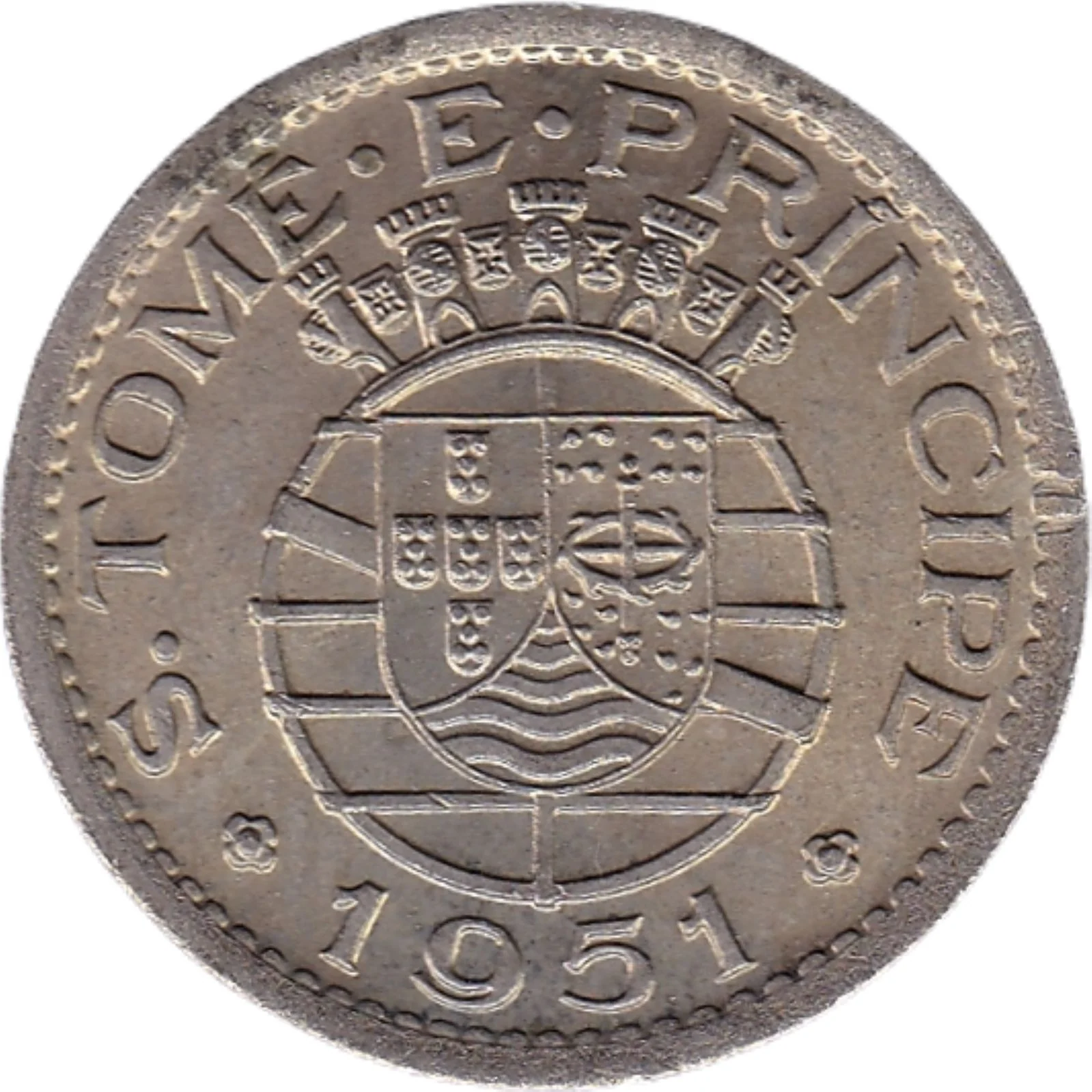
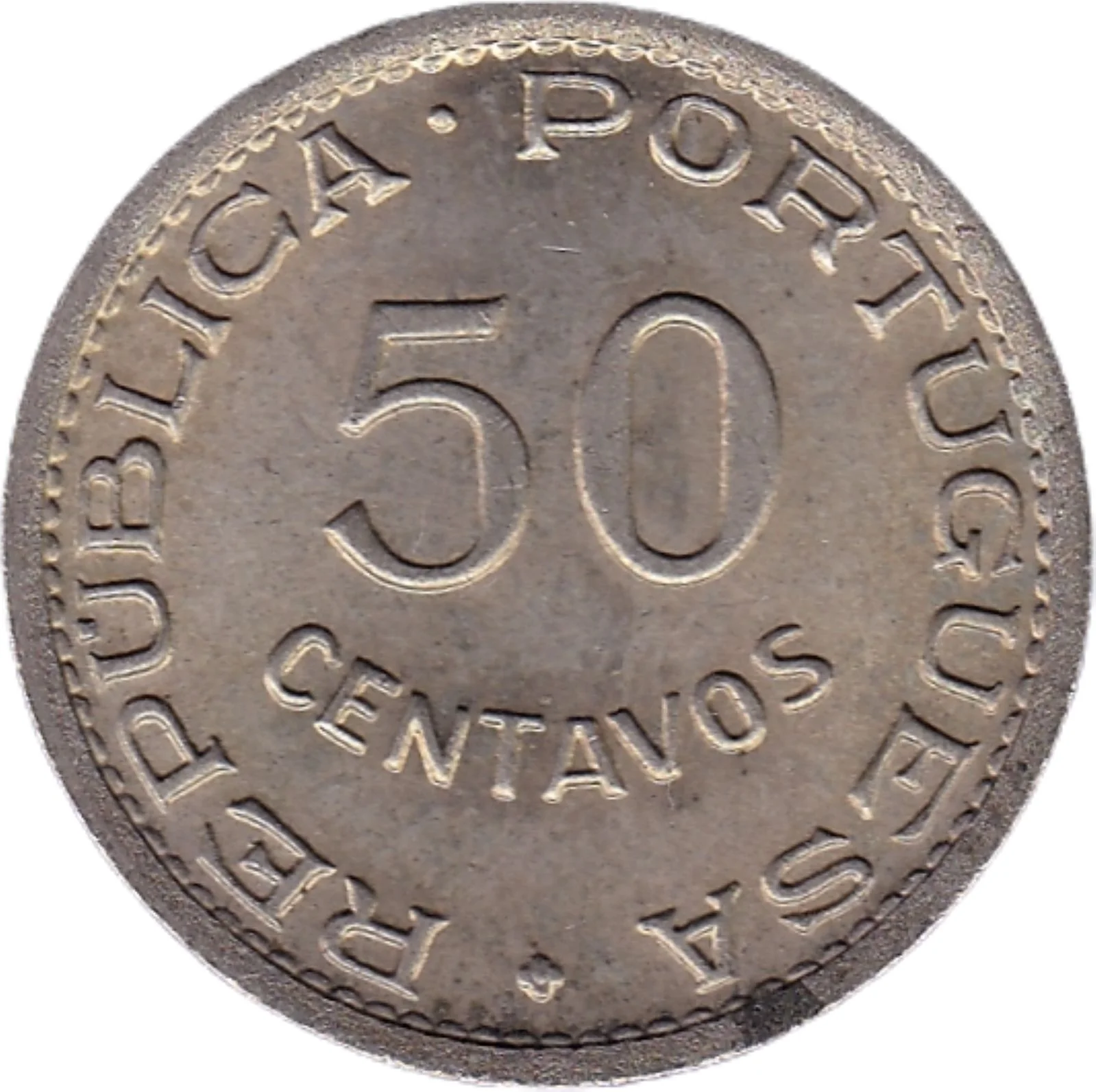
50 centavos – São Tomé and Príncipe
Add to wishlist
Sao Tome and Principe
Context
Year: 1951
Country: Sao Tome and Principe
Issuer: São Tomé and Príncipe
Period:
(1951—1975)
Currency:
(1914—1974)
Demonetized: Yes
Total mintage: 48,000
Material
Diameter: 22.6 mm
Weight: 4.5 g
Thickness: 1.66 mm
Shape: Round
Composition: Copper-nickel
Technique: Milled
Alignment: Coin alignment
flip
References
KM: #
Numista: #36189
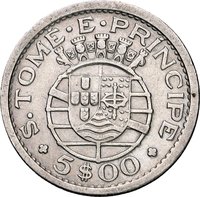
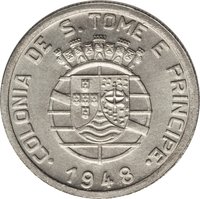
Obverse
Inscription:
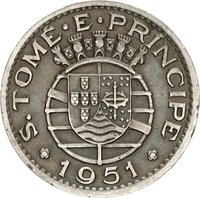
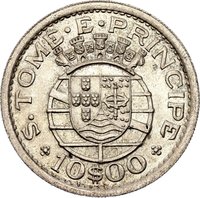
S. TOMÉ.E.PRÍNCIPE
1951
1951
Translation:
Saint Thomas and Prince
1951
1951
Script: Latin
Language: Portuguese
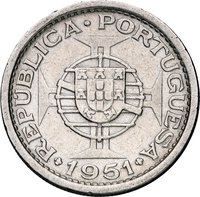
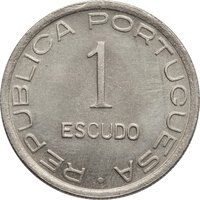
Reverse
Inscription:
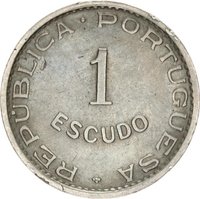
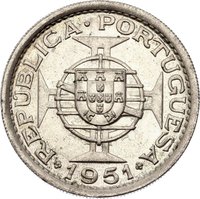
REPUBLICA PORTUGUESA
50
CENTAVOS
50
CENTAVOS
Translation:
Portuguese Republic
50
Cents
50
Cents
Script: Latin
Language: Portuguese
Edge
Plain
Categories
| Symbols> Coat of Arms |
Mints
| Name | Mark |
|---|---|
| Imprensa Nacional - Casa da Moeda | — |
Mintings
| Year | Mint Mark | Mintage | Quality | Collection |
|---|---|---|---|---|
| 1951 | — | 48,000 |
Historical background
In 1951, São Tomé and Príncipe existed as an overseas province of Portugal, and its currency situation was entirely dictated by the colonial metropole. The islands used the Portuguese São Tomé and Príncipe escudo (STPE), which was pegged at par with the Portuguese escudo (PTE). This meant the local currency had no independent monetary policy; its value and supply were directly controlled by Lisbon, primarily to facilitate the export of the colony's main products, cocoa and coffee, to Portugal.
The monetary system was designed to integrate the colony tightly into Portugal's economic sphere. All foreign exchange earnings from exports were managed through Portuguese banks, particularly the Banco Nacional Ultramarino, which acted as the central bank for Portugal's overseas territories. This structure ensured that Portugal could access foreign currency (like sterling or dollars) earned by the colony's lucrative plantation economy, while the islands themselves remained dependent on imported goods, often from Portugal.
Consequently, the currency situation in 1951 reflected the islands' status as a plantation economy and a captive market. There was little financial infrastructure for local development, and the fixed exchange rate system primarily served Portuguese commercial interests. This economic subordination, characteristic of the late colonial era, would later become a point of contention as movements for economic self-determination and eventual political independence gained momentum in the decades that followed.
The monetary system was designed to integrate the colony tightly into Portugal's economic sphere. All foreign exchange earnings from exports were managed through Portuguese banks, particularly the Banco Nacional Ultramarino, which acted as the central bank for Portugal's overseas territories. This structure ensured that Portugal could access foreign currency (like sterling or dollars) earned by the colony's lucrative plantation economy, while the islands themselves remained dependent on imported goods, often from Portugal.
Consequently, the currency situation in 1951 reflected the islands' status as a plantation economy and a captive market. There was little financial infrastructure for local development, and the fixed exchange rate system primarily served Portuguese commercial interests. This economic subordination, characteristic of the late colonial era, would later become a point of contention as movements for economic self-determination and eventual political independence gained momentum in the decades that followed.
🌟 Uncommon