

1 escudo – São Tomé and Príncipe
Add to wishlist
Sao Tome and Principe
Context
Year: 1948
Country: Sao Tome and Principe
Issuer: São Tomé and Príncipe
Period:
(1910—1951)
Currency:
(1914—1974)
Demonetized: Yes
Total mintage: 60,000
Material
Diameter: 26.5 mm
Weight: 7.8 g
Shape: Round
Composition: Nickel brass
Standard: Silver quarter ounce
Magnetic: No
Technique: Milled
References
KM: #
Numista: #36188
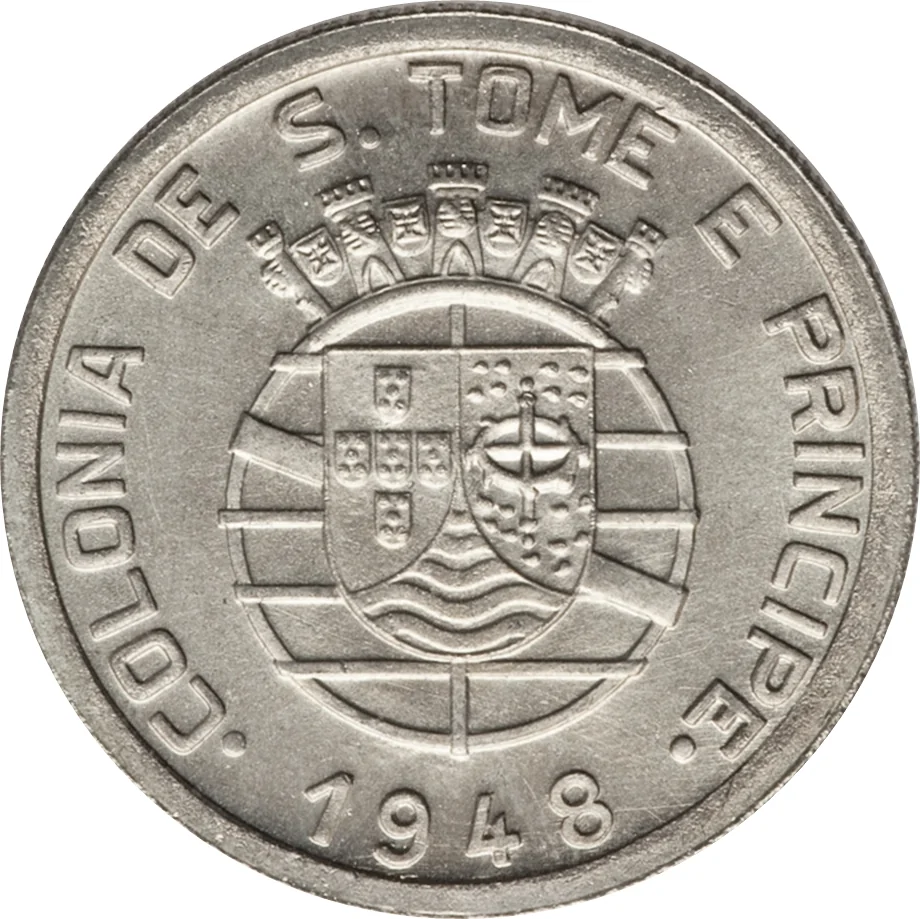
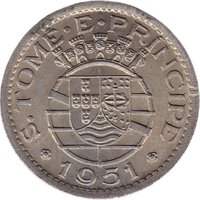
Obverse
Inscription:
.COLONIA DE S. TOMÉ E PRINCIPE.
1948
1948
Translation:
Colony of S. Tomé and Príncipe.
1948
1948
Script: Latin
Language: Portuguese
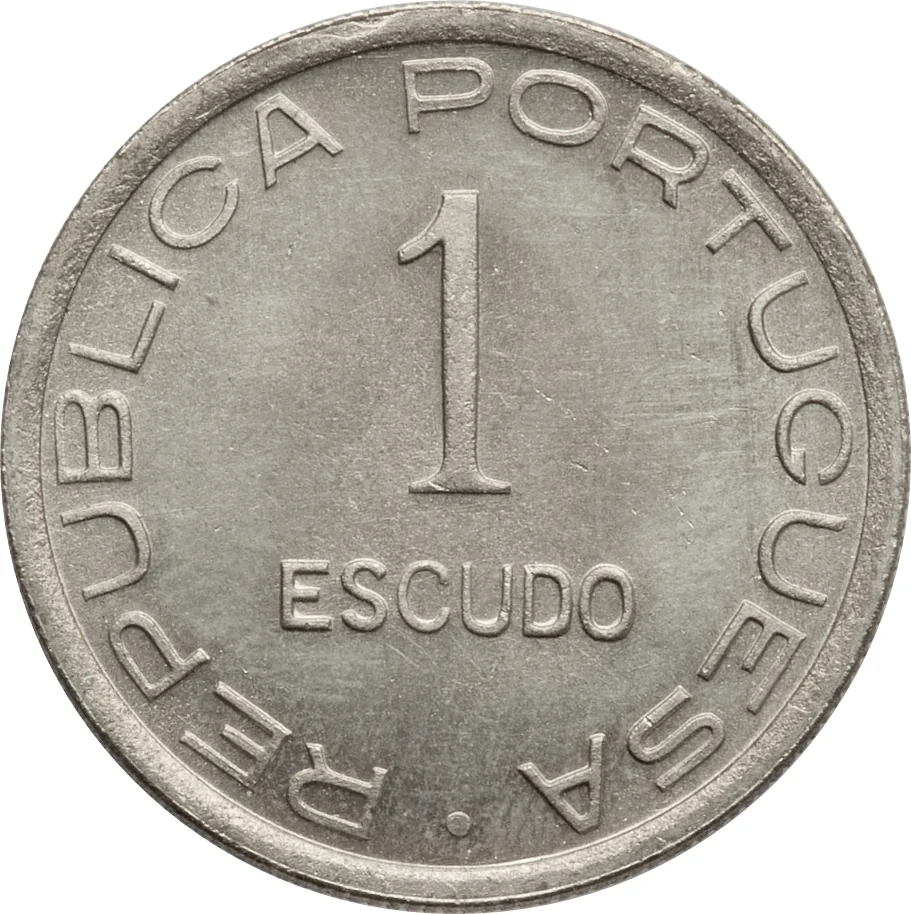
Reverse
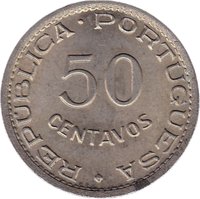
Inscription:
REPUBLICA PORTUGUESA ·
1 ESCUDO
1 ESCUDO
Translation:
Portuguese Republic · 1 Escudo
Script: Latin
Language: Portuguese
Edge
Reeded
Categories
| Symbols> Coat of Arms |
Mints
| Name | Mark |
|---|---|
| Imprensa Nacional - Casa da Moeda | — |
Mintings
| Year | Mint Mark | Mintage | Quality | Collection |
|---|---|---|---|---|
| 1948 | — | 60,000 |
Historical background
In 1948, São Tomé and Príncipe was not an independent monetary entity but a Portuguese overseas province. Consequently, its currency situation was entirely dictated by Portugal's colonial financial system. The official currency in circulation was the São Tomé and Príncipe escudo (STPE), which had been introduced in 1929 to replace the real. However, this escudo was not a freely convertible currency; it was a local issue pegged at par with the Portuguese escudo (PTE), creating a strict monetary union with the metropole.
The colony's economy in this period was dominated by plantation agriculture, primarily cocoa and coffee, with production controlled by Portuguese-owned rogas (estates). The currency system served to tightly bind the colony's trade and finance to Lisbon. All foreign exchange earnings from exports were managed through Portugal, and the local escudo's value was entirely dependent on the stability and policies of the Portuguese escudo. There was no central bank on the islands; monetary authority resided with the Banco Nacional Ultramarino (National Overseas Bank), which acted as the issuer of banknotes and the main commercial bank, further cementing Lisbon's control.
Therefore, the currency situation in 1948 was one of colonial dependency and stability through subordination. While the fixed parity ensured nominal stability and facilitated trade with Portugal, it meant São Tomé and Príncipe had no autonomous monetary policy to address local economic conditions. The system was designed to channel the colony's export wealth into the Portuguese economy, with the currency acting as a key instrument of this integration, a situation that would persist until the islands' independence in 1975.
The colony's economy in this period was dominated by plantation agriculture, primarily cocoa and coffee, with production controlled by Portuguese-owned rogas (estates). The currency system served to tightly bind the colony's trade and finance to Lisbon. All foreign exchange earnings from exports were managed through Portugal, and the local escudo's value was entirely dependent on the stability and policies of the Portuguese escudo. There was no central bank on the islands; monetary authority resided with the Banco Nacional Ultramarino (National Overseas Bank), which acted as the issuer of banknotes and the main commercial bank, further cementing Lisbon's control.
Therefore, the currency situation in 1948 was one of colonial dependency and stability through subordination. While the fixed parity ensured nominal stability and facilitated trade with Portugal, it meant São Tomé and Príncipe had no autonomous monetary policy to address local economic conditions. The system was designed to channel the colony's export wealth into the Portuguese economy, with the currency acting as a key instrument of this integration, a situation that would persist until the islands' independence in 1975.
⭐ Somewhat Rare