

1 Pie – Madras Presidency
India
Context
Years: 1825–1833
Country: India 
Issuer: Madras Presidency
Currency:
(1691—1835)
Demonetized: Yes
Total mintage: 4,741,328
Material
References
KM: #Click to copy to clipboard428
Numista: #35941
Obverse
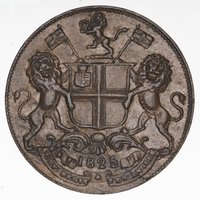
Description:
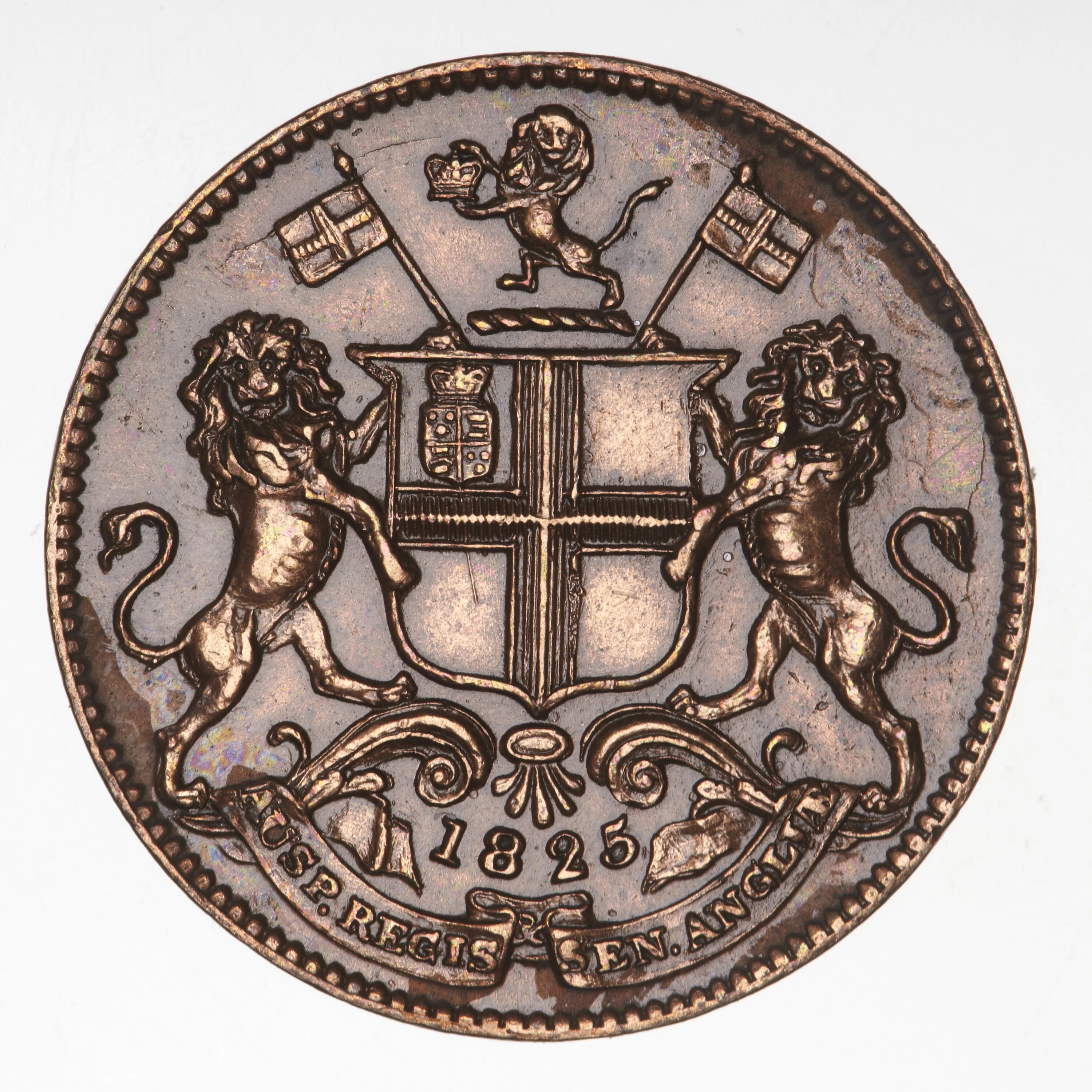
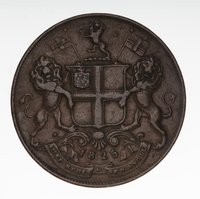
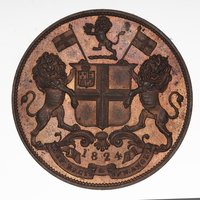
East India Company coat of arms, featuring the motto "Auspicio Regis Et Senatus Anglia" on a ribbon and a date below, all within a raised toothed rim.
Inscription:
1825
AUSP. REGIS & SEN. ANGLIAE
AUSP. REGIS & SEN. ANGLIAE
Translation:
Under the Auspices of the King and Senate of England
1825
1825
Language: Latin
Reverse
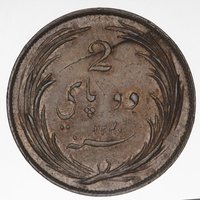
Description:
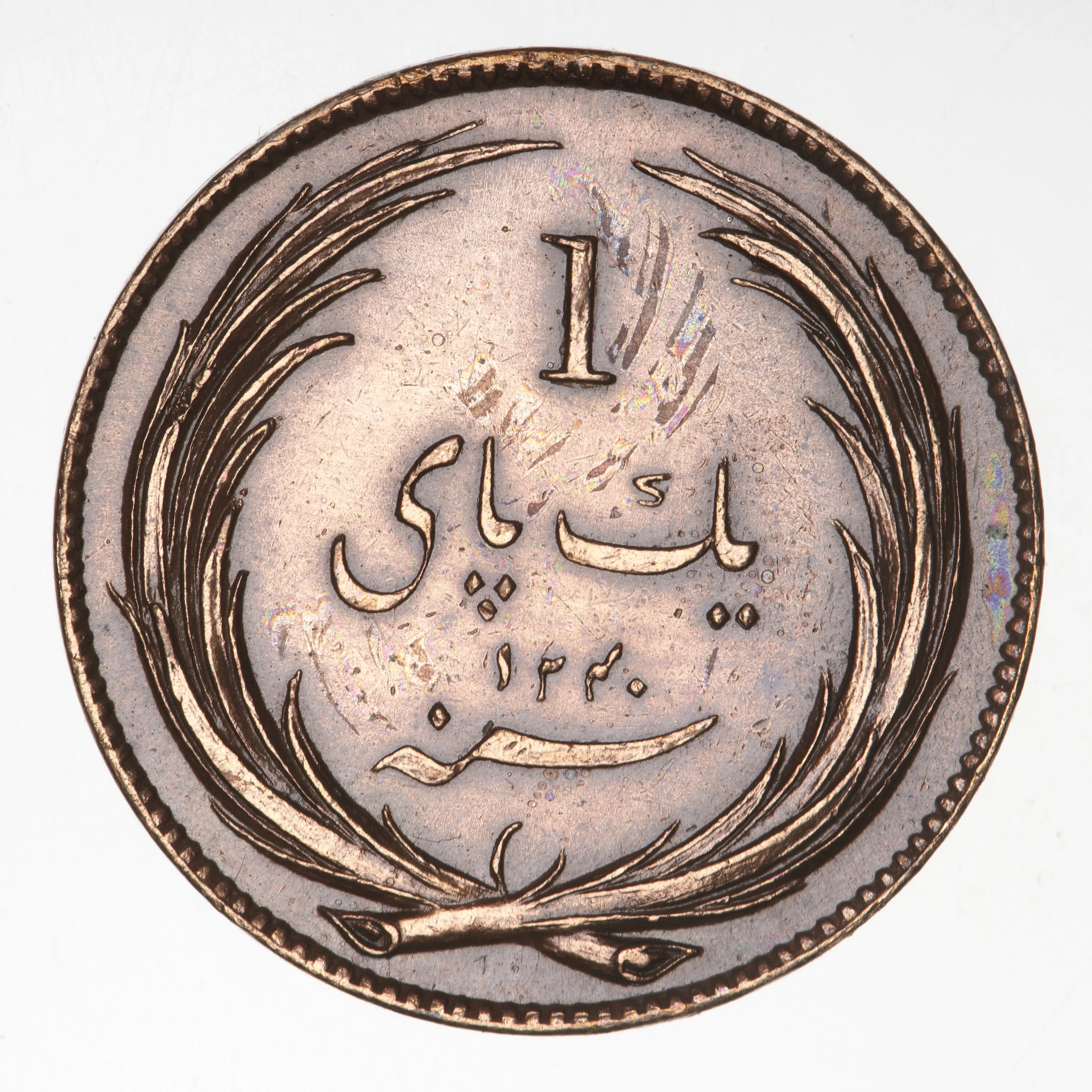
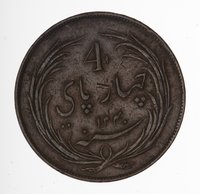
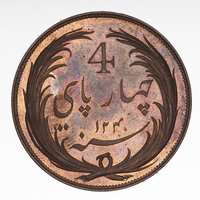
Persian: "Yek pai" with numeral value above and AH date below, flanked by sprays within a toothed rim.
Inscription:
1
دو پاي
١٢۴٠
سنه
دو پاي
١٢۴٠
سنه
Translation:
Two Paei
1240
Year
1240
Year
Language: Persian
Edge
Plain
Mints
| Name | Mark |
|---|---|
| Royal Mint (Tower Hill) | — |
Mintings
| Year | Mint Mark | Mintage | Quality | Collection |
|---|---|---|---|---|
| 1825 | — | — | Proof | |
| 1825 | — | 4,741,328 | ||
| 1833 | — | — |
Historical background
By 1825, the currency situation in the Madras Presidency was a complex and often chaotic system, characterised by the simultaneous circulation of multiple metallic currencies and a severe shortage of small change. The primary unit was the silver Star Pagoda, but the most ubiquitous coin in daily use was the gold pagoda, alongside silver rupees (largely Arcot rupees) and a bewildering variety of copper coins. This multiplicity led to fluctuating exchange rates between gold, silver, and copper, which varied not only over time but also between districts, causing significant inconvenience for trade and revenue collection.
The East India Company administration had long struggled to impose order. Their attempts to introduce a uniform silver standard, such as the Company Rupee, competed with the entrenched popularity of the gold pagoda, especially for larger transactions and zamindari revenue payments. Furthermore, a critical problem was the chronic scarcity of reliable copper coins for small transactions, which was filled by a flood of inferior, privately minted copper tokens and even lead pieces from local rulers and merchants. This undermined official currency and facilitated widespread counterfeiting, eroding public confidence in the monetary system.
Consequently, in 1825, the Presidency stood at a monetary crossroads. The authorities recognized the urgent need for simplification and control, viewing the chaotic currency as an impediment to efficient administration and economic growth. This year fell within a period of active reform, shortly preceding the more decisive actions of the late 1820s and 1830s, which would eventually lead to the demonetization of the gold pagoda and the firm establishment of a uniform silver standard based on the Company Rupee, laying the groundwork for a more unified subcontinental currency system.
The East India Company administration had long struggled to impose order. Their attempts to introduce a uniform silver standard, such as the Company Rupee, competed with the entrenched popularity of the gold pagoda, especially for larger transactions and zamindari revenue payments. Furthermore, a critical problem was the chronic scarcity of reliable copper coins for small transactions, which was filled by a flood of inferior, privately minted copper tokens and even lead pieces from local rulers and merchants. This undermined official currency and facilitated widespread counterfeiting, eroding public confidence in the monetary system.
Consequently, in 1825, the Presidency stood at a monetary crossroads. The authorities recognized the urgent need for simplification and control, viewing the chaotic currency as an impediment to efficient administration and economic growth. This year fell within a period of active reform, shortly preceding the more decisive actions of the late 1820s and 1830s, which would eventually lead to the demonetization of the gold pagoda and the firm establishment of a uniform silver standard based on the Company Rupee, laying the groundwork for a more unified subcontinental currency system.
⭐ Rare