

4 Pies – Madras Presidency
India
Context
Year: 1824
Islamic (Hijri) Year: 1240
Country: India 
Issuer: Madras Presidency
Currency:
(1691—1835)
Demonetized: Yes
Total mintage: 7,136,000
Material
References
KM: #Click to copy to clipboard430
Numista: #329508
Obverse
Description:
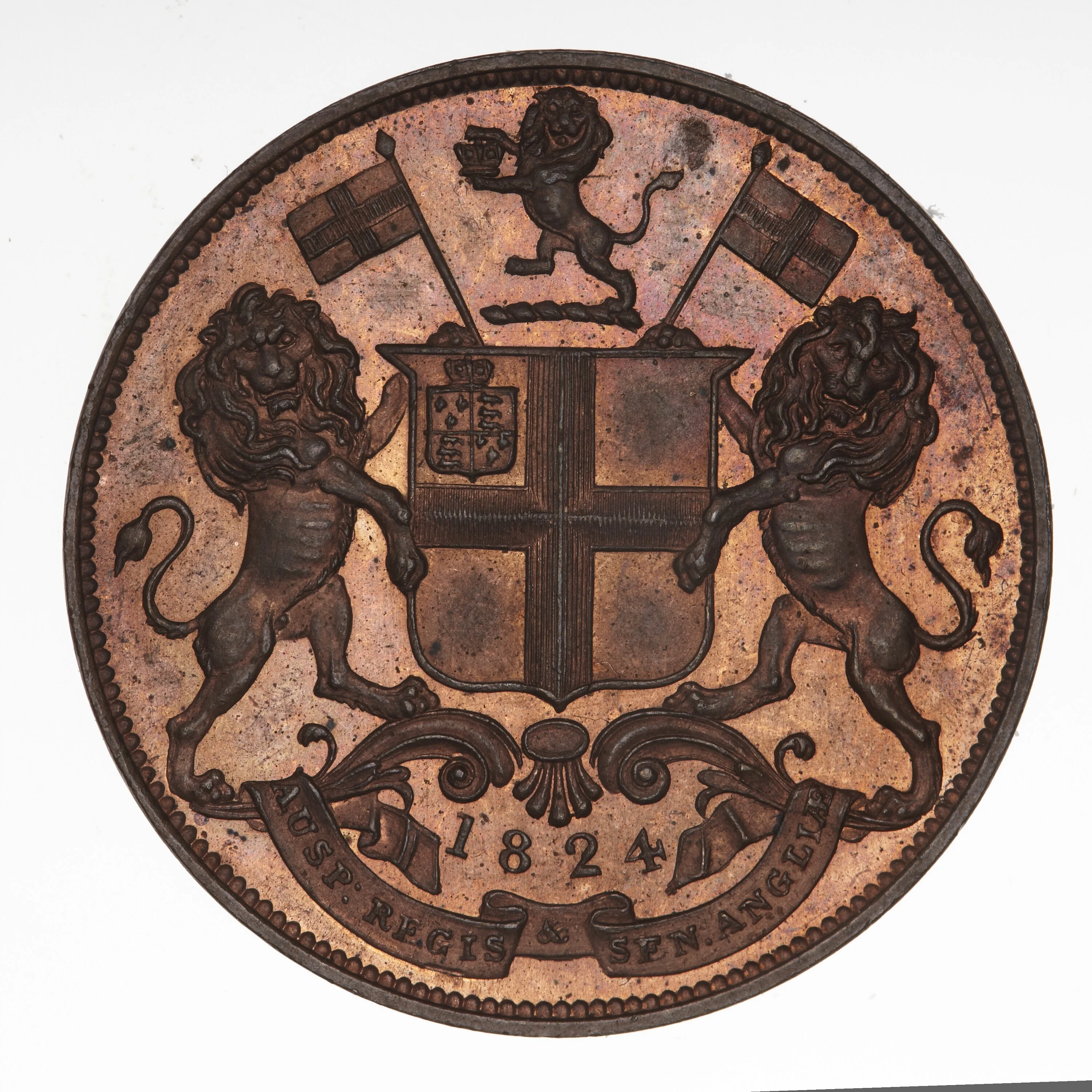
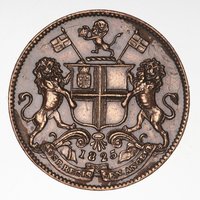
Coat of arms of the East India Company, with the motto "Auspicio Regis Et Senatus Anglia" on a ribbon and a date below, within a raised, toothed rim.
Inscription:
1824
AUSP REGIS & SEN ANGLIAE
AUSP REGIS & SEN ANGLIAE
Translation:
By the Auspices of the King and the Senate of England
Script: Latin
Language: Latin
Reverse
Edge
Plain.
Categories
| Symbols> Coat of Arms |
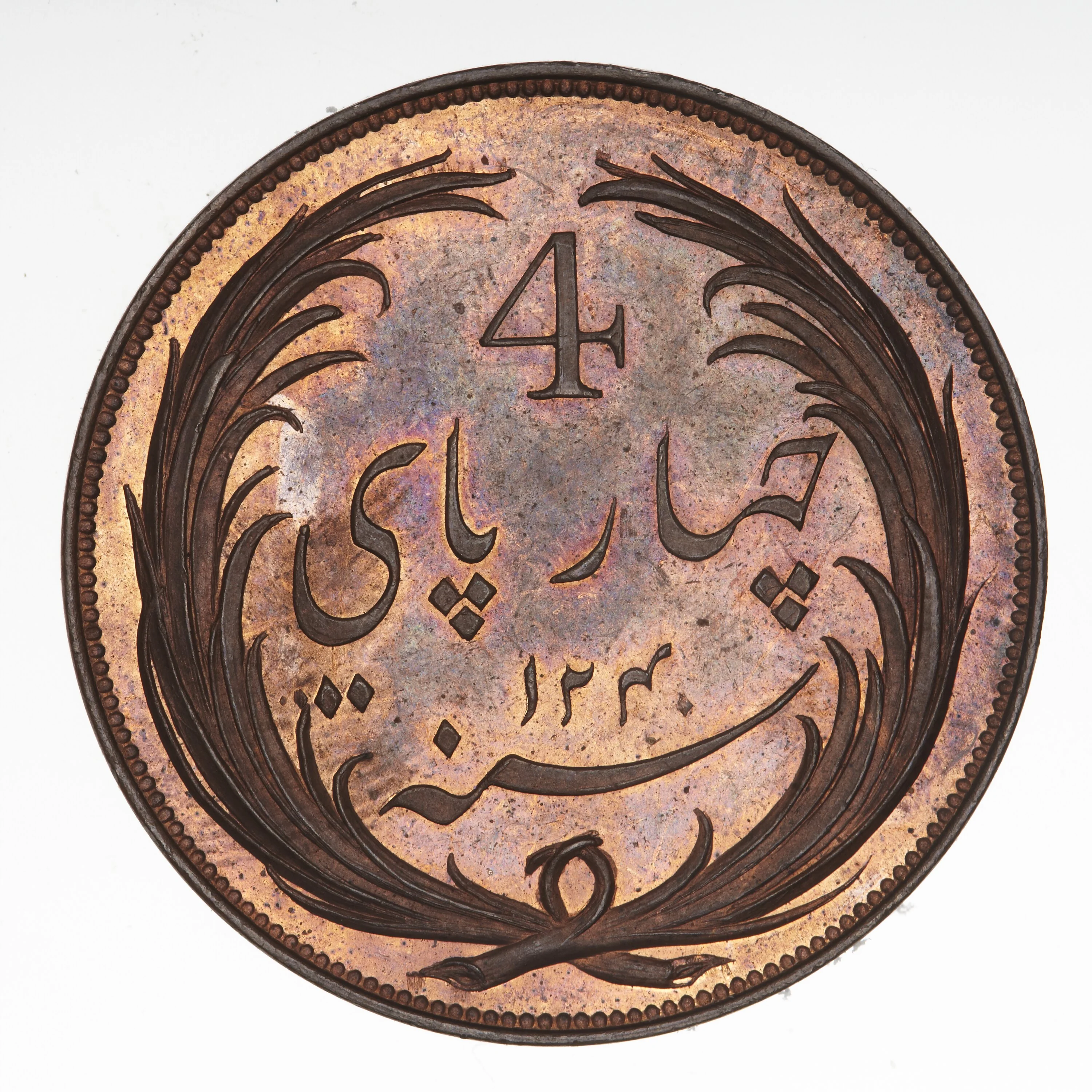
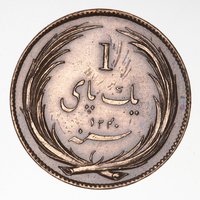
| Symbol> Wreath |
Mints
| Name | Mark |
|---|---|
| Royal Mint (Tower Hill) | — |
Mintings
| Year | Mint Mark | Mintage | Quality | Collection |
|---|---|---|---|---|
| 1824 | — | 7,136,000 | ||
| 1824 | — | — | Proof |
Historical background
In 1824, the currency situation in the Madras Presidency was characterized by a complex and often chaotic multiplicity of systems. The primary unit was the silver Star Pagoda, valued at approximately 3½ Company Rupees, but the everyday economy relied heavily on a bewildering array of gold pagodas, silver rupees, and copper coins (cash) from various dynasties and European issuers. Furthermore, the Presidency's monetary landscape was deeply regional, with different fanams and cash units having distinct values in districts like Arcot, Madras, and Malabar, leading to constant calculation difficulties for trade and revenue collection.
This disorder was a legacy of the pre-colonial period and early Company rule, where the East India Company had been slow to impose a uniform standard. While the Bengal Presidency had moved toward a uniform silver rupee standard, Madras remained on a de facto gold standard centred on the pagoda, with silver and copper coins as fractional currencies. The system was further strained by a chronic shortage of small-change copper coins, which hampered daily transactions for the majority of the population and encouraged the circulation of debased and counterfeit coins.
Recognizing the impediment this posed to administration and commerce, the East India Company was, by the 1820s, actively moving toward reform. The period around 1824 was a transitional one, setting the stage for the major currency reforms of 1825. These would demonetize the old gold pagoda and establish a uniform silver rupee standard across all of British India, aligning Madras with the systems of Bengal and Bombay. Thus, in 1824, the Presidency was on the cusp of abandoning its long-standing, fragmented monetary tradition in favour of a centralized, imperial currency.
This disorder was a legacy of the pre-colonial period and early Company rule, where the East India Company had been slow to impose a uniform standard. While the Bengal Presidency had moved toward a uniform silver rupee standard, Madras remained on a de facto gold standard centred on the pagoda, with silver and copper coins as fractional currencies. The system was further strained by a chronic shortage of small-change copper coins, which hampered daily transactions for the majority of the population and encouraged the circulation of debased and counterfeit coins.
Recognizing the impediment this posed to administration and commerce, the East India Company was, by the 1820s, actively moving toward reform. The period around 1824 was a transitional one, setting the stage for the major currency reforms of 1825. These would demonetize the old gold pagoda and establish a uniform silver rupee standard across all of British India, aligning Madras with the systems of Bengal and Bombay. Thus, in 1824, the Presidency was on the cusp of abandoning its long-standing, fragmented monetary tradition in favour of a centralized, imperial currency.
✨ Legendary