

200 dinars (Independence) – Algeria
Add to wishlist
Circulating commemorative coins
Commemoration: 50th Anniversary of Independence
Algeria
Context
Years: 2012–2019
Issuer: Algeria
Issuing organization: Bank of Algeria
Period:
(since 1962)
Currency:
(since 1964)
Material
References
KM: #
Numista: #35691
Value
Exchange value: 200 DZD
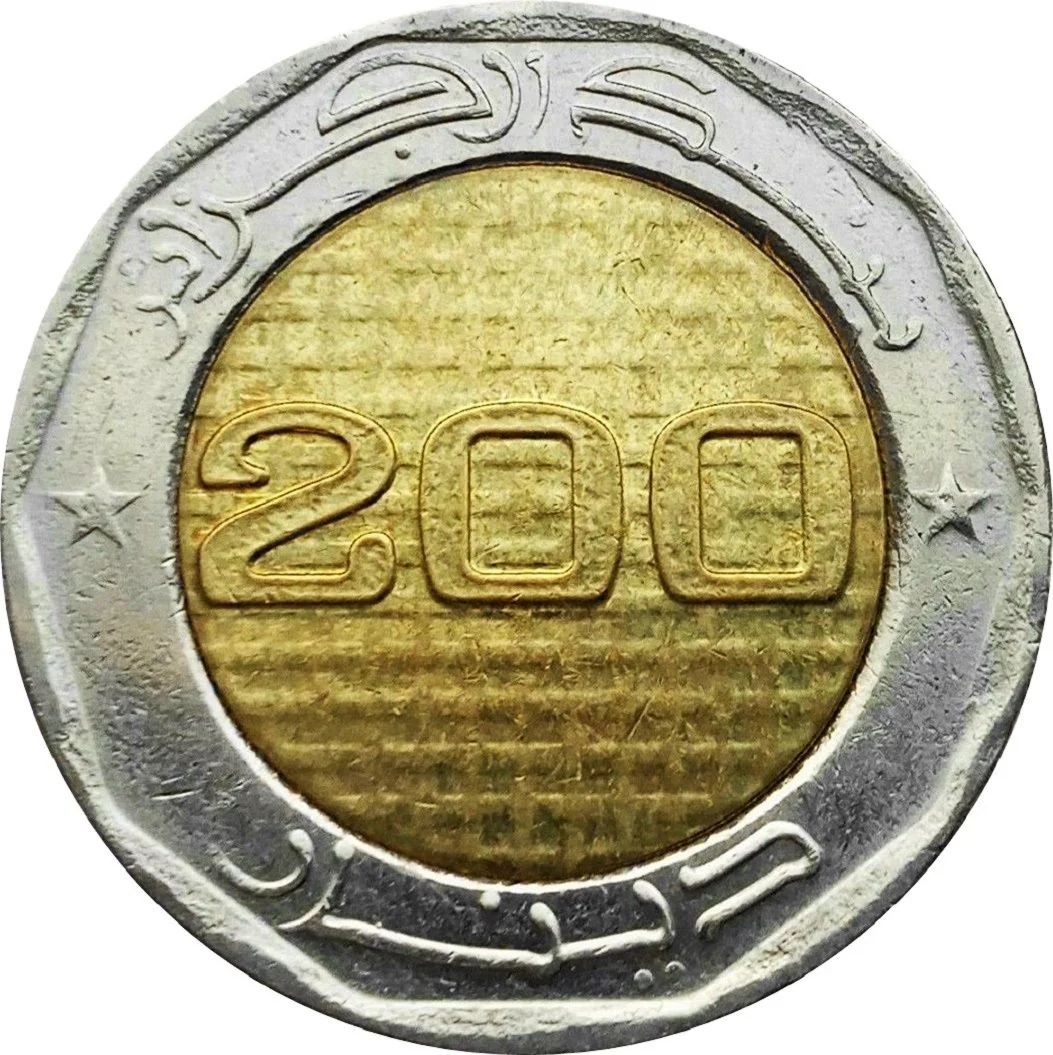
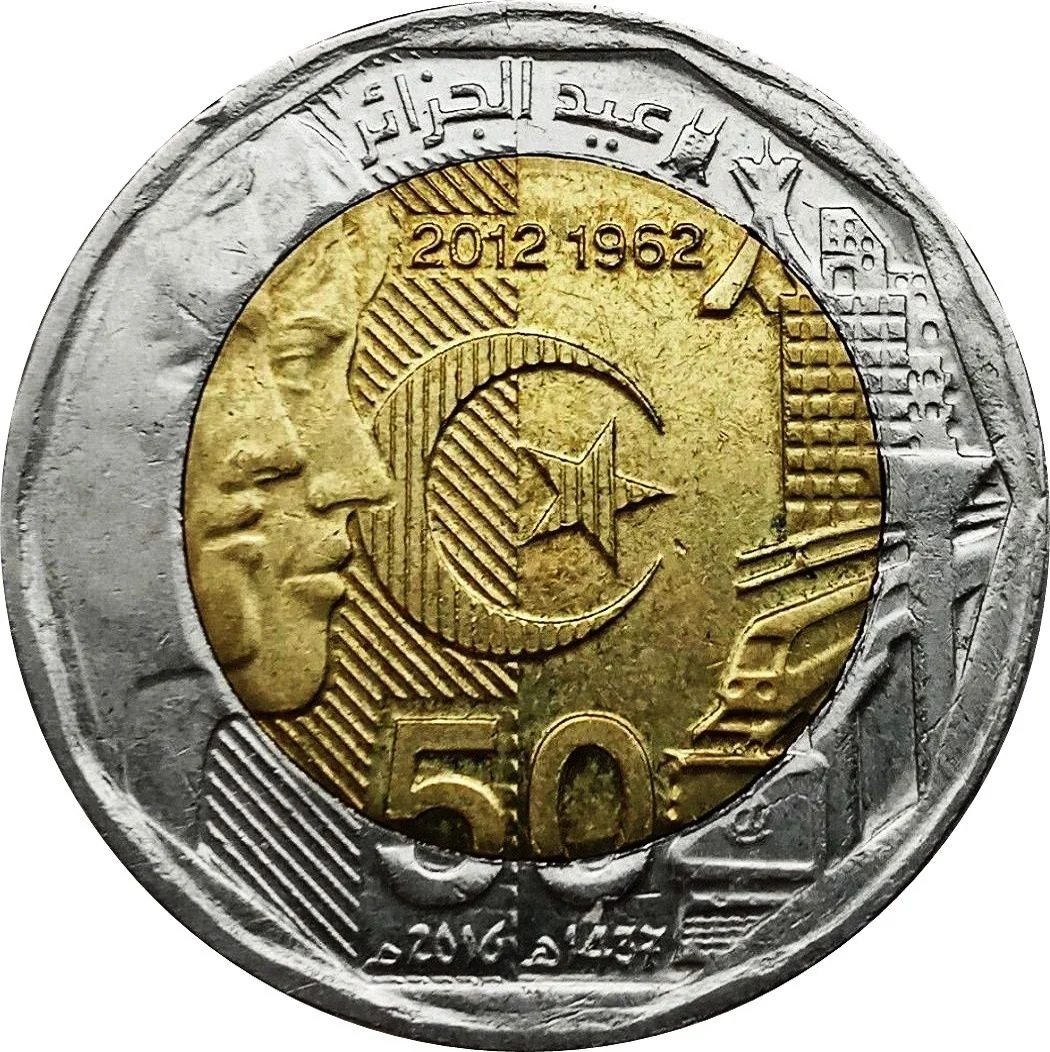
Obverse
Reverse
Edge
Reeded with the inscription
Legend:
4 x alternately upright and inverted 200 *: 200 * 00ᘔ * 200 * 00ᘔ *
Translation:
Two hundred, alternately upright and inverted: Two hundred, Zero Zero Ten, Two hundred, Zero Zero Ten.
Language: Latin
Categories
| Event> Independence |
| Transportation> Train |
Mints
| Name | Mark |
|---|---|
| Algiers | — |
Mintings
| Year | Mint Mark | Mintage | Quality | Collection |
|---|---|---|---|---|
| 2012 | — | — | ||
| 2013 | — | — | ||
| 2014 | — | — | Proof | |
| 2015 | — | — | ||
| 2016 | — | — | ||
| 2017 | — | — | ||
| 2018 | — | — | ||
| 2019 | — | — |
Historical background
In 2012, Algeria's currency situation was characterized by significant stability and strength, largely insulated from the global financial turbulence of the prior years. This was primarily due to the country's substantial hydrocarbon revenues, which filled foreign exchange reserves to a record high of approximately $192 billion by year's end. The Algerian dinar (DZD) maintained a tightly managed peg against a basket of currencies, heavily weighted toward the US dollar, with the official exchange rate held steady around DZD 77 to USD 1. This robust reserve position allowed the Banque d'Algérie to confidently manage the exchange rate, preventing volatility and ensuring ample liquidity for imports.
However, this apparent stability masked underlying and growing economic vulnerabilities. The economy remained overwhelmingly dependent on oil and gas exports, which accounted for over 95% of export earnings and about 60% of budget revenues. This created a classic "resource curse" scenario, where a strong currency (supported by energy inflows) undermined the competitiveness of non-hydrocarbon sectors, making non-energy exports and local manufacturing uncompetitive. Consequently, the import bill for consumer goods, food, and equipment soared, leading to a chronic trade imbalance with the non-hydrocarbon sector.
Looking ahead, 2012 served as a calm before the storm. Policymakers and economists widely recognized that the currency's strength was artificial and unsustainable in the long term without economic diversification. The high level of imports, funded by finite hydrocarbon savings, was steadily increasing the economy's vulnerability to a future oil price shock. While the immediate pressure on the dinar was minimal in 2012, the year highlighted the urgent need for structural reforms to reduce import dependency and develop other exportable goods—a challenge that would become acute later in the decade when global oil prices eventually fell.
However, this apparent stability masked underlying and growing economic vulnerabilities. The economy remained overwhelmingly dependent on oil and gas exports, which accounted for over 95% of export earnings and about 60% of budget revenues. This created a classic "resource curse" scenario, where a strong currency (supported by energy inflows) undermined the competitiveness of non-hydrocarbon sectors, making non-energy exports and local manufacturing uncompetitive. Consequently, the import bill for consumer goods, food, and equipment soared, leading to a chronic trade imbalance with the non-hydrocarbon sector.
Looking ahead, 2012 served as a calm before the storm. Policymakers and economists widely recognized that the currency's strength was artificial and unsustainable in the long term without economic diversification. The high level of imports, funded by finite hydrocarbon savings, was steadily increasing the economy's vulnerability to a future oil price shock. While the immediate pressure on the dinar was minimal in 2012, the year highlighted the urgent need for structural reforms to reduce import dependency and develop other exportable goods—a challenge that would become acute later in the decade when global oil prices eventually fell.
🌱 Common