

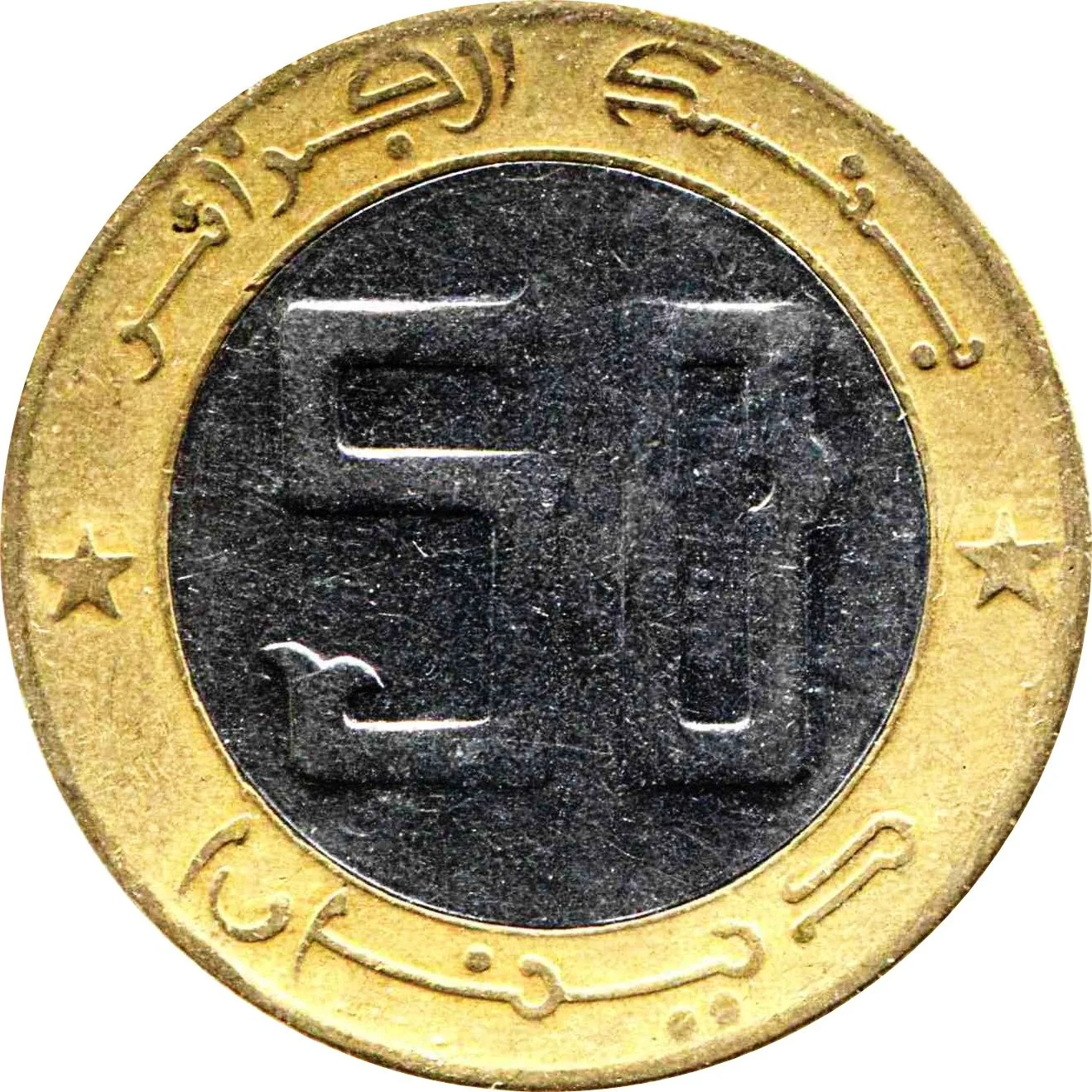
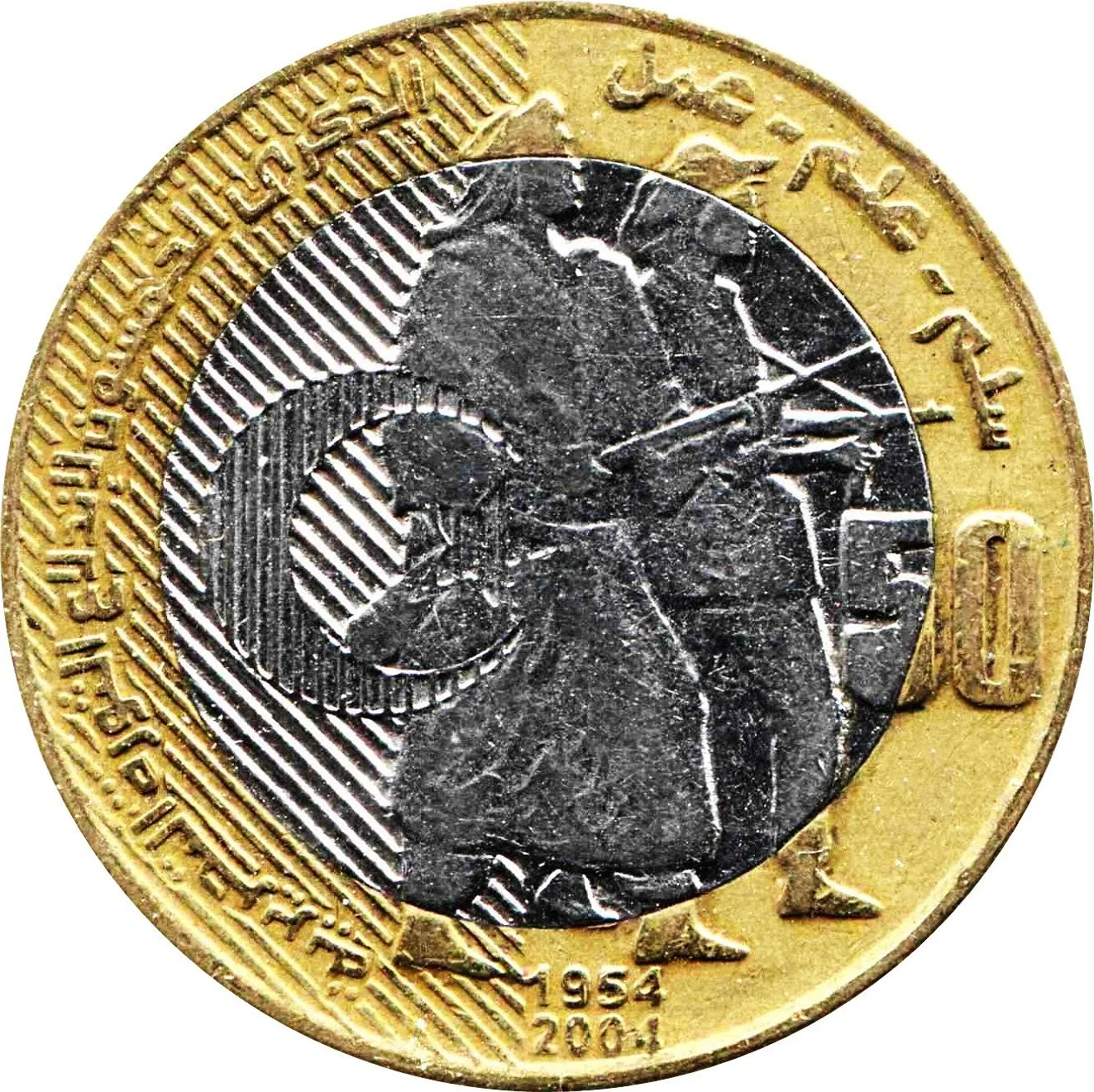
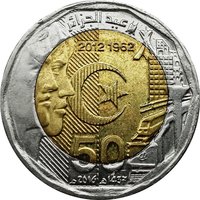
50 dinars (Algerian Revolution) – Algeria
Add to wishlist
Circulating commemorative coins
Commemoration: 50th Anniversary of the Algerian Revolution
Algeria
Context
Year: 2004
Issuer: Algeria
Issuing organization: Bank of Algeria
Period:
(since 1962)
Currency:
(since 1964)
Total mintage: 3,000,000
Material
References
KM: #
Numista: #10830
Value
Exchange value: 50 DZD
Obverse
Reverse
Edge
Plain
Mints
| Name | Mark |
|---|---|
| Algiers | — |
Mintings
| Year | Mint Mark | Mintage | Quality | Collection |
|---|---|---|---|---|
| 2004 | — | 3,000,000 |
Historical background
In 2004, Algeria's currency situation was characterized by a heavily managed exchange rate and a context of significant macroeconomic improvement. The Algerian dinar (DZD) was, and remains, not freely convertible, with its value set by the Bank of Algeria within a tightly controlled official band. This system was designed to maintain stability, insulate the economy from external shocks, and conserve foreign reserves, but it also created a disparity with a thriving parallel black market for foreign currency, where the dinar traded at a significantly weaker rate.
This period followed a decade of painful economic restructuring and coincided with a sustained rise in global hydrocarbon prices. As a result, Algeria experienced a dramatic turnaround in its external accounts, moving from high debt in the 1990s to accumulating substantial foreign exchange reserves, which exceeded $43 billion by the end of 2004. This reserve buildup strengthened the state's ability to defend the official dinar peg and provided a buffer against balance of payments crises.
However, underlying tensions persisted. The economy remained overwhelmingly dependent on oil and gas exports, which accounted for the bulk of foreign earnings, while the non-hydrocarbon sector struggled with competitiveness issues, partly due to an overvalued official exchange rate that made imports artificially cheap. Consequently, 2004 represented a moment of fiscal and external strength, but one that underscored the long-term structural challenges of a rigid currency regime within a rentier state, delaying broader economic diversification and reforms.
This period followed a decade of painful economic restructuring and coincided with a sustained rise in global hydrocarbon prices. As a result, Algeria experienced a dramatic turnaround in its external accounts, moving from high debt in the 1990s to accumulating substantial foreign exchange reserves, which exceeded $43 billion by the end of 2004. This reserve buildup strengthened the state's ability to defend the official dinar peg and provided a buffer against balance of payments crises.
However, underlying tensions persisted. The economy remained overwhelmingly dependent on oil and gas exports, which accounted for the bulk of foreign earnings, while the non-hydrocarbon sector struggled with competitiveness issues, partly due to an overvalued official exchange rate that made imports artificially cheap. Consequently, 2004 represented a moment of fiscal and external strength, but one that underscored the long-term structural challenges of a rigid currency regime within a rentier state, delaying broader economic diversification and reforms.
🌱 Common