

2.5 escudos – Mozambique
Add to wishlist
Mozambique
Context
Years: 1938–1951
Issuer: Mozambique
Period:
(1910—1951)
Currency:
(1911—1974)
Demonetized: Yes
Total mintage: 10,200,000
Material
References
KM: #
Numista: #14043
Value
Bullion value: $5.82
Obverse
Description:
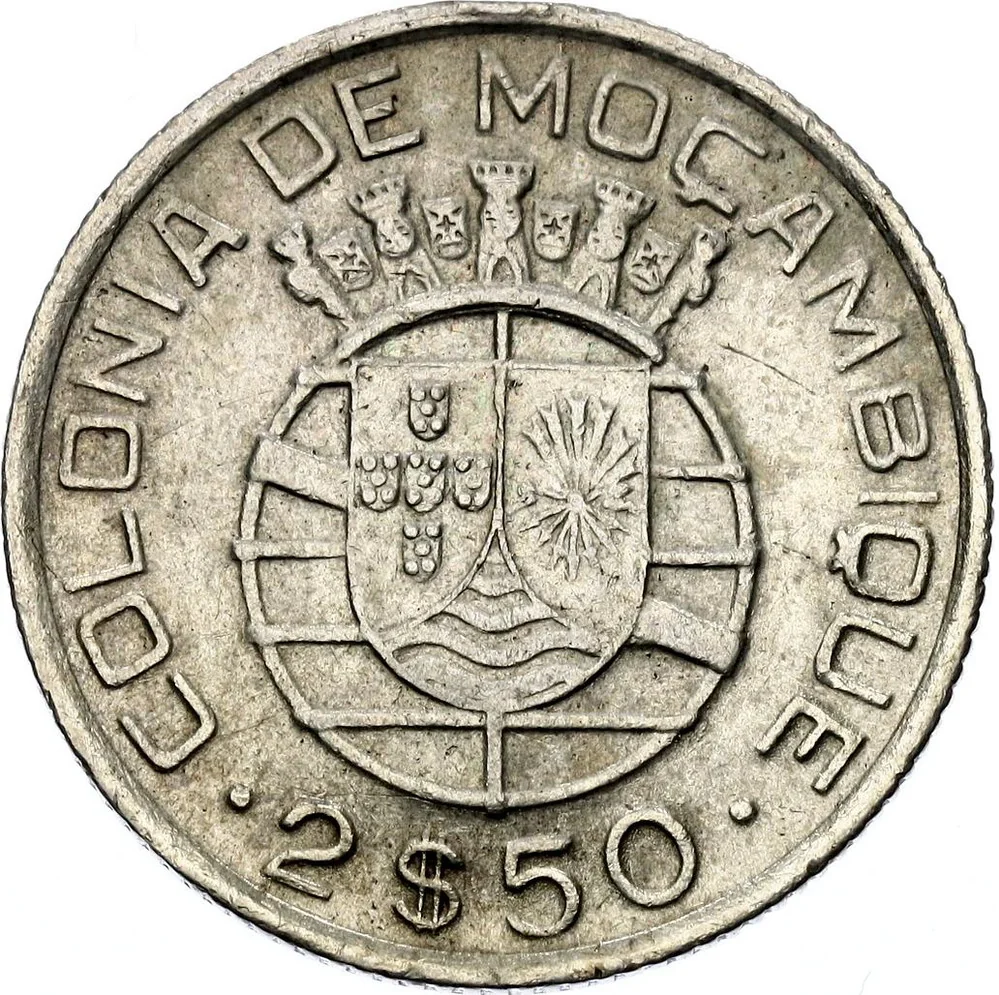
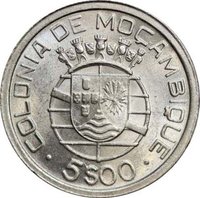
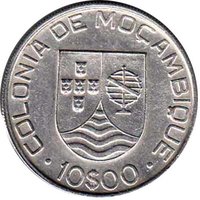
Portuguese Mozambique coat of arms within crowned armillary sphere, value below.
Inscription:
COLONIA DE MOÇAMBIQUE
· 2$50 ·
· 2$50 ·
Translation:
Colony of Mozambique
· 2.50 Escudos ·
· 2.50 Escudos ·
Script: Latin
Language: Portuguese
Reverse
Description:
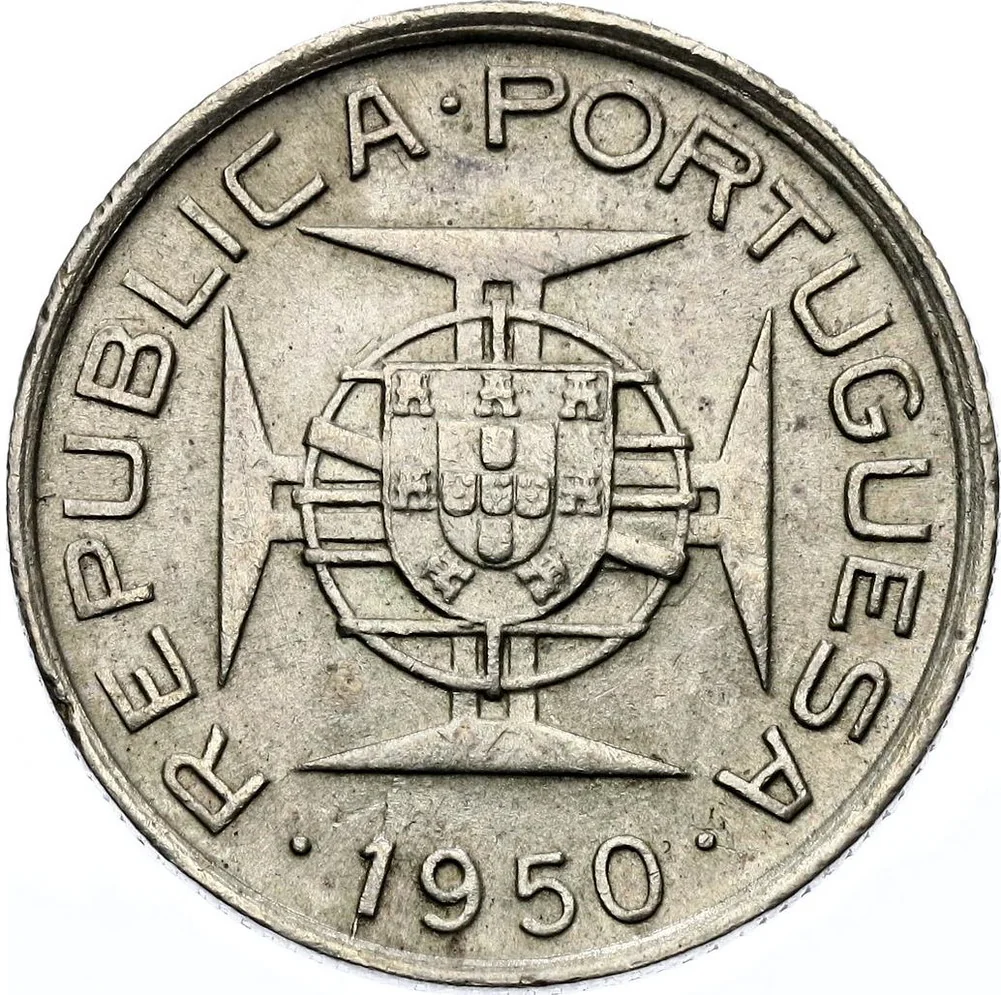
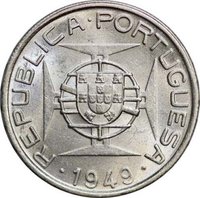
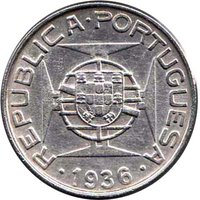
Portuguese coat of arms on an armillary sphere and cross, with date below.
Inscription:
REPUBLICA PORTUGUESA
· 1950 ·
· 1950 ·
Translation:
PORTUGUESE REPUBLIC
· 1950 ·
· 1950 ·
Script: Latin
Language: Portuguese
Edge
Reeded
Mintings
| Year | Mint Mark | Mintage | Quality | Collection |
|---|---|---|---|---|
| 1938 | — | 1,000,000 | ||
| 1942 | — | 1,200,000 | ||
| 1950 | — | 4,000,000 | ||
| 1951 | — | 4,000,000 |
Historical background
In 1938, Mozambique's currency situation was fundamentally defined by its status as a Portuguese colony, integrated into the broader Portuguese Escudo Zone. The official currency was the Portuguese escudo, which had replaced the real in 1911. This meant monetary policy was entirely set by Lisbon, with the Bank of Portugal acting as the central authority. Local economic needs were subordinate to the interests of the metropole, and the colony's financial system was designed to facilitate the export of agricultural products (like cotton, sugar, and cashews) and labour to neighbouring British territories, with earnings flowing back to Portugal.
The currency in daily circulation consisted primarily of notes and coins issued specifically for the colony by the Banco Nacional Ultramarino (BNU), which held the exclusive right of issue. These were Mozambique escudo notes, legally fixed at parity with the metropolitan Portuguese escudo. In practice, however, economic activity in the southern regions, particularly around the port of Lourenço Marques (now Maputo), was heavily influenced by the neighbouring British sterling area due to the trade and labour migration to South Africa and Southern Rhodesia. Sterling and South African pounds were frequently used in commerce, creating a de facto dual-currency environment in key economic hubs.
Overall, the 1938 currency system reflected colonial extraction and integration. It provided monetary stability through its peg to the Portuguese escudo, but it was not tailored for autonomous development. The infrastructure was rudimentary outside major ports, with cash economy penetration limited in vast rural areas where barter persisted. This setup would remain largely unchanged until the pressures of the Second World War began to disrupt global trade and colonial financial relationships in the years immediately following.
The currency in daily circulation consisted primarily of notes and coins issued specifically for the colony by the Banco Nacional Ultramarino (BNU), which held the exclusive right of issue. These were Mozambique escudo notes, legally fixed at parity with the metropolitan Portuguese escudo. In practice, however, economic activity in the southern regions, particularly around the port of Lourenço Marques (now Maputo), was heavily influenced by the neighbouring British sterling area due to the trade and labour migration to South Africa and Southern Rhodesia. Sterling and South African pounds were frequently used in commerce, creating a de facto dual-currency environment in key economic hubs.
Overall, the 1938 currency system reflected colonial extraction and integration. It provided monetary stability through its peg to the Portuguese escudo, but it was not tailored for autonomous development. The infrastructure was rudimentary outside major ports, with cash economy penetration limited in vast rural areas where barter persisted. This setup would remain largely unchanged until the pressures of the Second World War began to disrupt global trade and colonial financial relationships in the years immediately following.
🌱 Common