

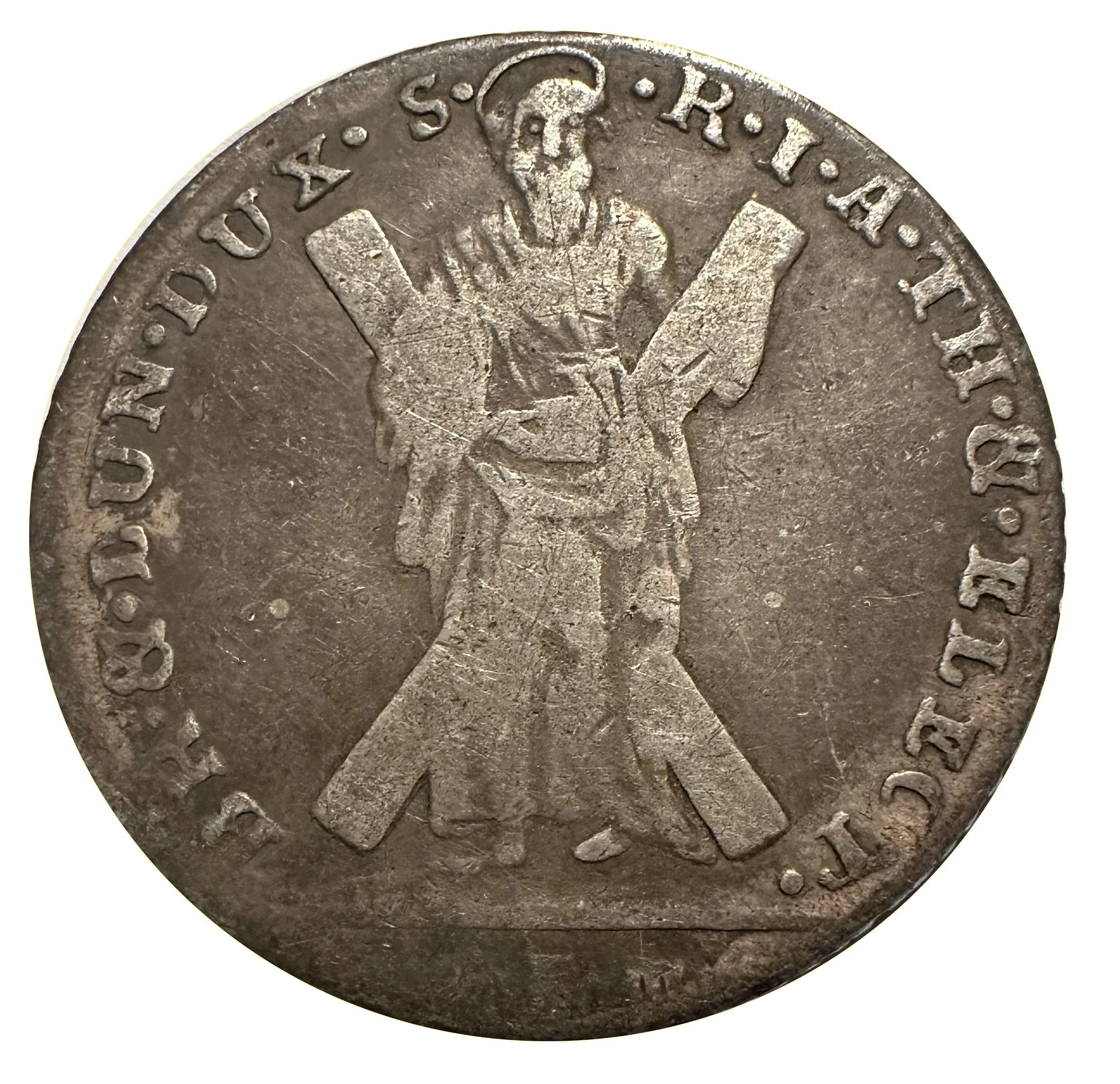
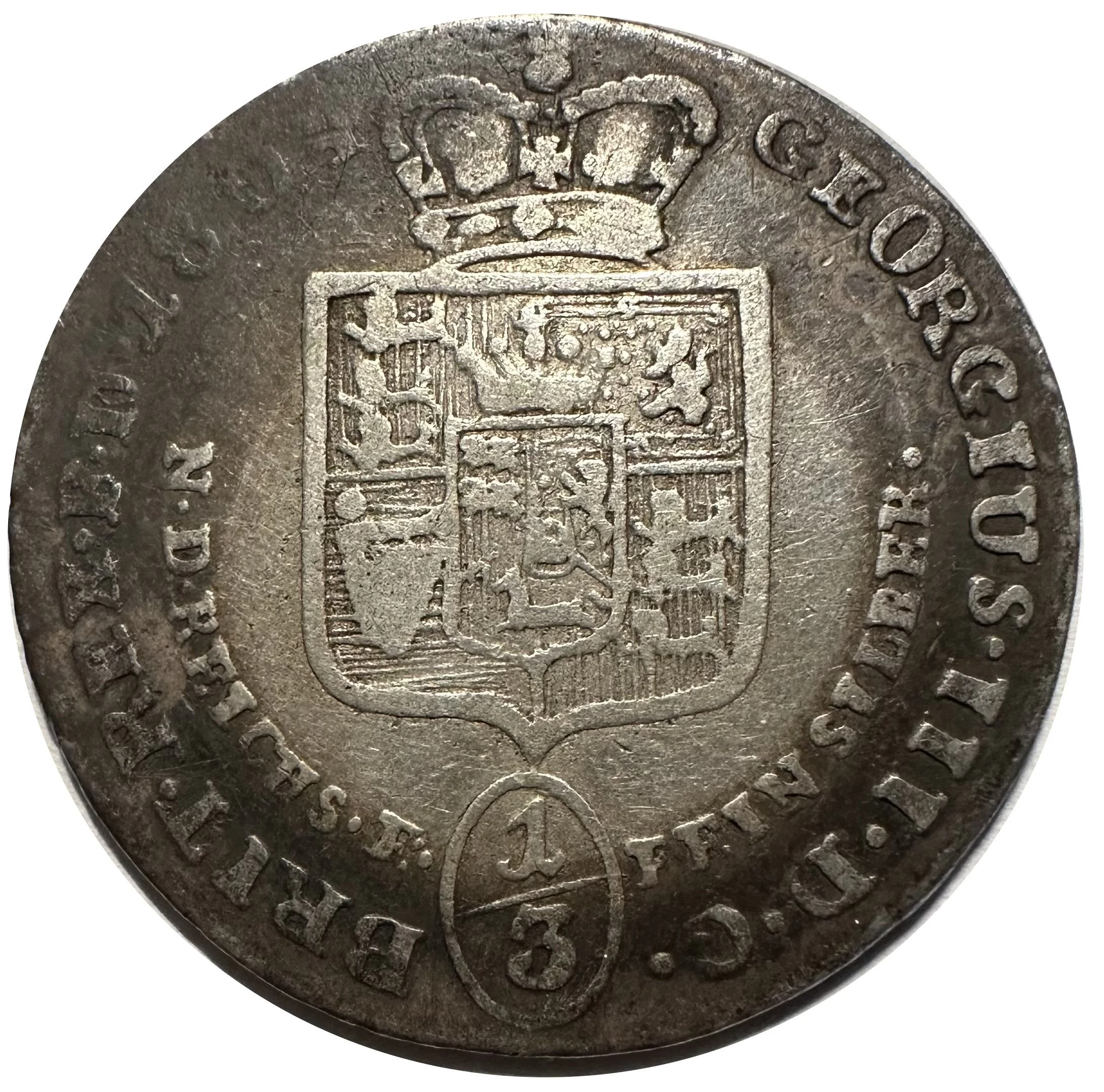
⅓ thaler – Brunswick-Lüneburg-Calenberg-Hannover
Add to wishlist
Germany
Context
Material
References
KM: #
Numista: #356195
Value
Bullion value: $15.86
Obverse
Reverse
Description:
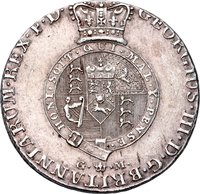
Arms above value
Inscription:
BRIT REX FD 1804 GEORGIUS III D G
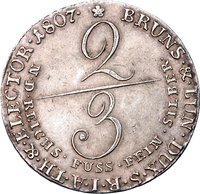
N D REICHS F 1/3 FEIN SILBER
N D REICHS F 1/3 FEIN SILBER
Script: Latin
Edge
Reeded
Mints
| Name | Mark |
|---|---|
| Clausthal | — |
Mintings
| Year | Mint Mark | Mintage | Quality | Collection |
|---|---|---|---|---|
| 1804 | — | — |
Historical background
In 1804, the currency situation in the Duchy of Brunswick-Lüneburg, specifically the Principality of Calenberg-Hannover, was complex and fragmented, reflecting the broader monetary disunity of the Holy Roman Empire. The territory operated on a dual system based on the Reichsthaler (Imperial Thaler), a large silver coin used for accounting and major transactions. However, the everyday circulating medium was the Gute Groschen, with 72 Groschen equaling one Reichsthaler. This system was further complicated by the concurrent use of the Conventionsthaler, a slightly different silver standard adopted by many northern German states, valued at ⅓ of a Reichsthaler more. Consequently, merchants and citizens had to navigate multiple exchange rates and coinages.
This monetary landscape was directly tied to Hanover's political connection to Great Britain through personal union. While the Electorate had its own minting authority, the influence of British economic interests and the influx of foreign coins, particularly from neighboring German states and the Netherlands, added to the circulatory chaos. The local government struggled to control the quality and quantity of coinage in circulation, leading to problems with debased coins and counterfeits. Furthermore, the use of Banco money (bank money of account) in major commercial centers like Hanover city for secure transfers added another abstract layer to the already convoluted system.
Overall, the currency situation in 1804 was one of precarious stability on the eve of major upheaval. The system functioned for local trade but was inefficient and prone to confusion in wider commerce. Within a decade, the Napoleonic Wars and the dissolution of the Holy Roman Empire (1806) would sweep away this old order, leading to French occupation, the introduction of French francs, and eventually a forced reorganization of Hanover's monetary system, making 1804 a final snapshot of a traditional, pre-modern currency regime.
This monetary landscape was directly tied to Hanover's political connection to Great Britain through personal union. While the Electorate had its own minting authority, the influence of British economic interests and the influx of foreign coins, particularly from neighboring German states and the Netherlands, added to the circulatory chaos. The local government struggled to control the quality and quantity of coinage in circulation, leading to problems with debased coins and counterfeits. Furthermore, the use of Banco money (bank money of account) in major commercial centers like Hanover city for secure transfers added another abstract layer to the already convoluted system.
Overall, the currency situation in 1804 was one of precarious stability on the eve of major upheaval. The system functioned for local trade but was inefficient and prone to confusion in wider commerce. Within a decade, the Napoleonic Wars and the dissolution of the Holy Roman Empire (1806) would sweep away this old order, leading to French occupation, the introduction of French francs, and eventually a forced reorganization of Hanover's monetary system, making 1804 a final snapshot of a traditional, pre-modern currency regime.
✨ Legendary