

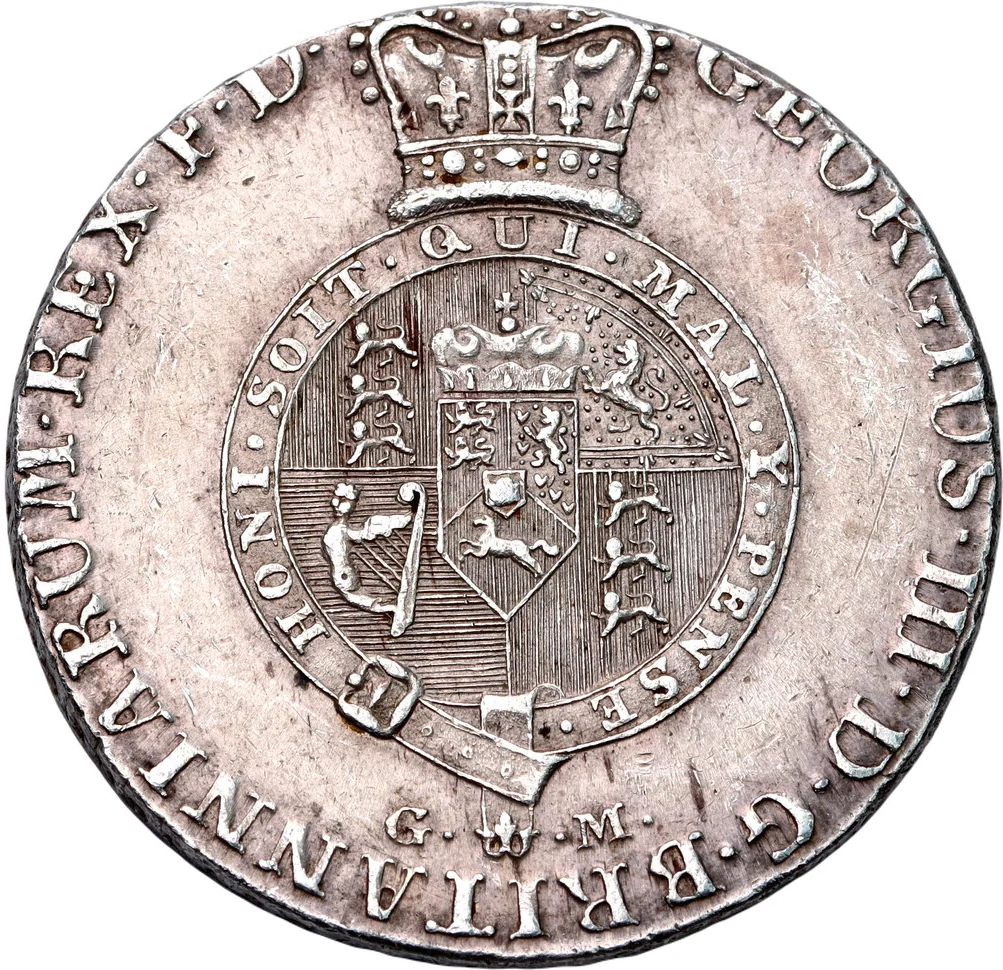
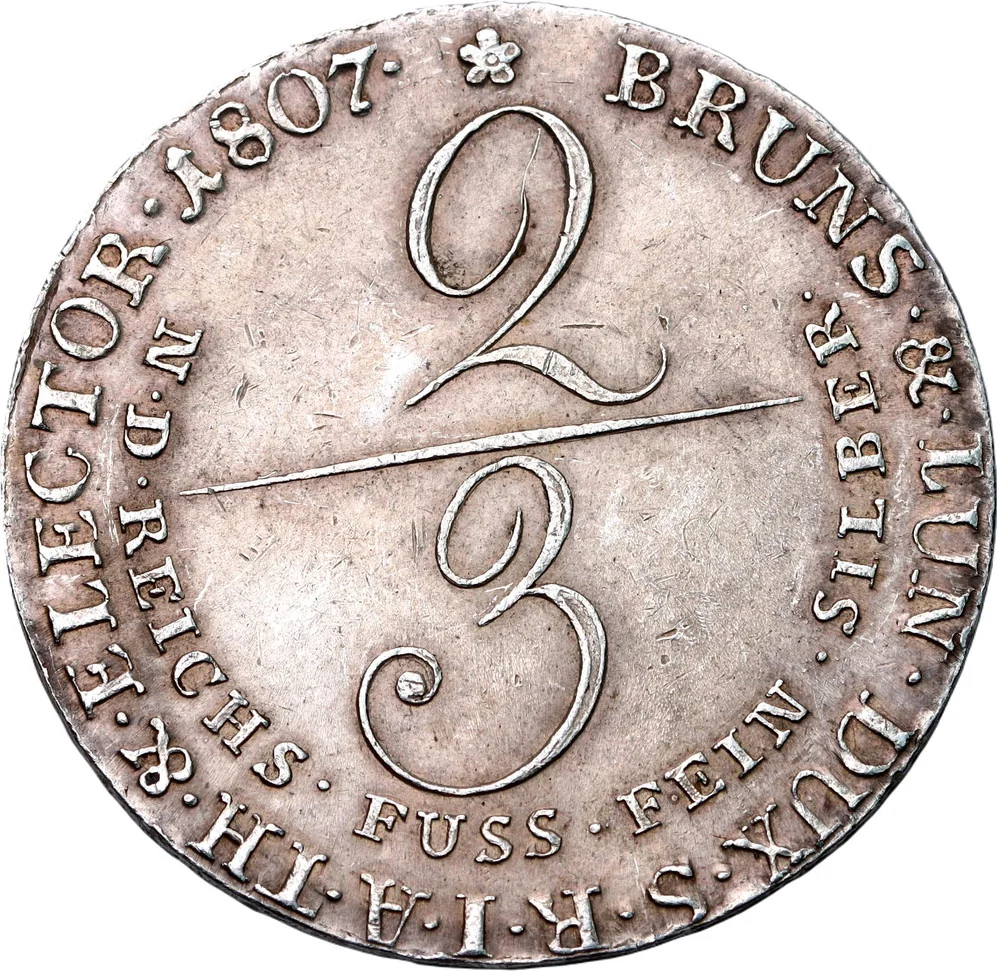
⅔ thaler – Brunswick-Lüneburg-Calenberg-Hannover
Add to wishlist
Germany
Context
Material
References
KM: #
Numista: #26801
Obverse
Reverse
Inscription:
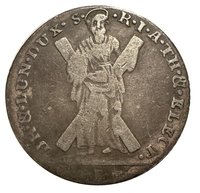
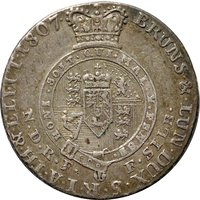
BRUNS·&·LUN·DUX·S·R·I·TH·&·ELECTOR·1807·
2
3
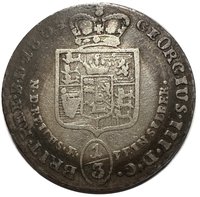
N·D·REICHS·FUSS·FEIN·SILBER·
2
3
N·D·REICHS·FUSS·FEIN·SILBER·
Script: Latin
Edge
Mints
| Name | Mark |
|---|---|
| Clausthal | — |
Mintings
| Year | Mint Mark | Mintage | Quality | Collection |
|---|---|---|---|---|
| 1805 | — | — | ||
| 1806 | — | — | ||
| 1807 | — | — |
Historical background
In 1805, the currency situation in the Duchy of Brunswick-Lüneburg, specifically its Calenberg-Hannover line (often referred to as the Electorate of Hanover), was complex and fragmented, reflecting the broader monetary disarray of the Holy Roman Empire. The territory did not have a single, unified coinage system. Instead, it operated on the Conventionsmünze standard, established by the 1753 Imperial Coinage Treaty, which set the Reichsthaler as a unit of account. However, actual circulating coins included local issues from the Hanoverian mint, as well as a plethora of foreign coins from neighboring German states, Dutch daalders, and French écus, all valued against the Conventionsthaler at fluctuating market rates.
This multiplicity of coins created significant practical challenges for trade and daily life. The value of money was not intrinsic but based on its declared tariff, leading to confusion and frequent disputes. Furthermore, the period was one of intense political uncertainty; Hanover was under British personal union and, following the resumption of war between Britain and Napoleonic France, was occupied by French troops in 1803. While the occupation was briefly lifted in 1805, the threat of renewed French intervention loomed, causing economic instability and disrupting normal fiscal policy, including any potential for monetary reform.
Consequently, the monetary landscape in 1805 was one of transition and instability. The old Imperial framework was crumbling under Napoleonic pressure, but no new system had yet been imposed. The currency in circulation was a heterogeneous mix, its value subject to both local convention and the upheavals of wider European war. Within two years, this situation would be forcibly simplified with Hanover's incorporation into the Kingdom of Westphalia and the introduction of the French Franc-based system, marking a definitive end to the region's early modern coinage era.
This multiplicity of coins created significant practical challenges for trade and daily life. The value of money was not intrinsic but based on its declared tariff, leading to confusion and frequent disputes. Furthermore, the period was one of intense political uncertainty; Hanover was under British personal union and, following the resumption of war between Britain and Napoleonic France, was occupied by French troops in 1803. While the occupation was briefly lifted in 1805, the threat of renewed French intervention loomed, causing economic instability and disrupting normal fiscal policy, including any potential for monetary reform.
Consequently, the monetary landscape in 1805 was one of transition and instability. The old Imperial framework was crumbling under Napoleonic pressure, but no new system had yet been imposed. The currency in circulation was a heterogeneous mix, its value subject to both local convention and the upheavals of wider European war. Within two years, this situation would be forcibly simplified with Hanover's incorporation into the Kingdom of Westphalia and the introduction of the French Franc-based system, marking a definitive end to the region's early modern coinage era.
💎 Extremely Rare